Episode 31 - FREEDOM

Episode 31 - FREEDOM

Author: JoAnn Fox: Buddhist Teacher May 5, 2019 Duration: 43:23

This episode is about FREEDOM:

freedom from sorrow

giving others freedom

freedom from the past

In other words, we look at how to lessen our habit of attachment. This exploration of attachment is in the context of an ordinary, modern life with marriage, children, jobs and family. Attachment is a habit of mind, like anger and jealousy are habits of mind. Attachment is the habit of viewing something as a cause of our happiness and then feeling that we need it in order to be happy. Attachment is not desire. There are many times we desire things without becoming attached. For example, we may desire to park our car. This is usually a neutral desire. However, if someone takes the parking spot we want, then attachment might arise and we become irritated. Attachment is not about the physical things, it is about how we relate to them. Giving up attachment doesn't mean we shouldn't own things, but that we don't let things own us.


"You must love in such a way that the person you love feels free."

--Thich Nhat Hanh

If someone says, "have no attachment to your spouse or child," it does not mean giving up loving them or feeling connected to them. It means that we give up being attached to what we want them to be or do. If we are attached to them becoming a football player and they want to be in the Drama Club, we might become frustrated or disappointed in them. That disappointment or frustration comes from being attached to how we want them to be, rather than how they are. We practice non-attachment when we give them them freedom to be themselves. We try not take take things personally. We let them go through what they need to, even if it's hard. Attachment doesn't make us closer; it creates anger or lack of acceptance, which undermines the connection between two people.  Attachment and love are opposites.

Can there be love without pain? Yes. If we oppose our attachment habit in relationships. To have a peaceful, happy relationship, we increase our habit of love in a relationship and decrease our habit of attachment. Attachment manifests in our selfish intentions and actions. Love is the habit of cherishing them. Attachment is our selfishness with others.

Practicing non-attachment also means we try to accept situations just as they are, without wishing them to be other than they are. When we are attached to something being other than they way it is, we suffer. This resistance to 'what is' is futile, but we are deeply habituated to this reaction. Buddha taught that freedom is possible right here in this ordinary way of life.


The fever of passion exists not for him who has completed the journey, who is sorrowless and wholly set free, and has broken all ties. (90)

The mindful ones exert themselves. They are not attached to any home; like swans that abandon the lake, they leave home after home behind.

Those who do not accumulate and are wise regarding food, whose object is the Void, the Unconditioned Freedom -- their track cannot be traced, like that of birds in the air.

He whose cankers are destroyed and who is not attached to food, whose object is the void, the unconditioned Freedom-- his path cannot be traced, like that of birds in the air. (93)

  —Buddha 

References:

Buddha. The Dhammapada: The Buddhist Path of Wisdom. Translated by Acharya Buddharakkhita. Buddha Dharma Education Association Inc., pp. 27. (PDF version)
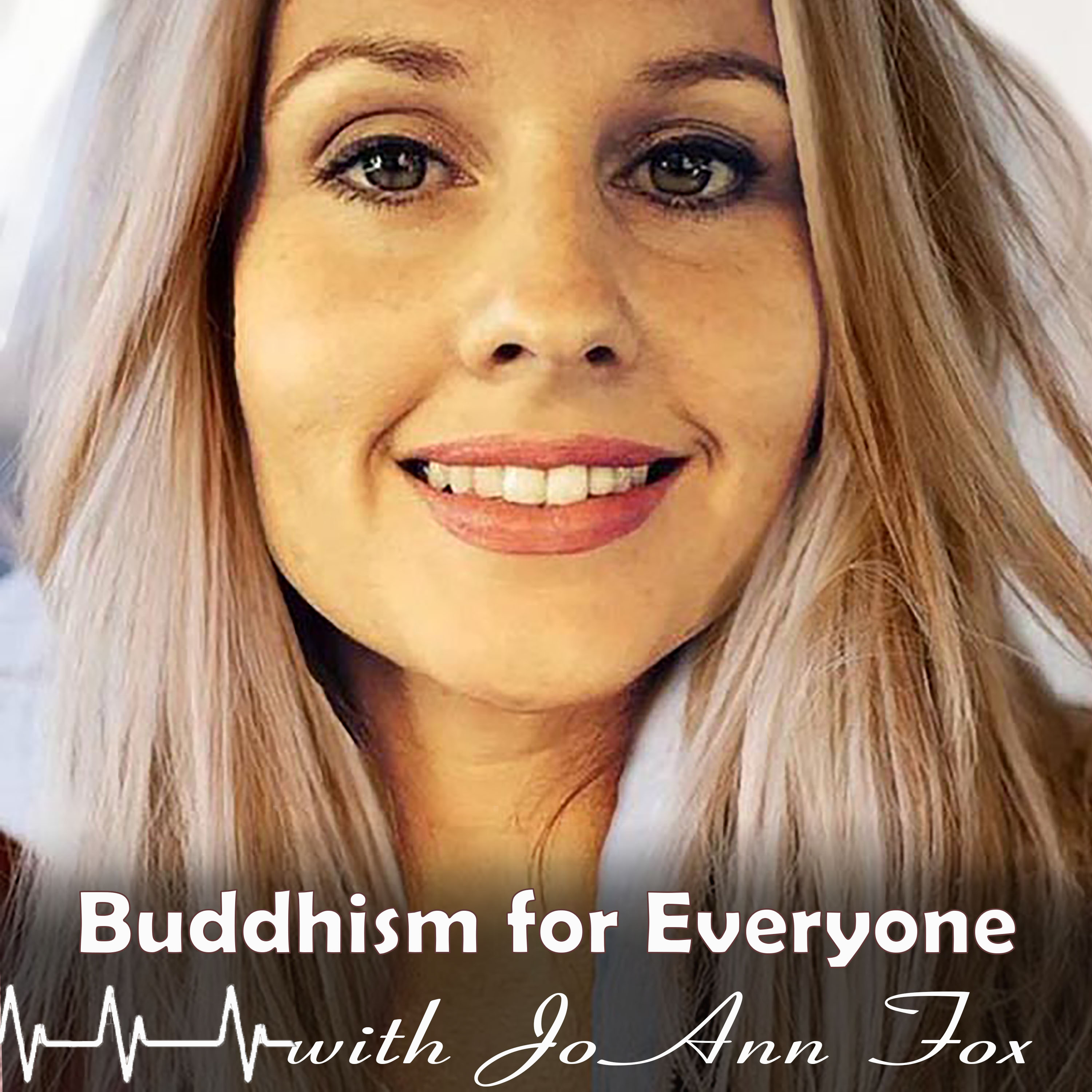

You'll find Buddhism for Everyone with JoAnn Fox to be a conversation that feels both timeless and immediately useful. JoAnn Fox, a Buddhist teacher with over two decades of experience, guides these discussions with a genuine warmth and a welcome touch of humor, making profound ideas feel accessible. This isn't about abstract philosophy; it's about the tangible ways these ancient practices can reshape our modern days. Each episode, released every other week, delves into practical applications. You might explore how to cultivate patience during a frustrating commute, find a deeper sense of contentment amidst daily routines, or develop the compassionate resilience the world needs. The podcast serves as a gentle, consistent reminder that spiritual growth isn't separate from ordinary life-it's woven right into it. JoAnn's approach demystifies meditation and mindfulness, framing them as tools for anyone seeking more peace or clarity. Whether you're completely new to these concepts or looking to deepen an existing practice, the conversations meet you where you are, offering insights that encourage reflection and, most importantly, action in your own life.
Author: Language: English Episodes: 230

Buddhism for Everyone with JoAnn Fox
Podcast Episodes
Episode 156 = Practicing Non-attachment with Family [not-audio_url] [/not-audio_url]

Duration: 31:12
We must work on our minds to overcome the habits of attachment--which always bring suffering--whether one is a monk or a family man. The context of a monastery versus a home with young children will make the practice dif…
Episode 155 - The Heart of Awakening [not-audio_url] [/not-audio_url]

Duration: 42:32
When we're being selfish, our actions are motivated by attachment to our happiness, reputation, opinion, expectations being met, etc. As we practiced after the last episode, we again practice cherishing others as an oppo…
Episode 153 - Root of Attachment [not-audio_url] [/not-audio_url]

Duration: 40:42
In this episode and subsequent mindfulness practice, we are working toward severing the root of craving (also known as attachment). What is the root of craving? Suffering is said to have three roots: anger, attachment, a…
Episode 152 - Examining Attachment To Our Self [not-audio_url] [/not-audio_url]

Duration: 42:44
Attachment to the self causes suffering, just as suffering invariably follows attachment to any object. In general, attachment arises when we perceive an object we find attractive and become fixated on it; we exaggerate…
Episode 151 - The Three Steps To Lessen Attachment [not-audio_url] [/not-audio_url]

Duration: 41:21
In this episode, we look at a three-step process to lessen attachment. The first step is to notice the craving mind and examine it. The craving mind focuses on its object of desire, exaggerates its good qualities, and fi…
Episode 150 -  Happiness and Attachment [not-audio_url] [/not-audio_url]

Duration: 34:40
Once Buddha was staying near the Himalayas in a place where the people were being very poorly treated by three cruel and ruthless kings. Buddha had the thought, 'I wonder if there is a way to get the kings to treat peopl…
Episode 149 - Friendship and Buddhism [not-audio_url] [/not-audio_url]

Duration: 31:55
With stories of yogis who spent years practicing alone in isolated mountain caves, it might seem like Buddhism promotes a solitary path. But in reality, Buddha spoke many times of the importance of good friends. Friends…
Episode 148 - Mindfulness for a Happy Life [not-audio_url] [/not-audio_url]

Duration: 34:37
Mindfulness can be used to train the mind: to make the mind more peaceful and see your world differently. Mindfulness, in this way, is used to remember things we've learned and intend to put into practice. For example, w…
Episode 147 - Be Grateful To Everyone [not-audio_url] [/not-audio_url]

Duration: 31:15
The practice of Lojong has the literal translation of "mind training." The great Buddhist master Atisha taught mind training over 1,000 years ago in the form of slogans. These 59 slogans are designed to be practiced in t…
Episode 146 - Caring For Our Parents [not-audio_url] [/not-audio_url]

Duration: 35:13
The Buddha taught that certain factors strengthen the karmic results of our actions. One example is that the effects of actions we do toward certain types of people are intensified because of their special relationship t…
