Howl: »Elite Force Voyager Online« Video Game Performance Reenacted (gpn24)

Howl: »Elite Force Voyager Online« Video Game Performance Reenacted (gpn24)

Author: CCC media team June 4, 2026 Duration: 3:36:13
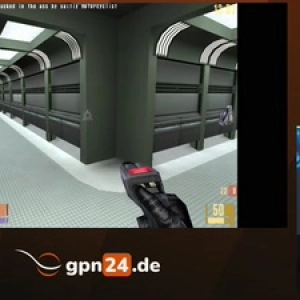
The American artist Joseph DeLappe is considered a pioneer of video game–based performance art and among the first artists to systematically use virtual online game worlds as sites of artistic intervention. To mark the 25th anniversary of his online performance Howl: Elite Force Voyager Online (2001), DeLappe is restaging the work for the first time in a slightly abridged version before a live audience. Playing as “Allen Ginsberg,” DeLappe (*1963, San Francisco, US) joins online sessions of the multiplayer shooter Star Trek™: Voyager – Elite Force (2000) and explores the in-game chat as a poetic medium. Line by line, he types Allen Ginsberg’s famous and controversial Beat poem Howl (1955) into the chat interface in real time while reciting it aloud. He does not shoot. He stands still and types. The text appears on screen in real time, visible to other players in small fragments as the performance unfolds. Howl: Elite Force Voyager Online was created in 2001 in the privacy of DeLappe’s studio in Reno, Nevada. Lasting over five hours, the performance was directed exclusively at players who happening to be in the same virtual space of the popular online shooter. The work originated in the artist’s early exploration of digital network environments as spaces of social, political, and aesthetic negotiation. As early as the late 1990s, he understood the then-emerging online game worlds as a new form of digital public sphere and conceived of the performance as a kind of digital street art project: Why play the game and follow its rules? What would happen if someone entered an online shooter and recited poetry instead of firing a weapon? By subverting the functional logic of the game, DeLappe transformed the virtual space into a stage for poetic and media-critical intervention. In doing so, he challenged players to reconsider their relationship to the video game world and its social function and invited them – sometimes reluctantly, sometimes with amusement – to engage with poetry. DeLappe further developed this performance method in later well-known works such as Quake/Friends (2003) and dead-in-iraq (2006–2011), and paved the way for numerous other experimental works in video game performance art. **To join the performance as a player, follow these steps:**   1.   Download the Windows or Linux client, (this is a free version of the game’s multiplayer element made with permission from the developer)  a.   https://last-outpost.net/index.php?page=holomatch 2.   Install on a windows pc or Linux 3.   Open and go to “multimatch” 4.   click “specify server” and enter IP address  37.120.173.241:27960 5.   Play the game as you would 6.   Please be respectful towards the community Licensed to the public under https://creativecommons.org/licenses/by/4.0/ about this event: https://cfp.gulas.ch/gpn24/talk/PLRFN8/
Tune into the Chaos Computer Club-recent events feed for a direct line to the forefront of digital culture and critical technology discourse. Curated by the CCC media team, this podcast channels the raw, insightful atmosphere of Europe's most influential hacker association, bringing you recordings from their major gatherings and community events. Each episode is a deep dive into talks and presentations from the last two years, covering topics from cryptography and privacy rights to hardware hacking, societal impacts of surveillance, and open-source philosophy. You'll hear from researchers, activists, and engineers who are actively shaping our digital future, offering perspectives rarely found in mainstream tech conversations. This isn't a produced show with hosts; it's an archival audio stream of genuine conference sessions, complete with audience questions and the spontaneous energy of the live event. For anyone interested in the technical details and ethical debates at the heart of modern technology, this feed serves as an essential, unfiltered resource. Subscribe to this podcast to keep your finger on the pulse of the Chaos Computer Club's ongoing dialogue, where complex ideas are broken down and the tools for a more empowered digital life are openly discussed.
Author: Episodes: 100

Chaos Computer Club - recent events feed
Podcast Episodes
Infrastructure Review & Closing (gpn24) [not-audio_url] [/not-audio_url]

Duration: 1:16:35
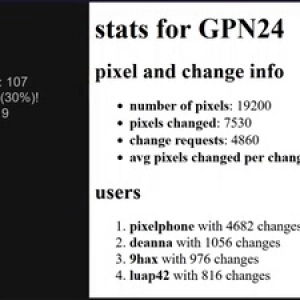
Große Zahlen und ganz viel WOW Licensed to the public under https://creativecommons.org/licenses/by/4.0/ about this event: https://cfp.gulas.ch/gpn24/talk/MTP7YB/
WAF: Wrong Approach Firewall (gpn24) [not-audio_url] [/not-audio_url]

Duration: 1:01:42
Web Application Firewalls (WAFs) for filtering based on HTTP and payload are omnipresent. In this talk an argument will be made that, in many cases, the wrong approach for implementing WAFs is chosen: They are implemente…
Building video games with 20 year old tech (gpn24) [not-audio_url] [/not-audio_url]

Duration: 19:10
The market is full of high-performance graphics APIs like Vulkan and fantastic engines like Unreal and Unity. So, why not use DirectX 9 and a self-built engine instead? ;) In this talk we'll take a quick stroll down memo…
Three Languages, Triple the Confusion (gpn24) [not-audio_url] [/not-audio_url]

Duration: 20:21
This code runs without errors, but still confuses. In this talk, we explore some subtle quirks of C, Python, and Java (and others) that catch even experienced developers off guard. No bugs, no typos - just the language d…
MMO-CHIP: From Microscope to Verilog in an hour (gpn24) [not-audio_url] [/not-audio_url]

Duration: 58:45
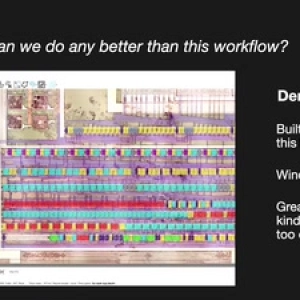
Reverse engineering old custom chips from microscope pictures is cool, but oh so painfully slow! Last time I did this (talk at 38C3), I spent two weeks waking up, annotating wires in Inkscape, going to bed, and then drea…
DI.Days as Anarchist Practice/Anarchist Practices for DI.Days (gpn24) [not-audio_url] [/not-audio_url]

Duration: 44:54
Digital Independence Days are a response to the growing monopolization of technology and the recent loss of trust in US-based tech firms after the USA's shift towards authoritarianism. The (communicated) goal is to prote…