Wie und warum das Bundesamt für Strahlenschutz flächendeckend Radioaktivität misst (gpn24)

Wie und warum das Bundesamt für Strahlenschutz flächendeckend Radioaktivität misst (gpn24)

Author: CCC media team June 5, 2026 Duration: 1:02:20
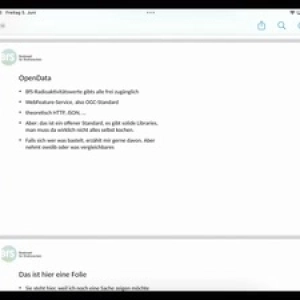
Kritische Infrastruktur, Notfallschutz, Datenbankenreplikation, embedded Linux, custom hardware, Umweltradioaktivität? Einmal alles bitte! Das Bundesamt für Strahlenschutz betreibt mit über 1700 Messstellen bundesweit ein Messnetz für Ortsdosisleistung. Messdatenbanken redundant an 6 Standorten, Datenaufbereitung für den Notfallschutz. Hier gibts eine ausführliche Vorstellung von Technik, Protokollen und Gerät. Und Quellcode. Um überhaupt eine Chance zu haben, zeitnah auf radiologische Notfälle zu reagieren, ist es eine sehr gute Idee, Umweltradioaktivität dauerhaft zu messen. Idealerweise prüft man diese Messwerte fortlaufend und speist sie in verständliche und bedienbare Informations- und Prognosesysteme ein. Nach Strahlenschutzgesetz ist daher die großflächige Ermittlung der Gamma-Ortsdosisleistung Zuständigkeit des Bundes, mitsamt Entwicklung und Festlegung von Probenahme-, Analyse-, Mess- und Berechnungsverfahren zur Ermittlung der Umweltradioaktivität sowie die Durchführung von Vergleichsmessungen und Vergleichsanalysen. Zunächst sind es Umweltmessungen, die die Radioaktivität der natürlichen Radionuklide messen, im Notfall ist das Messnetz gleichzeitig ein Frühwarnsystem. Die Frage dabei: Wie macht man das? Welche Anforderungen ergeben sich konkret? In diesem Talk gibts den kompletten Querschnitt von der Messung bis zur Übertragung in die Informationssysteme des Bundes und dem internationalen Austausch in der EU und der internationalen Atomenergiebehörde. Erklärung und Einführung insbesondere zu: - Messhardware - Netzwerkarchitektur und -protokolle - Messdaten-Replikation und Redundanzen - Datenprüfung und Plausibilisierung - Ausblick ins integrierte Mess- und Informationssystem des Bundes - öffentliche Schnittstellen und APIs Wo es sich anbietet mit ein paar kleinen Livedemos. Und als besonderer Bonus: Quellcode, Quellcode, Quellcode. Das Bundesamt für Strahlenschutz entwickelt unter GPL. Bisher war Sourcecode vom ODL-Messnetz aber nicht veröffentlicht. Das ändert sich jetzt, dieser Talk kommt mit Code-Drop. Licensed to the public under https://creativecommons.org/licenses/by/4.0/ about this event: https://cfp.gulas.ch/gpn24/talk/8VZADC/

Tune into the Chaos Computer Club-recent events feed for a direct line to the forefront of digital culture and critical technology discourse. Curated by the CCC media team, this podcast channels the raw, insightful atmosphere of Europe's most influential hacker association, bringing you recordings from their major gatherings and community events. Each episode is a deep dive into talks and presentations from the last two years, covering topics from cryptography and privacy rights to hardware hacking, societal impacts of surveillance, and open-source philosophy. You'll hear from researchers, activists, and engineers who are actively shaping our digital future, offering perspectives rarely found in mainstream tech conversations. This isn't a produced show with hosts; it's an archival audio stream of genuine conference sessions, complete with audience questions and the spontaneous energy of the live event. For anyone interested in the technical details and ethical debates at the heart of modern technology, this feed serves as an essential, unfiltered resource. Subscribe to this podcast to keep your finger on the pulse of the Chaos Computer Club's ongoing dialogue, where complex ideas are broken down and the tools for a more empowered digital life are openly discussed.
Author: Episodes: 100

Chaos Computer Club - recent events feed
Podcast Episodes
Infrastructure Review & Closing (gpn24) [not-audio_url] [/not-audio_url]

Duration: 1:16:35
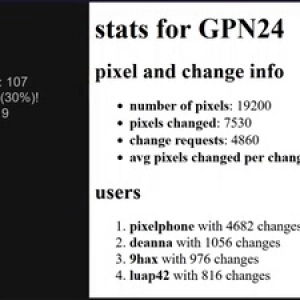
Große Zahlen und ganz viel WOW Licensed to the public under https://creativecommons.org/licenses/by/4.0/ about this event: https://cfp.gulas.ch/gpn24/talk/MTP7YB/
WAF: Wrong Approach Firewall (gpn24) [not-audio_url] [/not-audio_url]

Duration: 1:01:42
Web Application Firewalls (WAFs) for filtering based on HTTP and payload are omnipresent. In this talk an argument will be made that, in many cases, the wrong approach for implementing WAFs is chosen: They are implemente…
Building video games with 20 year old tech (gpn24) [not-audio_url] [/not-audio_url]

Duration: 19:10
The market is full of high-performance graphics APIs like Vulkan and fantastic engines like Unreal and Unity. So, why not use DirectX 9 and a self-built engine instead? ;) In this talk we'll take a quick stroll down memo…
Three Languages, Triple the Confusion (gpn24) [not-audio_url] [/not-audio_url]

Duration: 20:21
This code runs without errors, but still confuses. In this talk, we explore some subtle quirks of C, Python, and Java (and others) that catch even experienced developers off guard. No bugs, no typos - just the language d…
MMO-CHIP: From Microscope to Verilog in an hour (gpn24) [not-audio_url] [/not-audio_url]

Duration: 58:45
Reverse engineering old custom chips from microscope pictures is cool, but oh so painfully slow! Last time I did this (talk at 38C3), I spent two weeks waking up, annotating wires in Inkscape, going to bed, and then drea…
DI.Days as Anarchist Practice/Anarchist Practices for DI.Days (gpn24) [not-audio_url] [/not-audio_url]

Duration: 44:54
Digital Independence Days are a response to the growing monopolization of technology and the recent loss of trust in US-based tech firms after the USA's shift towards authoritarianism. The (communicated) goal is to prote…