271: The Exquisite Slurry for Bottling Cider | Ask Ryan 2021 Part 3

271: The Exquisite Slurry for Bottling Cider | Ask Ryan 2021 Part 3

Author: Ria Windcaller: Award-winning Cidermaker, Podcaster | Craft Beer Columnist May 5, 2021 Duration: 48:07

The Yeast and Sugar Slurry

Ryan Monkman of FieldBird Cider in Ontario continue on with helping Ria get ready to bottle cider that has been conditioning for over 2 years! In this episode we discuss the amount of sugar to add, what kind of yeast to use and how to make what is known as a "slurry".

episode 271 Yeast slurry

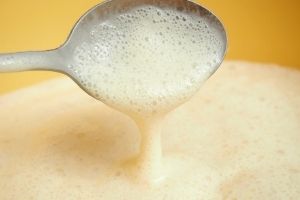
The slurry - a mixture of water, yeast and sugar

But let's first take a couple steps back....to episode 270 where Ryan offered tips for finding out if there is any sugar left in the cider. Knowing if there is any residual sugar even after 24 months is critical, especially if at the time of bottling you plan on adding a bit of what is known as "priming sugar" and yeast to create bubbles for an end product that is sparkling.

After all, "bubbles help aromas pop" says Ryan and I certainly enjoy a bit of bubbles too in the glass.

If the maker overlooks this step and adds too much sugar, the bottles will potentially over pressurize and may explode! No one in their good mind wants to make what is known as a bottle bomb, as they are very dangerous and will make all your beloved cider undrinkable as it drips down upon the wall or the floor. What a mess!

Making the slurry 

  • Begin with a 1/4 cup of warm water (not so hot that it would burn your finger)
    • You can substitute cider for water, but make sure not to heat the cider so that it taste burnt or else that burnt flavor will transfer into the cider you are wanting to bottle.
  • Use 1 yeast that works in difficult conditions such at AB-1 from Fermentis
    • Bayanus yeast are used the most for making the slurry as they are able to work in very difficult conditions.
  • Calculating the amount of sugar needed:
    • As a rule: brewers add 3 to 4 grams of sugar/liter. So if you like how beers are usually carbonated, you can follow the same principle and add around 3-4 grams/liter.
    • For 5 US gallons of cider that would mean adding around 76 grams of sugar.
      • 5 gallons = 18.9271 liters | 18.9271 liters x 4 grams  = 75
      • Add 75 grams of priming sugar
      • BUT only if you are completely sure that all the existing sugar has been fermented.
      • IF your residual sugar test via clinitabs/AIM Tabs or the Fermentest show that you still have 2 grams/liter in your cider then you will subtract that amount from the total.

to Review -

  • 5 gallons = 18.9271 liters
  • 2 (grams) x 18.9271  = 3.78542 grams
    • ...I'd round 3.78542 up to 4 grams, thereby calcualting that there is 4 grams of sugar currently in my 5 gallon batch of cider. Soooo, instead of adding 75 grams, as I usually would for cider that has no residual sugar left, I will subtract 3 grams and only add 72 grams of sugar.

Mix the yeast, water and sugar for the Slurry

  • Mix the warm water, yeast and sugar. Let is sit for 20 to 40 minutes so the yeast is able to reproduce more yeast cells.
  • Slowly add the cider into the Slurry so that it can fully inoculate the cider - Ryan says this alone can take up to 45 minutes. For commercial makers this could be a 12 hour process!
  • Once done - bottle immediately. Carbonation should begin within two weeks.

Contact for Ryan Monkman at FieldBird Cider

Mentions in this Chat

Help Support Cider Chat Please donate today. Help keep the chat thriving!

Find this episode and all episodes at the page for Cider Chat's podcasts.


There’s a whole world in a glass of cider, and Cider Chat is your invitation to explore it. Hosted by award-winning cidermaker and writer Ria Windcaller, this podcast travels far beyond the bottle to meet the people who make the global cider culture so vibrant. Each conversation is a journey-you might find yourself in a heritage orchard learning the history of forgotten apple varieties, in a bustling taproom with an importer explaining regional traditions, or in a kitchen with a chef pairing cider with unexpected foods. The discussions get into the delightful nuances, too, whether that’s the semantics of what we even call this drink or how the concept of terroir translates from soil to sip. It’s not just about production; it’s about the community, the travel, and the stories that fermentation unlocks. This is for anyone curious about the craft, history, and sheer enjoyment of fermented apple juice in all its forms. So, pour a glass and settle in for a series that feels like a wide-ranging, informative, and genuinely good-humored chat with friends who happen to be obsessed with cider. You’ll come away with a deeper appreciation for every effervescent, tart, or sweet sip, hearing directly from the growers, makers, and enthusiasts who are shaping this drink’s exciting present and future.

Author: Language: English Episodes: 501

Cider Chat
Podcast Episodes
498: Heeman's Cellar | Somewhere Cider from Ontario [not-audio_url] [/not-audio_url]

Duration: 1:12:05
In this episode of Cider Chat, we visit Heeman Cellars in Ontario, where a multi-generational strawberry farm expanded into cider and mead production focused on heritage apples, terroir, and experimentation. We taste ble…
496: Liberty Ciderworks | Spokane, WA [not-audio_url] [/not-audio_url]

Duration: 56:28
Liberty Ciderworks in Spokane, Washington is an urban cidery focused on traditional methods. While located in the city, their cider reflects deep agricultural roots. Cider maker and founder Rick Hastings ferments with wi…
495: Cider Barrels Speak | Bâtonnage & Barrel Aging [not-audio_url] [/not-audio_url]

Duration: 58:24
In this archive episode of Cider Chat, we go in a barrel cellar in Prince Edward County, Ontario, with Ryan Monkman of FieldBird Cider and Lee Baker of Keint-He Winery. Listening to Fermentation What Is Bâtonnage in Cide…
494: Humboldt Cider and the Historic Orchard of Albert Etter [not-audio_url] [/not-audio_url]

Duration: 1:00:53
In this episode of Cider Chat, we hear from Tom Hart of Humboldt Cider Company, located in Eureka, California along the rugged Pacific coastline behind what locals call the Redwood Curtain. We also discusses preserving t…
493: Cider as a Sport | Sidra in Asturias (Archive Edition) [not-audio_url] [/not-audio_url]

Duration: 55:28
What is Asturian cider? Asturian cider (sidra natural) is a traditionally fermented apple cider from Asturias, Spain, served through a high pour (escanciado) and shared socially in small servings called culines. This epi…
492: Absolem Cider Company | Maine Cider Energy [not-audio_url] [/not-audio_url]

Duration: 52:23
This episode of Cider Chat explores the growing Maine cider scene through Absolem Cider Company in Winthrop, a farm-based cidery helping shape New England's evolving cider identity. Located on a 60-acre farm in Winthrop,…
491: Revisiting Randall Grahm | Cider Exploration Without Hesitation [not-audio_url] [/not-audio_url]

Duration: 53:35
An early conversation that explored possibilities cider was only beginning to consider. As Cider Chat moves toward its 500th episode, we revisit conversations from the earliest seasons, taking a long view of the moments…
490: Let Cider Lead [not-audio_url] [/not-audio_url]

Duration: 22:32
An editorial on leadership, scarcity, and why cider no longer needs to borrow authority from beer or wine. In Let Cider Lead, host Ria Windcaller steps back from interviews to offer a clear-eyed reflection on the state o…
489: Natural Cider Production Seminar | CiderCon 2025 [not-audio_url] [/not-audio_url]

Duration: 1:10:53
Natural cider is often misunderstood as funky, volatile, or flawed. Recorded live at CiderCon 2025, this seminar reframes natural cider as a philosophy of low intervention, balance, and intentional care, not a free pass…