Ranking Government Secretism

Ranking Government Secretism

Author: Alberto Daniel Hill April 14, 2026 Duration: 6:52

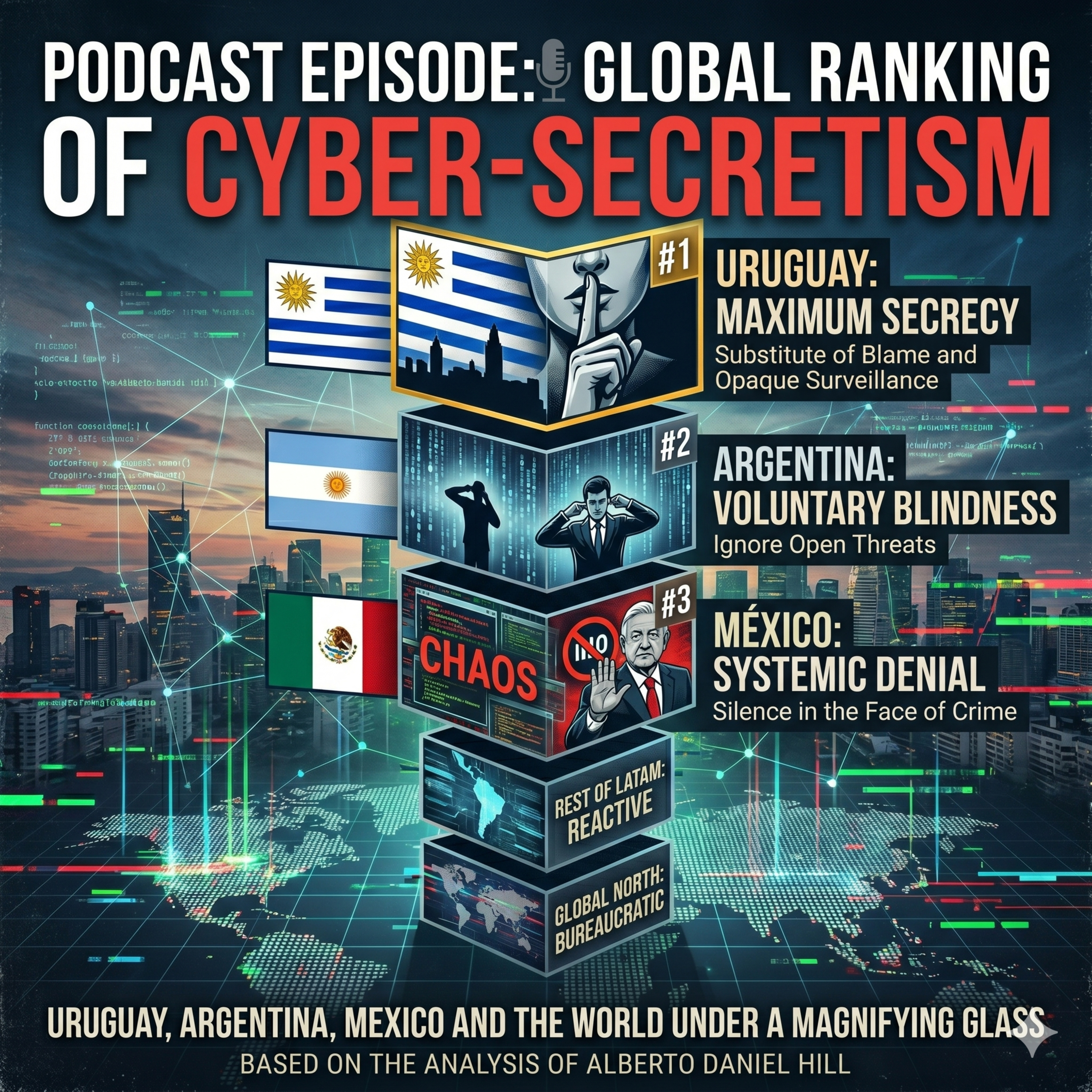
Government cybersecurity "secretism," also known as the "Protocol of Silence," is a systemic institutional strategy where state-level entities intentionally hide, minimize, or obfuscate details regarding cyberattacks and data breaches. Rather than protecting citizen data or national security, this strategy prioritizes preserving institutional reputation and averting public panic. Secretism operates through mechanisms such as narrative minimization (downgrading severe breaches to mere "informatic incidents"), delayed disclosure, and information siloing, which ultimately paralyzes regulatory bodies and leaves critical national infrastructure vulnerable to replicated attacks.

The consequences of this institutional opacity are severe, creating a "security gap" that leaves citizens defenseless against identity theft, financial fraud, and targeted attacks. For example, during the 2025 ransomware attack on the Banco Hipotecario del Uruguay (BHU), officials silenced the exfiltration of 700GB of sensitive data, preventing regulatory remediation and causing a bankruptcy of public trust. Similarly, in Argentina, a massive 2026 data dump by the CHRONUSTEAM affecting over 8 million citizen records was met with "total silence" and dismissively labeled as "old data" by the government.

This culture of denial is further compounded by historical retaliation against ethical researchers. The wrongful imprisonment of Alberto Daniel Hill in Uruguay for responsibly disclosing vulnerabilities created a profound chilling effect on the national cybersecurity workforce, stopping professionals from reporting flaws to the state out of fear. Consequently, figures like Hill have emerged as "Digital Dissidents" advocating for radical transparency as a weapon to counter institutional secrecy.

Globally, secretism takes various forms, ranging from Western "hygiene failures" to authoritarian "systematic control" models in countries like China and Russia, which rely on internet shutdowns and mass surveillance. Conversely, countries governed by strict data protection frameworks exhibit much lower levels of secretism. Latvia, for instance, ranks near the bottom of the secretism scale because its adherence to the EU's GDPR mandates the public reporting of serious data breaches within 72 hours, making transparency a legal obligation rather than a choice. Ultimately, combating secretism requires the abolishment of the Protocol of Silence, mandatory incident notifications, and the legal protection of good-faith security researchers to ensure digital sovereignty and democracy.

#Cybersecurity #ProtocolOfSilence #DataBreaches #GovernmentTransparency #DigitalDissident #InformationSecurity #Hacktivism #GDPR #AlbertoDanielHill #InfoSec cybersecurity secretism protocol-of-silence data-protection radical-transparency digital-sovereignty internet-shutdowns


Alberto Daniel Hill hosts Cybermidnight Club-Hackers, Cyber Security and Cyber Crime, a podcast that exists at the raw intersection of digital crime and personal consequence. His authority comes from a unique and grim distinction: as an expert in cybersecurity, he also became the first person in Uruguay to serve a prison sentence for a computer-related crime-one he maintains he did not commit, an offense that may be entirely fictional. This lived experience, shadowed by ambiguity and the weight of the state, fuels every conversation. The series moves beyond theoretical discussions to explore the real human stories and systemic flaws within the shadowy realms of hacking, security failures, and cyber crime. Listeners are taken into operations on the dark web, not through sensationalism, but through the lens of someone who has navigated its myths and realities from both sides of the law. The podcast naturally unfolds with interviews, analysis, and Hill’s own reflections, offering a grounded perspective that challenges easy narratives about guilt, technology, and power. It’s a detailed audit of the digital underworld, conducted by a guide who understands the cost of a single line of code or a misplaced accusation. You’ll hear about vulnerabilities, both in systems and in justice, making this a essential series for anyone intrigued by the true crime of the modern age, where the evidence is often ephemeral and the stakes are profoundly human.
Author: Language: English Episodes: 100

Cybermidnight Club– Hackers, Cyber Security and Cyber Crime
Podcast Episodes
Hackeo a TuID y el silencio oficial [not-audio_url] [/not-audio_url]

Duration: 12:15
Bienvenidos a un nuevo episodio de Cybermidnight Club, presentado por Alberto Daniel Hill. En este episodio de alto riesgo, analizamos a fondo la supuesta vulneración de "LaPampaLeaks" a la plataforma de identidad digita…
The LaPampaLeaks Breach of Uruguay's TuID [not-audio_url] [/not-audio_url]

Duration: 37:50
**Welcome to another episode of Cybermidnight Club, hosted by Alberto Daniel Hill.** In this high-stakes episode, we dive deep into the alleged LaPampaLeaks compromise of Uruguay’s TuID digital identity platform.**What h…
Be Prime prefirió demandar que activar 2FA [not-audio_url] [/not-audio_url]

Duration: 17:48
Aquí tienes algunas opciones detalladas de prompts en español que puedes copiar y pegar directamente en Gemini (o en cualquier otro generador de imágenes con IA) para crear la portada del episodio del podcast Cybermidnig…
CIBERSEGURIDAD - CRISIS EN URUGUAY [not-audio_url] [/not-audio_url]

Duration: 2:05
El anuncio del ataque "salado" pronosticado para mayo es altamente real y debe considerarse casi inminente, fundamentado en la capacidad analítica y el historial comprobado de Alberto Daniel Hill.La alta probabilidad de…