Nineteen Seventy Three

Nineteen Seventy Three

Author: DamnInteresting.com October 17, 2012 Duration: 31:12
On 12 November 1971, in the presidential palace in the Republic of Chile, President Salvador Allende and a British theorist named Stafford Beer engaged in a highly improbable conversation. Beer was a world-renowned cybernetician and Allende was the newly elected leader of the impoverished republic. Beer, a towering middle-aged man with a long beard, sat face to face with the horn-rimmed, mustachioed, grandfatherly president and spoke at great length in the solemn palace. A translator whispered the substance of Beer’s extraordinary proposition into Allende’s ear. The brilliant Brit was essentially suggesting that Chile’s entire economy–transportation, banking, manufacturing, mining, and more–could all be wired to feed realtime data into a central computer mainframe where specialized cybernetic software could help the country to manage resources, to detect problems before they arise, and to experiment with economic policies on a sophisticated simulator before applying them to reality. With such a pioneering system, Beer suggested, the impoverished Chile could become an exceedingly wealthy nation. In the early 1970s the scale of Beer’s proposed network was unprecedented. One of the largest computer networks of the day was a mere fifteen machines in the US, the military progenitor to the Internet known as ARPANET. Beer was suggesting a network with hundreds or thousands of endpoints. Moreover, the computational complexity of his concept eclipsed even that of the Apollo moon missions, which were still ongoing at that time. After a few hours of conversation President Allende responded to the audacious proposition: Chile must indeed become the world’s first cybernetic government, for the good of the people. Work was to start straight away. Stafford Beer practically ran across the street to share the news with his awaiting technical team, and much celebratory drinking occurred that evening. But the ambitious cybernetic network would never become fully operational if the CIA had anything to say about it.

The stories that shape our world are often hidden in plain sight, waiting for the right moment to reveal their strange and significant details. That's the territory explored by Damn Interesting, a narrative-driven podcast from the team at DamnInteresting.com. Each episode is a deep and immersive dive into a true story, told with the care and pacing of an audiobook. You'll find yourself pulled into meticulously researched accounts from the overlapping realms of science, medicine, history, and human behavior. One week might unravel a forgotten medical mystery, while the next could detail a pivotal, overlooked moment in technological history or a psychological phenomenon that explains more than we'd like to admit. This podcast is built on the conviction that reality, when examined closely, is far more compelling than fiction. The narration is clear and engaging, designed to make complex subjects accessible and to transform historical footnotes into gripping narratives. It’s for anyone with a restless curiosity about the how and why of things, offering those satisfying moments of connection where disparate facts suddenly click into place. Listening feels like uncovering a series of fascinating secrets, each story selected for its inherent ability to surprise and make you reconsider a piece of the world.

Author: Language: English Episodes: 73

Damn Interesting
Podcast Episodes
Death By Derivatives [not-audio_url] [/not-audio_url]

Duration: 14:55
The opening of a canal in 1848 led to the birth of modern financial derivatives, and the early demise of some of the men who traded them
Ghoulish Acts & Dastardly Deeds [not-audio_url] [/not-audio_url]

Duration: 54:12
In the 1950s, an anonymous terrorist planted a pipe bomb in a New York City public space. Then another. And another.
No Country For Ye Olde Men [not-audio_url] [/not-audio_url]

Duration: 12:49
Britain’s practice of transporting convicts to American colonies was a fearsome punishment, but not for the chronic criminal James Dalton.
Fire And Dice [not-audio_url] [/not-audio_url]

Duration: 23:09
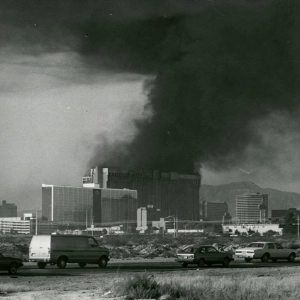
The story of a tragic hotel fire of Rube Goldberg proportions.
The Reconstruction of Ulysses S. Grant [not-audio_url] [/not-audio_url]

Duration: 25:07
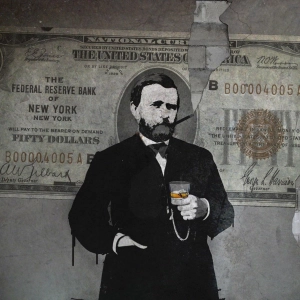
As a civilian, the beloved American Civil War general and two-term president failed at every attempt to make money. Except for one.
Foreign Exchanges [not-audio_url] [/not-audio_url]

Duration: 30:26
He made a name for himself organizing the world’s most important economic conference, only to have it tarnished by an outrageous accusation.
Starving For Answers [not-audio_url] [/not-audio_url]

Duration: 14:44
During WWII, 36 American conscientious objectors volunteered as subjects in a brutal science experiment to measure the body's response to starvation.
Ten Minutes In Lituya Bay [not-audio_url] [/not-audio_url]

Duration: 24:52
A remote bay in Alaska is home to an odd and occasionally catastrophic geology. In 1958, a handful of people experienced this firsthand.
The King's Letters [not-audio_url] [/not-audio_url]

Duration: 19:40
The 15th-century scholar who upset the Korean aristocracy by creating a native script for the Korean language, and thus wean it off Chinese characters.