The Supernatural Bunnymother Of Surrey

The Supernatural Bunnymother Of Surrey

Author: DamnInteresting.com February 9, 2014 Duration: 17:48
The men from London arrived just in time to see Mary Toft give birth to her fifteenth rabbit. It was the winter of 1726, and Nathaniel St. André and Samuel Molyneux arrived in the market town of Godalming in Surrey to meet Mary Toft, a short, stout peasant of "stupid and sullen temper" (per St. André's later, embittered description). They found the country-woman waiting at the house of local man-midwife John Howard. She was lingering on the edge of a bed, stripped down to her corset. Howard assured the Londoners that they had come just in time. Soon Mary Toft's body began to twist and contort. Her throes could be so powerful that her clothes would fly off her body, and the woman would have to be held down in her chair. Sometimes the labors lasted up to a day and a half. Toft's belly would "leap," a phenomenon Howard thought was caused by baby rabbits jumping around inside Toft's uterus. One was observed to hop like this for eighteen hours. But that winter day, the labor was not prolonged, and soon Toft had delivered her child--the skinned torso of a small rabbit. The men from London started dissecting it right there on the floor. St. André--surgeon anatomist to the King of England himself--took a section of lung and put it in a basin of water. It floated, showing that the lungs had air in them, which suggested that the creature had breathed before it died. The rabbit's anus was found to have feces in it, which meant that the small animal must have eaten something. There was no blood. St. André then turned his attention to the mother, who had been waiting patiently by the fire. He found that one breast produced a thin, watery milk. After palpating Mary's stomach, St. André found a hard lump in the woman's right side. From this he concluded that the rabbits had been bred in Toft's fallopian tubes, after which they had hopped down to her uterus, where they developed. With no prospect of another birth any time soon, the men retired. In the evening Mary Toft fell into convulsions again--this time so violent she had to be held in her chair. "After three or four very strong Pains that lasted several minutes, I delivered her of the skin of the rabbet, rolled and squeezed up like a Ball," St André wrote later. The rabbit's head came soon after, complete except for one ear. Satisfied, St. André and his companion Molyneux returned to London with some of Mary's purported offspring, preserved by Howard in jars of alcohol. By the end of the year, all of England--even King George I himself--would know about the woman who had given birth to rabbits.

The stories that shape our world are often hidden in plain sight, waiting for the right moment to reveal their strange and significant details. That's the territory explored by Damn Interesting, a narrative-driven podcast from the team at DamnInteresting.com. Each episode is a deep and immersive dive into a true story, told with the care and pacing of an audiobook. You'll find yourself pulled into meticulously researched accounts from the overlapping realms of science, medicine, history, and human behavior. One week might unravel a forgotten medical mystery, while the next could detail a pivotal, overlooked moment in technological history or a psychological phenomenon that explains more than we'd like to admit. This podcast is built on the conviction that reality, when examined closely, is far more compelling than fiction. The narration is clear and engaging, designed to make complex subjects accessible and to transform historical footnotes into gripping narratives. It’s for anyone with a restless curiosity about the how and why of things, offering those satisfying moments of connection where disparate facts suddenly click into place. Listening feels like uncovering a series of fascinating secrets, each story selected for its inherent ability to surprise and make you reconsider a piece of the world.

Author: Language: English Episodes: 73

Damn Interesting
Podcast Episodes
Death By Derivatives [not-audio_url] [/not-audio_url]

Duration: 14:55
The opening of a canal in 1848 led to the birth of modern financial derivatives, and the early demise of some of the men who traded them
Ghoulish Acts & Dastardly Deeds [not-audio_url] [/not-audio_url]

Duration: 54:12
In the 1950s, an anonymous terrorist planted a pipe bomb in a New York City public space. Then another. And another.
No Country For Ye Olde Men [not-audio_url] [/not-audio_url]

Duration: 12:49
Britain’s practice of transporting convicts to American colonies was a fearsome punishment, but not for the chronic criminal James Dalton.
Fire And Dice [not-audio_url] [/not-audio_url]

Duration: 23:09
The story of a tragic hotel fire of Rube Goldberg proportions.
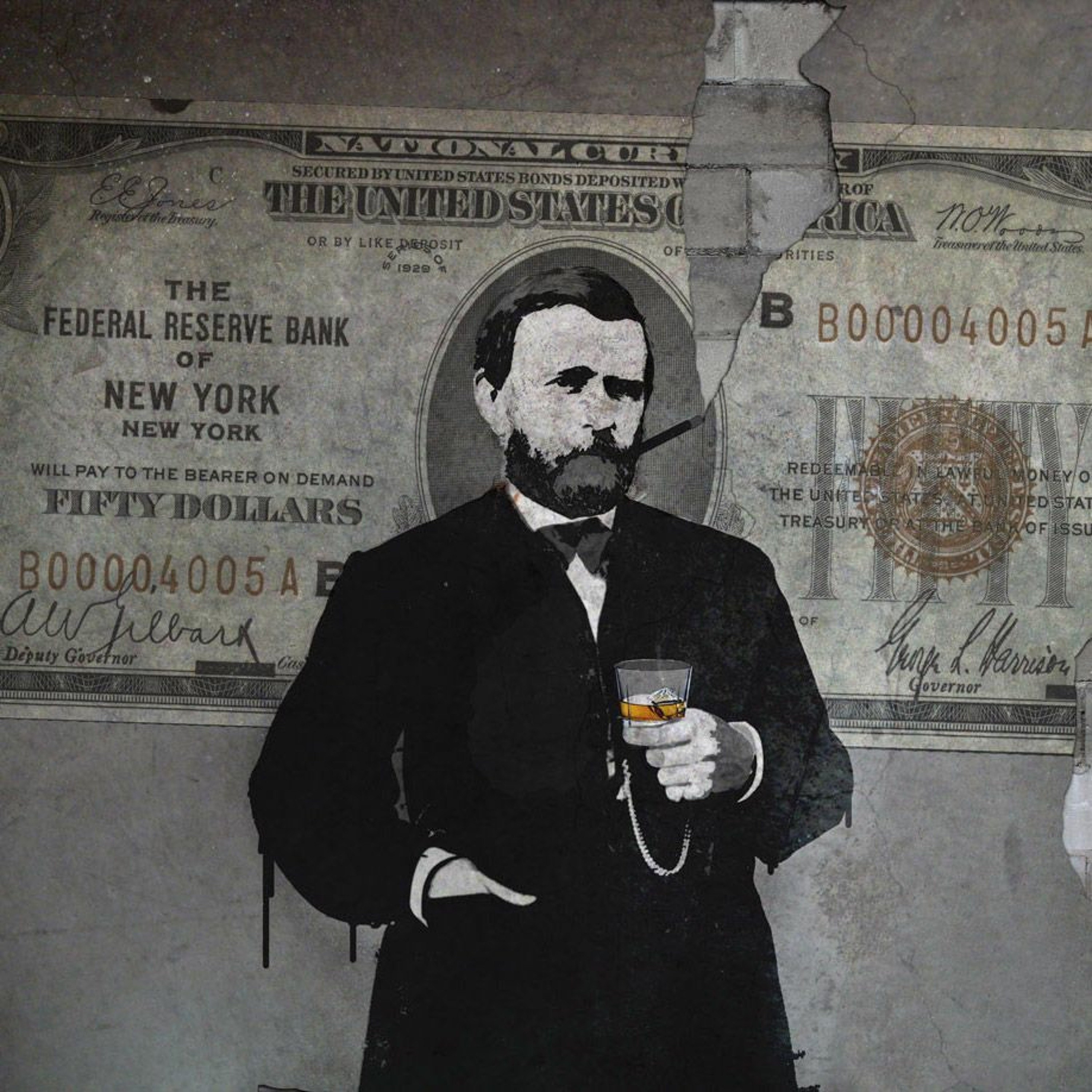
The Reconstruction of Ulysses S. Grant [not-audio_url] [/not-audio_url]

Duration: 25:07
As a civilian, the beloved American Civil War general and two-term president failed at every attempt to make money. Except for one.
Foreign Exchanges [not-audio_url] [/not-audio_url]

Duration: 30:26
He made a name for himself organizing the world’s most important economic conference, only to have it tarnished by an outrageous accusation.
Starving For Answers [not-audio_url] [/not-audio_url]

Duration: 14:44
During WWII, 36 American conscientious objectors volunteered as subjects in a brutal science experiment to measure the body's response to starvation.
Ten Minutes In Lituya Bay [not-audio_url] [/not-audio_url]

Duration: 24:52
A remote bay in Alaska is home to an odd and occasionally catastrophic geology. In 1958, a handful of people experienced this firsthand.
The King's Letters [not-audio_url] [/not-audio_url]

Duration: 19:40
The 15th-century scholar who upset the Korean aristocracy by creating a native script for the Korean language, and thus wean it off Chinese characters.