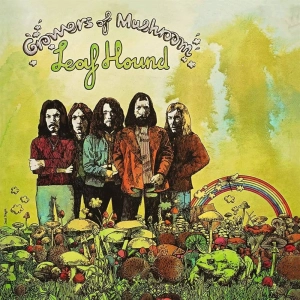
What if Led Zeppelin had a long-lost twin that nobody remembers? In this episode of Dig Me Out, we unearth Leafhound’s 1971 proto-metal masterpiece Growers of Mushroom—an album that had all the ingredients for greatness but somehow slipped through the cracks of rock history . With a Robert Plant-caliber vocalist, Jimmy Page-inspired guitar tones, and riffs heavy enough to rival Black Sabbath, Leafhound created one of the most compelling “what if?” stories in early 70s heavy rock .
Born from the remains of Black Cat Bones—the band that spawned Free’s Paul Kossoff and Simon Kirk, plus Foghat’s Rod Price—Leafhound emerged with vocalist Peter French and a sound that captured the raw, blues-drenched fury of the era . Released on Decca Records in 1971, Growers of Mushroom represents that crucial moment when heavy rock was still finding itself, experimenting with psychedelic tangents, folk influences, and proto-metal darkness before the genre lines were drawn .
In this deep dive, hosts Jason, Tim, and Chip explore why this album works so well sonically while examining its fatal flaw: great performances without truly memorable songs . We discuss the album’s massive guitar tones, the Plant-inspired vocal howls, and those adventurous moments where Leafhound breaks from the Zeppelin/Sabbath template to explore jazzy, psychedelic, and Southern rock territories . From the buzzing intensity of “Freelance Fiend” to the eight-minute odyssey of “Work My Body,” this is an album that demands attention—even if it never quite delivers the knockout punch .
If you love Led Zeppelin, Black Sabbath, Mountain, Cactus, Atomic Rooster, or Deep Purple, this episode is essential listening. We’re diving deep into the Heavy 70s—that glorious era of custom vans, tinted sunglasses, and amps cranked to the point of speaker destruction .
Episode Highlights
0:00 – Intro & “Freelance Fiend”
Overview of Leafhound’s place in 1971 heavy rock, the band’s origins in Black Cat Bones, and why this album won our December 70s Rock poll with 46% of the vote .
2:15 – The Album Poll Results
Breaking down the four albums in contention: Armageddon (1975), Leafhound’s Growers of Mushroom (1971), Bloodrock (1970), and Toad (1971), plus community reactions from our Metal Union members .
6:45 – Band History: From Black Cat Bones to Leafhound
How Paul Kossoff and Simon Kirk left to form Free, Rod Price departed for Foghat, and vocalist Peter French assembled a new lineup that would record two albums before dissolving .
13:30 – What Works: The Led Zeppelin DNA
Analyzing the lead singer/lead guitarist dynamic, the Plant-inspired vocal howls, the Leslie West guitar tones, and that stripped-down 70s performance-based intensity .
15:25 – “Freelance Fiend”
The album’s killer opening track with its razor-sharp buzz, cowbell, and Mountain-style riffing .
18:05 – “Drown My Life in Fear”
The album’s standout moment—a bass-driven, Sabbath-influenced doom track with slide guitar textures and Robert Plant-caliber vocals .
22:47 – The Zeppelin Comparisons
Why this album sounds like the Creed to Led Zeppelin’s Pearl Jam—familiar DNA, different execution .
24:30 – “Work My Body”
An eight-minute journey featuring jazzy blues guitars, multiple structural shifts, and an unexpected organ-driven finale that recalls Deep Purple .
29:00 – “With A Minute to Go”
Breaking down the song’s direct lift of the cadence from Led Zeppelin’s “What Is and What Should Never Be” .
35:59 – What Doesn’t Work: The Missing Hooks
Honest conversation about why great guitar tones and performances aren’t enough without memorable choruses and compelling songwriting .
40:15 – “Stray” & The Sabbath Influence
How Leafhound shifts between Zeppelin-inspired blues rock and Black Sabbath’s minor-key doom throughout the album .
44:00 – Recording & Production
Discussing those massive, fuzzy 70s guitar tones—how they achieved speaker distortion, fuzz pedals, and that buzzing quality unique to early heavy rock .
53:22 – The Aftermath: What Happened Next
Peter French’s move to Atomic Rooster and Cactus, the band’s 2004 reunion, and the 2022 expanded reissue of Growers of Mushroom .
58:10 – “Growers of Mushroom”
The album’s trippy, psychedelic title track that evokes the Amboy Dukes and late-60s acid rock .
1:02:00 – Final Verdict & Album Rankings
Where Growers of Mushroom stands among other 70s heavy rock discoveries, and whether this album deserves cult classic status or remains a well-executed footnote .
Join the Conversation
Love discovering forgotten heavy rock? Subscribe to Dig Me Out and join the Metal Union at digmeoutpodcast.com to vote on future albums, access bonus episodes, and connect with our private Discord community . Keep the show ad-free and help us uncover more Heavy 70s gems by becoming a Patreon member at dmounion.com .
Got a 70s deep cut we need to cover? Drop us a suggestion—we’re always hunting for the next Leafhound .
This is a public episode. If you'd like to discuss this with other subscribers or get access to bonus episodes, visit
www.digmeoutpodcast.com/subscribe