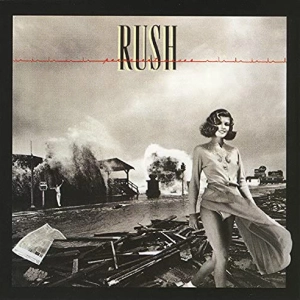
Picture this: It’s a crisp January morning in 1980. The new decade is fresh, brimming with possibility, and you’re flipping through the racks at your favorite record store. Disco is slipping out of fashion, punk’s rebellious roar still echoes, and the New Wave is gathering momentum. Amidst all this change, Rush—a band known for their sprawling progressive rock epics—is about to redefine themselves.
The moment you unwrap Permanent Waves and place the needle down, something shifts. The opening notes of “The Spirit of Radio”cut through the speakers like a beacon for the new era. You’re swept into a world where Rush balances complexity with accessibility, progressive rock with mainstream ambition. The album was a turning point for a band about to define their legacy.
A Balancing Act Between Complexity and Accessibility
Permanent Waves, recorded at the now-legendary Le Studio in Morin Heights, Quebec, marked the beginning of Rush’s iconic 80s run. With Terry Brown returning as producer, the album showcased a deliberate pivot. Gone were the sprawling epics of Hemispheres (1978). In their place were tightly constructed, thematically sharp tracks that leaned into shorter runtimes while still showcasing the band’s virtuosity .
This album reached number four on the U.S. Billboard 200 and number three in Canada, earning gold and platinum certifications. Not only was it a commercial success, but it also marked the first time the band broke even on a tour, thanks to nine months on the road supporting the record .
A Showcase of Rush’s Evolution
The album opens with “The Spirit of Radio”, an anthem to music’s transformative power. Lifeson’s shimmering guitar riff, Peart’s intricate drumming, and Lee’s powerful vocals meld into a track that bridges progressive rock and radio-friendly melodies. Its unexpected reggae breakdown was a bold experiment, cementing the song’s status as a classic.
“Free Will”, the second single, explores existentialism with blistering technical interplay between guitar and bass. Meanwhile, deeper cuts like “Jacob’s Ladder” unfold like a storm—a dark, atmospheric journey that builds into an otherworldly crescendo.
A surprising inclusion as a single was “Entre Nous”, released in April 1980. Despite its relatively low profile in Rush’s live sets, it encapsulates the album’s lyrical intimacy, proving that even Rush’s quieter moments pack a punch .
Is Rush Metal?
The Permanent Waves episode of Dig Me Out reignited the perennial debate: Is Rush a metal band? While their technical prowess and influence on the genre are undisputed, Rush has always been more at home in progressive rock. However, their heavier tracks, like those from 2112 and even moments on Permanent Waves, ensured they earned respect among metal fans and artists alike .
Why Permanent Waves Still Resonates
With its release, Permanent Waves wasn’t just another Rush album; it was a declaration of intent. The band embraced the future while honoring their past, delivering an album that remains a cornerstone of progressive rock. Decades later, it’s still finding new fans and delighting old ones. As a Dig Me Out listener said: “This album has grown with me. I’ve owned it on every format, and it never gets old” .
Dust off your vinyl or pull it up on your favorite streaming platform—Rush’s Permanent Waves deserves a fresh listen. If this record still gives you chills or you’re discovering it for the first time, let us know.
Songs in this Episode
* Intro - The Spirit of the Radio
* 27:20 - Jacob's Ladder
* 35:33 - Natural Science
* 41:17 - Freewill
* Outro - The Spirit of the Radio
Make Your Voice Heard!
Rush fans, prog rock enthusiasts, and curious listeners, this one’s for you! Your input drives our journey into the music that defined eras. From underrated classics to monumental masterpieces like Permanent Waves, we rely on you to shape the episodes we bring to life.
By joining the DMO Union on Patreon, you help keep us independent and ad-free while gaining the power to vote on and choose the albums we dive into each year. Together, we’ll continue celebrating the art, the stories, and the magic of progressive rock and beyond—one listener-powered episode at a time.
Dig Me Out is a reader-supported publication. To receive new posts and support my work, consider becoming a free or paid subscriber.
This is a public episode. If you'd like to discuss this with other subscribers or get access to bonus episodes, visit
www.digmeoutpodcast.com/subscribe