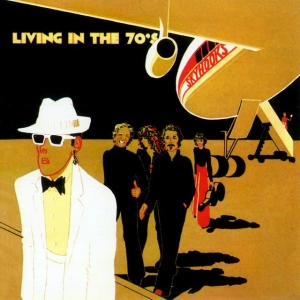
Skyhooks – Living in the 70s (1974) | 70s Rock Deep Dive
What if the most important rock album of 1974 never made it out of its home country? In Australia, Skyhooks’ debut Living in the 70s was a cultural earthquake — 16 weeks at #1, the highest-selling Australian album of its time, six songs banned from commercial radio, and a bill where AC/DC and Split Ends opened for them. Outside Australia? Complete silence for fifty years.
Jason, Tim, and Chip dig into this theatrical, bass-driven, gloriously weird debut from Melbourne’s most provocative band — a record that sounds like Alice Cooper, Rocky Horror, Black Oak Arkansas, and a cosmic cowboy walked into a pub and decided to start a glam rock band. It’s not what you’d expect from 1974 Australian rock. That’s exactly the point.
If you love Alice Cooper, Slade, Alex Harvey, early Cheap Trick, or any band that traded guitar heroics for theatrical swagger, this episode is for you.
• 0:00 — Intro — This week on Dig Me Out: 70s and 80s rock. Four albums entered the listener poll. One won both — with a tiebreaker. Welcome to Australia.
• 1:07 — How the Album Won — The poll breakdown: Detective (1977), Hurriganes’ Roadrunner (1974), Thundermug’s Thundermug Strikes (1972), and Skyhooks’ Living in the 70s (1974). It tied with Detective on the website. It tied with Thundermug on Patreon. Skyhooks won both. Community member Eric Peterson suggested it — then voted against it. Classic.
• 3:10 — Australian Correspondent Gavin Weighs In — The band’s backstory, straight from someone who actually grew up with this record. Singer Shirley Strachan’s wild post-band career (children’s television, home renovation hosting, a fatal helicopter crash in 2001). Guitarist Red Simons’ 28 years gonging amateurs off stage on Hey Hey It’s Saturday. These were not conventional rock band trajectories.
• 6:43 — Album History and Chart Context — October 1974, Mushroom Records, produced by Ross Wilson. 16 weeks at #1. Highest-selling Australian album of its time. “Horror Movie” hit #1 on the National Singles Chart in 1975. Listed #9 in 100 Best Australian Albums. Over 475,000 copies and counting. The numbers behind the record that North America never heard.
• 11:02 — Community Comments from the Poll — Listener reactions from the Patreon and Discord, including a debate about whether Hurricanes would have been the first Finnish band covered on the show (it wouldn’t have been), and the Led Zeppelin/John Bonham drumming-on-a-secret-album conspiracy theory that surrounds the Detective record.
• 13:28 — What Works: Jay’s Take — The record is nothing like what you’d expect. Bass-driven, not guitar-forward. Theatrical song-as-set-piece writing. A vocalist who sounds — on first listen — like a woman, then like Alice Cooper, then like something you genuinely can’t categorize. This album sounds like 70s AM radio in all the ways classic rock nostalgia forgets.
• 20:26 — What Works: Chip’s Take — Full-face makeup, banned lyrics, and a sound that was aggressively transgressive in conservative 1974 Australia — even if it doesn’t register that way in 2026. The theatrical context matters. Watching live performances from the era makes the whole thing click. Think Alex Harvey, early Alice Cooper, pre-MTV showmanship.
• 24:00 — “Living in the 70s” and “Whatever Happened to the Revolution” — The title track ages itself but holds up as a hook. Track two is a boogie-groove gut punch that sounds like Dangerous Toys discovered Black Oak Arkansas. If you played this song cold before one of the 80s metal episodes, nobody would have guessed it was from 1974 Australia.
• 25:48 — “Carlton (Lygon Street Limbo)” — Hyper-local Melbourne geography meets Caribbean rhythm meets bluesy guitar. Lyrically opaque to anyone who’s never been to Carlton, but sonically one of the record’s most surprising moments.
• 29:54 — The Concert Bill That Rewrites History — At the height of their commercial peak, Skyhooks headlined a show. AC/DC and Split Ends (later Crowded House) opened for them. Three completely different bands, three completely different futures — and Skyhooks had top billing. The footnote that reframes everything.
• 31:56 — “Horror Movie” — The Great Disguise — It’s not about horror movies. It’s about the 6:30 news. The song that became a dancefloor hit by weaponizing social commentary — murders, fires, and violence packaged and broadcast into Australian living rooms every evening. The twist lands. The repetition getting there is a genuine debate.
• 38:44 — What Doesn’t Work — All three hosts wanted more guitar grit. The record sits in a power-pop middle ground when it could have gone full glam bombast or full distorted rock. Some songs lean too hard on lyrical repetition. “Motorcycle B***h” opens a door it never fully walks through. The hooks are quirky, not cathartic — and for a certain kind of listener, that’s a dealbreaker.
• 42:12 — “Smut” — The Song That Out-Smutted the 80s — Of everything covered in months of hair metal and 80s sleaze rock, this 1974 Australian track made the hosts blush harder than anything else. An ode to the adult cinema experience in graphic detail. This one got banned from radio. Correctly.
• 50:52 — Final Ratings — Jay: EP (“Living in the 70s,” “Whatever Happened to the Revolution,” “Horror Movie,” “You Just Like Me Because I’m Good in Bed,” “Carlton,” “Smut”). Chip: Decent Single (“Living in the 70s,” “Whatever Happened to the Revolution,” “Carlton”). Tim: EP (“Living in the 70s,” “Whatever Happened to the Revolution,” “You Just Like Me Because I’m Good in Bed,” “Carlton,” “Motorcycle B***h”).
• 54:47 — Outro and Credits — Thanks to listener Eric Peterson for the suggestion. A reminder that the Aughts are the hottest category in listener voting right now — so if you’re submitting a 2000s pick, your odds are slim. For everyone else? The 70s and 80s polls are wide open.
🎧 Full episode archive (800+ episodes): digmeoutpodcast.com
⚡ Skip the line — pick your own album: dmounion.com
This is a public episode. If you'd like to discuss this with other subscribers or get access to bonus episodes, visit
www.digmeoutpodcast.com/subscribe