Greetings Friends,
I have been reflecting on the art of living a life of attention and intention. This is an art form I have dedicated much of my life to, and one that continues to bear fruit as I continue to practice it.
What is the art of living?
How is attention an art?
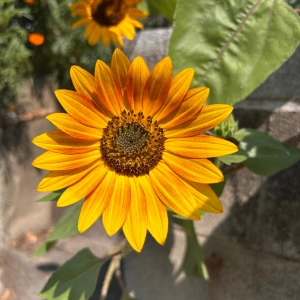
Last night I was walking home with my partner from meditation, it was dusk. The fire flies had just started to flutter about, offering their pulsating flashes of illumination. The air was warm, a gentle breeze. We took the “longer” route, through residential roads where cone flowers, milk weed, bee balm, lilies and zinnia are brimming and blooming in hell strips and front yards. My body felt satisfied. My heart was full. Appreciation stirred in my cells. As the world darkened and the moon beamed brighter.
The art of attention opens us to the magic and mystery of this world we live in, this life that we inhabit. Without thinking about it, we experience a life-world-self that is interconnected, emergent, alive. The art of attention also allows us to actually experience our lives, to let things flow, change. To feel the processes that move through us, to notice when we are hooked into a limiting belief or narrative about ourselves and the world. To notice when we are shutting down a particular feeling or emotion.
the art of feeling our lives
This past Monday during our live online meditation group we read from the Hidden Lamp Case 23: Jiao-an’s Sand in the Eye. In it Jiao-an is told by her teacher Yuanwu, that she must, “erase all views” and then she “will finally be free.”
Jiao-an responds to this in a verse:
the pillar pulls out a bone sideways;
the void shows its claws and fangs;
even if one profoundly understands,
there is still sand in the eye.
In her commentary to the koan, Zenki Mary Mocine Roshi writes:
When I began practice I struggled with what I took to be the instruction to suppress emotions. I heard that I would find equanimity by not having views, or emotions, and it seemed to me that I was being asked to give up my humanity and my personality. There may have been some such flavor to the teachings I heard, but I think I exaggerated it out of my own fear of the teaching of “no-self” and my own need to do it “right.”
I have found that my life works when I do not try to suppress emotions or deny that I have views. When I deny them, they just sneak up on me later and cause problems.
She goes on to share a memory about her early years of training at Tassajara where she did practice suppressing an emotion. She reflects:
Had I allowed myself to feel the pain, to really physically experience it, I would have been able to let it go rather quickly. This is the emptiness of emotions. They arise, abide and pass away, but only if we allow them to arise in the first place.
It is human to have emotions. However, it is our practice to not let them have us. In the years since that experience at Tassajara, I have learned to pay attention to my breath and my body. Then I’m suppressing something, my body feels heavy and my belly feels tense. Then I know to stop, breathe, and ask myself, “What is this?”
I really appreciate how Zenki describes the emptiness of emotion, the tendency to suppress and how a certain hearing of the teachings/or experiences of emptiness or equanimity may lead us down the road to suppression.
Part of the art of attention is the art of recognizing and then familiarizing ourselves with the empty yet apparent nature of experience.
Sensations, thoughts, feelings, emotions, physical discomforts arise through the various causes and conditions that make-up our human life. We, as practitioners, as artists of the Way—can notice the composition of these sensations, feelings, thoughts and emotions.
This is the courageous act of feeling our embodied experience, allowing emotions to arise and experiencing our lives. While this may seem simple in written word form—truly it is an embodied art. For we, as humans have developed habits for managing our experience. We have learned that certain feeling states are “bad” or “wrong” or “dangerous”. And have developed skill in ignoring, suppressing or pushing certain emotions away.
On the other side there are feeling states, emotions, sensations, thoughts that we have deep habitual tendencies towards entertaining, getting identified with, and believing.
The practice of emptiness is the art of experiencing life as it is. To allow what is happening to happen. To trust that we can feel our lives.
I always love the analogy of experience being like weather, in that it is always moving through. Some feelings are stormy, some are bright, some emotions feel like layers of gray clouds, others like a light mist. Just like the sky allows the weather to pass through it—the sky of awareness allows the weather of emotion and feeling to move through us.
The sky’s spaciousness is unobstructed by the weather, the clarity and openness of awareness is unobstructed by the panic, grief, fear, pain that passes through us.
the many faces of suppression
Sometimes on the road to realizing emptiness, we practice suppression. This could be because we want to do it right or good. Because we think we shouldn’t be feeling certain things or because certain feelings are uncomfortable. Also, because we are trying not to indulge or get hooked by the story and we haven’t quite learned or don’t quite trust that we can feel it and it will liberate itself. Or maybe we have experience of parts of us doing or saying really painful unskillful things, and at present the tool we have for working with them is to suppress or push them down.
The art of attention is the art of noticing. As Zenki says in her commentary, we can begin to notice the tendency to suppress, the beliefs that surround this tendency and from there we can start to get curious about actually feeling the feeling itself.
Practice is a practice of self-study, of awareness. There is not a set method for feeling our lives. Sometimes the path to feeling is through self-compassion and loving kindness, sometimes through including them in the breath, sometimes opening to the space around them, sometimes as we courageously open to our direct experience the way opens up—something unexpected arises to meet us.
My experience is there are feelings I am not used to feeling and when they arise my mind can get really active about trying to figure out, fix or solve them.
Sadness came up a few weeks ago when a client’s story touched something personal that was similar enough to something happening in the collective. After I finished my sessions for the evening, I watched my mind bounce into anger, blame, and then search and search for a story, a reason I was feeling the way I was feeling. But as I let myself feel the feelings themselves—tears came, then compassion and peace.
Another more common way I experience this is I can get frustrated with certain people, and stay in the story of what they did or didn’t do. When I notice that I am doing this and let myself feel the feeling underneath I often discover that the feeling is really different then the story I am telling myself. I also find that through feeling the feelings, often clarity arises about how to respond in the relationship.
Do you have experiences of turning towards a feeling or emotion that you did’t want to feel? What happened?
What does suppression feel like, sound like or look like for you?
What practices support you in feeling difficult emotions or sensations?
Weekly Online Meditation Event
Monday Night Dharma — 6P PT / 9P ET Join weekly for drop-in meditation and dharma talk. We are currently exploring the Hidden Lamp: Teaching from the Buddhist Women Ancestors
Feel free to join anytime. Event lasts about 1.5 hours. ZOOM LINK
In-Person in Oregon
Grasses, Trees and the Great Earth Sesshin— August 10 - 16 at Great Vow Zen Monastery
In-Person in Columbus, Ohio through Mud Lotus Sangha
Weekly Meditations on Tuesday, Wednesday and Thursday
Retreats, Meditation instruction and other events can be found on our website.
I’m Amy Kisei. I am a Zen Buddhist Teacher, Spiritual Counselor, Astrologer and Artist. I offer 1:1 Spiritual Counseling sessions using IFS and Hakomi (somatic mindfulness). I also offer astrology readings. Check out my website to learn more. I currently live in Columbus, OH and am a supporting teacher for the Mud Lotus Sangha.
This is a public episode. If you'd like to discuss this with other subscribers or get access to bonus episodes, visit
amykisei.substack.com/subscribe