Consumption as ethics: Talking with students about food

Consumption as ethics: Talking with students about food

Author: Ethical Schools September 3, 2020 Duration: 27:15

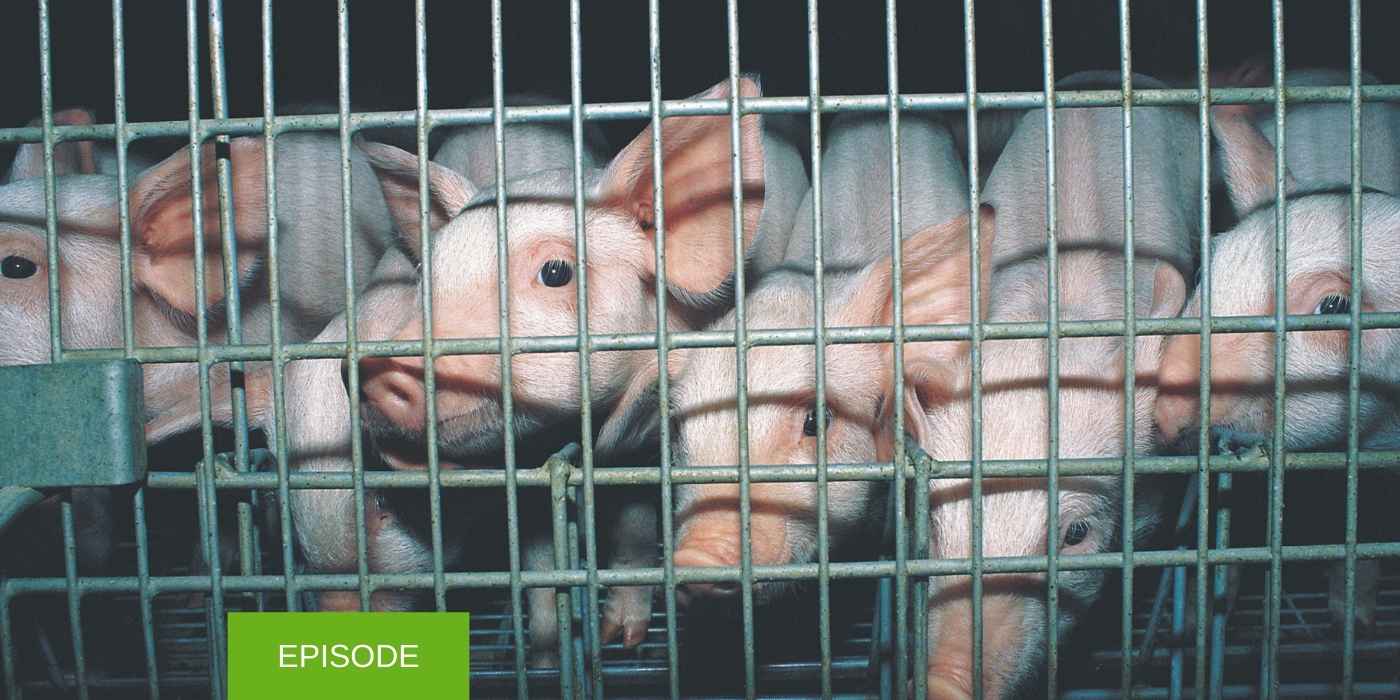
We welcome back Monica Chen of Factory Farming Awareness Coalition. She describes the animal-agricultural complex that exploits workers in meatpacking plants and animals in factory farms and devastates communities and the environment. Monica introduces FFAC’s culturally-competent virtual lessons and presentations for students from middle school through university, customized for all subject areas.  Students who want to become social justice activists, with food as the hub that connects worker rights, sustainability, and environmental racism can apply to FFAC’s intern program.

Overview

00:00-00:52 Intro

00:52-03:29 Definition and origin of factory farms (FF)

03:29-05:27 Impact of FF on climate change

05:27-06:07 Methane from cows and climate change

06:07-08:17 Depletion and pollution of natural resources

08:17-09:31 Water use and drought (particularly in California)

09:31-12:33 Chickens

12:33-13:52 Pigs

13:52-16:20 Meatpacking plants

16:20-19:16 Factory Farming Awareness Coalition (FFAC) programming for classrooms and distance learning

19:16-22:12 Tailoring content area presentations

22:12-24:05 FFAC’s intern program

24:05-25:52 Relationship of FF to spread of infectious diseases

25:52-27:15 Outro

Transcript

Click here to see the full transcription of this episode. 

References

...

Conversations about education often focus on test scores and curriculum, but there’s a deeper layer that truly shapes a student’s experience. Ethical Schools digs into that layer, exploring what it means to build a learning community grounded in integrity and care. Each week, hosts Amy and Jon sit down with educators and innovators who are actively reimagining schools. You’ll hear specific, grounded discussions about the practical work of creating environments where every student feels safe and respected. The dialogue frequently addresses how to support young people dealing with trauma, moving beyond theory to share actionable strategies that teachers are using right now. More than just problem-solving, this podcast highlights how to empower students themselves to become advocates and changemakers in their own communities. It’s a series that connects philosophy with daily practice, looking at the social and cultural structures within schools through a lens of ethics. For anyone invested in the future of education-whether you’re a teacher, administrator, or simply a concerned community member-this podcast offers a thoughtful and necessary perspective on the foundational values that make education meaningful.
Author: Language: English Episodes: 240

Ethical Schools
Podcast Episodes
Distortions and fabrications: The state of climate education [not-audio_url] [/not-audio_url]

Duration: 29:45
We speak with Katie Worth, investigative journalist and author of Miseducation: How Climate Change is Taught in America. Ms. Worth explores what children across the country are taught, or not taught, about climate change…
Doing democracy: School participatory budgeting [not-audio_url] [/not-audio_url]

Duration: 47:29
We speak with Dr. Daniel Schugurensky and Tara Bartlett of Arizona State University and Madison Rock of the Center for the Future of Arizona about school participatory budgeting in Arizona and worldwide. Students, and so…
Gender Inclusivity: Where Science and Ethics Intersect (Encore) [not-audio_url] [/not-audio_url]

Duration: 32:10
We speak with high school science teachers and trans men, Sam Long and Lewis Maday-Travis, who have developed resources and trainings to help biology teachers develop gender-inclusive curricula. Science tells us that sex…
Changing school culture: The Concerns-Based Adoption Model (CBAM) [not-audio_url] [/not-audio_url]

Duration: 32:00
We continue our conversation with Dr. David Osher of the American Institutes for Research, delving deeper into the CBAM approach to school culture change. Dr Osher describes a study he and colleagues conducted, following…
The right to thrive: Expanding our definition of equity [not-audio_url] [/not-audio_url]

Duration: 44:31
We speak with Dr. David Osher of the American Institutes for Research. Dr. Osher explains his view of robust equity, that all people deserve to thrive, and that thriving occurs holistically over the course of a lifetime,…
The People’s Education: Freire, dialogue, and democracy [not-audio_url] [/not-audio_url]

Duration: 43:40
We continue our conversation with Dr. Carlos Alberto Torres, Distinguished Professor at UCLA and Founding Director of the Paulo Freire Institute. Dr. Torres speaks about Freire’s contention that communities should define…
Global citizenship education: Building on the legacy of Paulo Freire [not-audio_url] [/not-audio_url]

Duration: 33:00
We speak with Carlos Alberto Torres, Distinguished Professor at UCLA. Dr. Torres worked closely with Paulo Freire and now directs the UCLA Paulo Freire Institute. He argues that we need to create a model of ethics educat…
Math literacy: Every student’s right (Part 2) [not-audio_url] [/not-audio_url]

Duration: 28:44
We continue our conversation with Dr. Terri Bucci of the Mathematics Literacy Initiative at OSU’s Mansfield campus. Dr. Bucci observes that we rarely ask children how they learn best. MLI’s implementation of the Algebra…