Cultural responsiveness: is music optional?

Cultural responsiveness: is music optional?

Author: Ethical Schools November 3, 2022 Duration: 39:57

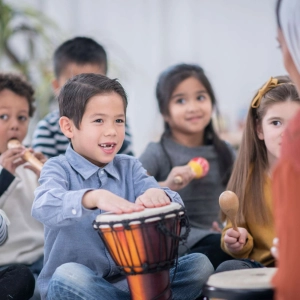
We speak with Dr. Anne Smith, longtime music teacher in Northern Virginia, about accommodating cultural differences. Dr. Smith created an alternate curriculum for students whose traditions don’t allow secular music-making. We discuss the extent to which parents should be able to influence what their students learn. We also talk about why music and art are treated as lesser (“special”) subjects.

Overview

00:00-00:35 Intros

00:35-07:57 A parent asks to opt her daughter out of music

07:57-09:48 Finding a balance in a class with culturally and linguistically diverse children and families

09:48-12:02 Importance of conversation between professionals and families

12:02-14:15 Are parental objections to music different from objections to literature and science?

14:15-16:39 Teachers need to articulate why they are teaching what they are teaching; importance of teaching music

16:39-19:03 Music should be part of everyone’s life—a loss if parents opt out

19:03-20:30 Importance of music foundation before children go on specific tracks

20:30-24:30 Teachers’ responses to Va. governor’s  push for parents to object to aspects of education he doesn’t like

24:30-27:01 “Old Black Joe”

27:01-29:15 Using the arts to educate and promote equity

29:15-32:22 Why schools treat art and music as dispensable

32:22-36:16 Treating the arts seriously as subjects

36:16- Outro

T...


Conversations about education often focus on test scores and curriculum, but there’s a deeper layer that truly shapes a student’s experience. Ethical Schools digs into that layer, exploring what it means to build a learning community grounded in integrity and care. Each week, hosts Amy and Jon sit down with educators and innovators who are actively reimagining schools. You’ll hear specific, grounded discussions about the practical work of creating environments where every student feels safe and respected. The dialogue frequently addresses how to support young people dealing with trauma, moving beyond theory to share actionable strategies that teachers are using right now. More than just problem-solving, this podcast highlights how to empower students themselves to become advocates and changemakers in their own communities. It’s a series that connects philosophy with daily practice, looking at the social and cultural structures within schools through a lens of ethics. For anyone invested in the future of education-whether you’re a teacher, administrator, or simply a concerned community member-this podcast offers a thoughtful and necessary perspective on the foundational values that make education meaningful.
Author: Language: English Episodes: 240

Ethical Schools
Podcast Episodes
Technology and ethics: AI and the classroom [not-audio_url] [/not-audio_url]

Duration: 1:03:26
Robbie Torney, director of AI Programs at Common Sense Media, analyzes teachers' use of AI. We focus on AI teaching assistants, their uses and abuses, and how teachers' judgment and skills remain central. We discuss the…
Climate justice: A transformational education and engagement project [not-audio_url] [/not-audio_url]

Duration: 45:46
We speak with Tom Roderick, founding executive director of the Morningside Center for Teaching Social Responsibility; Jan Zuckerman, Co-founder of Sunnyside Environmental School in Portland, Oregon; and Graham Klag, an a…
Teachers as Interpreters: Listening to Every Student [not-audio_url] [/not-audio_url]

Duration: 40:31
We speak with Dr. Cynthia Ballenger about her recent book, “Teaching is Inquiry: Observation and Reflection as the Heart of Practice,” in which she explores the role of ethnography in inquiry-based teaching and learning,…
Hip Hop in the classroom: Reaching students where they are [not-audio_url] [/not-audio_url]

Duration: 38:26
We speak with Dr. Dawn Hicks Tafari, Professor of Education and Coordinator of Elementary Education at Winston-Salem State University in North Carolina. Dawn is author of "The Journey of Kamau Miller: Hip Hop Composite C…
Challenging credentialism: An alternative vision of education (Encore) [not-audio_url] [/not-audio_url]

Duration: 36:43
We speak with Arlene Goldbard, writer, visual artist, speaker, social activist and consultant, whose most recent book is “In the Camp of Angels of Freedom: What does it mean to be educated?” An autodidact from a working-…
Mobile Creativity Labs: Scaling STEAM Across India [not-audio_url] [/not-audio_url]

Duration: 40:31
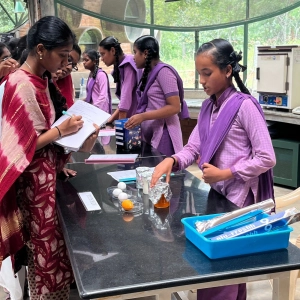
We speak with Dr. David Penberg and Adhirath Sethi about Agastya, a unique educational ecosystem serving students and teachers in 22 Indian states. Agastya has a hub-and-spokes design, with an elaborate 172-acre campus o…
Resilience: Preparing Children to Weather Traumatic Events [not-audio_url] [/not-audio_url]

Duration: 32:41
We speak with Dr. Tovah P. Klein, professor of psychology at Barnard College and the director of the Center for Toddler Development, about her book, “Raising Resilience: How to Help Our Children Thrive in Times of Uncert…
Marygrove School: Place- and project-based teaching and learning [not-audio_url] [/not-audio_url]

Duration: 58:06
We speak with Dr. Elizabeth Birr Moje, dean and professor at the Marsal Family School of Education, University of Michigan. Dr. Moje discusses Detroit’s School at Marygrove, a university-school partnership serving childr…
Honesty: What it means and how to teach it [not-audio_url] [/not-audio_url]

Duration: 37:21
We talk with Sarah Stitzlein, author of "Teaching honesty in a populist era: Emphasizing truth in the education of citizens." Dr. Stitzlein, a professor of education and affiliate professor of philosophy at the Universit…
Creating democratic learning environments: Educators in conversation [not-audio_url] [/not-audio_url]

Duration: 46:48
We speak with Dr. Linda F. Nathan and Jonathan Mendonca, two co-editors of the recently published book, "Building Democratic Schools and Learning Environments: A Global Perspective," an anthology of accounts of creating…