Education denied: What should reparations look like?

Education denied: What should reparations look like?

Author: Ethical Schools October 7, 2020 Duration: 48:00

Daarel Burnette II of Education Week delves into the history of Black communities demanding education and school boards conspiring to deprive them of opportunities and resources. We zoom in on Virginia’s reparations to Black citizens, now in their 60’s, who were excluded from schools when Prince Edward County shut its schools to avoid integration. Mr. Burnette, a “military brat,” theorizes about why children of Black military families do so much better academically than their civilian peers.

Overview

00:00-00:50 Intros

00:50-02:06 Prince Edward County and its significance

02:06-03:31 Virginia’s reparations fund

03:31-07:09 Reactions of reparations recipients

07:09-09:44 Lessons from other state reparations programs

09:44-13:28 Essential elements of a reparations program

13:28-17:24 Overtaxing and underfunding

17:24-19:28 Black Lives Matter movement and educational equity

19:28-22:00 Teachers’ beliefs about genetics and achievement

22:00-24:08 Coleman report and assumptions about Black families

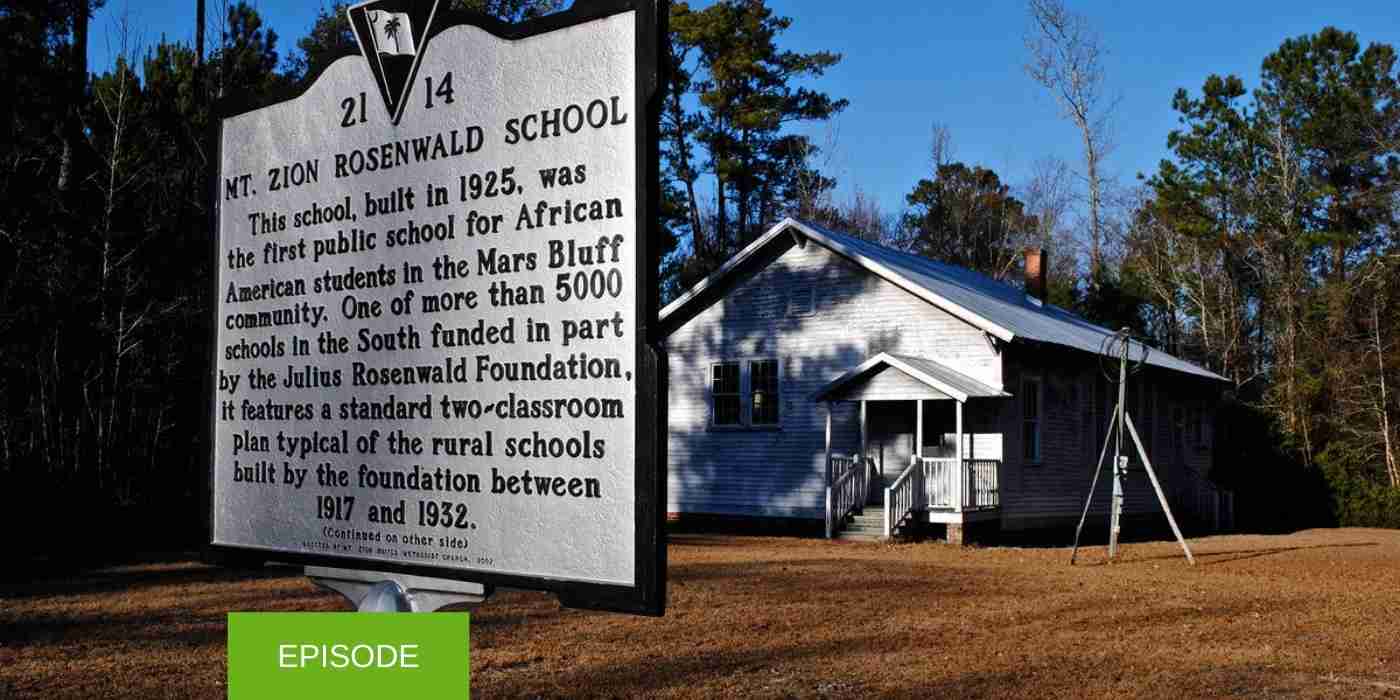
24:08-26:05 History of Black demands for public education; Freedmen’s schools; Rosenwald schools; attacks on Black schools by KKK and White Citizens Councils

26:05-29:00 Students from Black military families outperform civilian students; achievement gap almost eliminated in Department of Defense schools

29:00-35:25 Military base interventions to improve schools serving military families

35:25-38:48 Integration blinds us to what happens afterward; not the end of the story 

38:48-44:30 Freedmen’s schools and Rosenwald schools

44:30-46:31 Why knowledge of history is so essential

46:31-48:00 Outro

Transcript

Click here to see the full transcription of this episode. 


Conversations about education often focus on test scores and curriculum, but there’s a deeper layer that truly shapes a student’s experience. Ethical Schools digs into that layer, exploring what it means to build a learning community grounded in integrity and care. Each week, hosts Amy and Jon sit down with educators and innovators who are actively reimagining schools. You’ll hear specific, grounded discussions about the practical work of creating environments where every student feels safe and respected. The dialogue frequently addresses how to support young people dealing with trauma, moving beyond theory to share actionable strategies that teachers are using right now. More than just problem-solving, this podcast highlights how to empower students themselves to become advocates and changemakers in their own communities. It’s a series that connects philosophy with daily practice, looking at the social and cultural structures within schools through a lens of ethics. For anyone invested in the future of education-whether you’re a teacher, administrator, or simply a concerned community member-this podcast offers a thoughtful and necessary perspective on the foundational values that make education meaningful.
Author: Language: English Episodes: 240

Ethical Schools
Podcast Episodes
The purpose of education: Educating for a solutionary future? [not-audio_url] [/not-audio_url]

Duration: 34:34
We welcome back Zoe Weil, president and co-founder of the Institute for Humane Education, to speak about her recent Psychology Today column on the purpose of education. Although the official goal of many school systems i…
Technology: What’s hype and what helps  [not-audio_url] [/not-audio_url]

Duration: 22:00
We speak with Dr. Justin Reich, director of the MIT Teaching Systems Lab, and host of the TeachLab podcast, about education technology. Hailed by some as the great equalizer, the beneficiaries of ed tech tend to be white…
Going public: Education scholars as policy advocates [not-audio_url] [/not-audio_url]

Duration: 47:45
We speak with Dr. Kevin Kumashiro, a founder of Education Deans for Justice and Equity and organizer of the International Conferences on Education and Justice. Dr. Kumashiro describes how education scholars across the co…
Looping: It’s all about the relationships [not-audio_url] [/not-audio_url]

Duration: 17:30
We speak with Dr. Leigh Wedenoja of the Rockefeller Institute of Government about the benefits to students of having a teacher for more than one year. Test scores improve, behavior problems subside, absenteeism decreases…
Descriptive inquiry: Teachers talking about hard subjects [not-audio_url] [/not-audio_url]

Duration: 40:45
We speak with Dr. Cecelia Traugh and Dr. Cara Furman, co-authors of “Descriptive Inquiry in Teacher Practice: Cultivating Practical Wisdom to Create Democratic Schools.” Descriptive inquiry is a structured, collaborative…
Holistic education: Joy, wellness, and rigor (Encore) [not-audio_url] [/not-audio_url]

Duration: 50:11
We speak with Dr. Linda Nathan of the Center for Artistry and Scholarship and the Perrone-Sizer Institute for Creative Leadership about her experience in creating progressive schools. Dr. Nathan says all teachers, no mat…
Evolving demographics: Rural schools in transition [not-audio_url] [/not-audio_url]

Duration: 29:29
We speak with Dr. David Fine, school superintendent in Dover, a mostly white small town in rural Dutchess County, NY, where longtime residents have been joined by other families to create a more diverse and integrated de…
Solving chronic absence: A whole-school approach [not-audio_url] [/not-audio_url]

Duration: 45:00
We speak with Hedy N. Chang of Attendance Works, who describes the long-term impact on student success of chronic absence in all grades. Framing chronic absence as a truancy issue can increase alienation from school. Dis…