Technology and ethics: AI and the classroom

Technology and ethics: AI and the classroom

Author: Ethical Schools September 29, 2025 Duration: 1:03:26

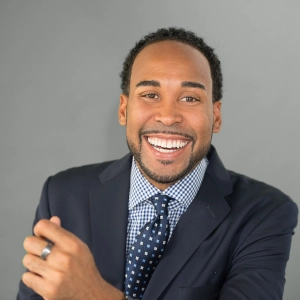
Robbie Torney, director of AI Programs at Common Sense Media, analyzes teachers' use of AI. We focus on AI teaching assistants, their uses and abuses, and how teachers' judgment and skills remain central. We discuss the need for school- and district-wide education and policies on using AI in teaching and learning.


Overview

Intros

Common Sense media and its AI work

Evaluation principles for AI risk

What teachers use AI for

What happens with users’ data

AI teacher assistants, risks, and advantages

AI and cultural sensitivity

AI as assistive or adaptive technology

Recognition of AI as enhancements not replacements?

Special risks of AI teacher assistants for IEPs and behavior plans

How teachers can protect against “invisible influence” risks

AI and complex historical events such as California missions or slavery

“Tools,” “functions,” and prompts

Four specific steps teachers should take when using teacher assistants

Purchasing AI: Consultation and training

Role of school boards, administrators, and state departments of education

Legislation to protect students

Importance of discussion of values and ethical questions

Outro

Transcript

Click here to see the full transcription of this conversation. 

References

Common Sense Media AI Initiatives: click here


Soundtrack by Poddington Bear


Conversations about education often focus on test scores and curriculum, but there’s a deeper layer that truly shapes a student’s experience. Ethical Schools digs into that layer, exploring what it means to build a learning community grounded in integrity and care. Each week, hosts Amy and Jon sit down with educators and innovators who are actively reimagining schools. You’ll hear specific, grounded discussions about the practical work of creating environments where every student feels safe and respected. The dialogue frequently addresses how to support young people dealing with trauma, moving beyond theory to share actionable strategies that teachers are using right now. More than just problem-solving, this podcast highlights how to empower students themselves to become advocates and changemakers in their own communities. It’s a series that connects philosophy with daily practice, looking at the social and cultural structures within schools through a lens of ethics. For anyone invested in the future of education-whether you’re a teacher, administrator, or simply a concerned community member-this podcast offers a thoughtful and necessary perspective on the foundational values that make education meaningful.
Author: Language: English Episodes: 240

Ethical Schools
Podcast Episodes
ChatGTP: Cheating optimizer or force for teaching transformation? [not-audio_url] [/not-audio_url]

Duration: 50:09
We speak with Lev Moscow and Richard Miller, veteran high school teachers, about the panic around the release of chatGPT. The AI tool produces respectable essays that students can pass off as their own. The best teachers…
Climate anxiety: a generational plague [not-audio_url] [/not-audio_url]

Duration: 36:31
We speak with Lian Zeitz, co-founder of the Climate Mental Health Network, which promotes wellness in light of the climate crisis. According to a recent survey, 70% of young people are fearful for their future due to cli…
Climate education: not just for science class (Encore) [not-audio_url] [/not-audio_url]

Duration: 40:44
We speak with Dr. Deb L. Morrison, research scientist at the University of Washington School of Education, about centering climate science throughout the K-12 curriculum. Dr. Morrison talks about ClimeTime, a Washington…
Undocumented students: Keeping secrets, navigating obstacles [not-audio_url] [/not-audio_url]

Duration: 35:02
Dr. Gerardo Mancilla, associate professor in the School of Education at Edgewood College and host of Educators and Immigration podcast, reflects on his experiences as an undocumented student in the ‘90s. We discuss what…
Practicing ethics: Case studies (Encore) [not-audio_url] [/not-audio_url]

Duration: 41:18
We speak with Meira Levinson, Professor of Education at Harvard, about her website justiceinschools.org and books of “hard cases,” designed to help educators and youth workers think about the ethical implications of thei…
Recruiting teachers of color: What works [not-audio_url] [/not-audio_url]

Duration: 29:01
We speak with Elizabeth Steiner, education policy researcher at the RAND Corporation, about diversifying the K-12 teacher workforce. Data consistently shows the benefits, especially to Black and Latiné students, of learn…
Cultural responsiveness: is music optional? [not-audio_url] [/not-audio_url]

Duration: 39:57
We speak with Dr. Anne Smith, longtime music teacher in Northern Virginia, about accommodating cultural differences. Dr. Smith created an alternate curriculum for students whose traditions don’t allow secular music-makin…
The purpose of education: Educating for a solutionary future? [not-audio_url] [/not-audio_url]

Duration: 34:34
We welcome back Zoe Weil, president and co-founder of the Institute for Humane Education, to speak about her recent Psychology Today column on the purpose of education. Although the official goal of many school systems i…