A Fistful of Dollars (1964) and Yojimbo (1961)

A Fistful of Dollars (1964) and Yojimbo (1961)

Author: Film Trace March 24, 2025 Duration: 1:00:59

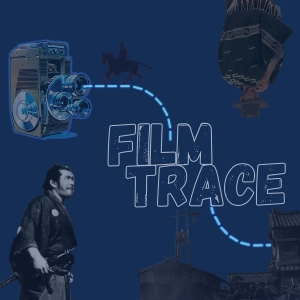
In episode seven of our Visionary Remakes season, we traverse two classic westerns. First, Kurosawa's Yojimbo (1961) and its nearly immediate Italian reaction, Sergio Leone's A Fistful of Dollars (1964).

The western has always been seen as a distinctly American film genre. The "west" in the word is the American West, a grand nearly ungovernable stretch of land filled with plains, deserts, mountains, rivers, and precarious cliffs, both literal and moral. It is a rich canvas that can tell a thousand different stories. Ironically, here we have two non-American voices calling out to the vast wilderness of the West. Perhaps it is a wild and mysterious place that exists in all cultures.

Kurosawa's Yojimbo is not necessarily a textbook Western, but of course, it is deeply indebted to Shane (1953), High Noon (1952), The Gunfighter (1950), and John Ford's Stagecoach (1939) and My Darling Clementine (1946). At the same time, the source material was a hardboiled detective American novel from the 1930s, and we can not discount its place in the lineage of the chanbara films. Yojimbo is an amalgamation and many different styles and genres, but it still feels like a Western at its core.

A Fistful of Dollars is resolutely a Western, but it came from somewhere left of the dial. Sergio Leone did not speak English nor had he ever been to America, let alone the American West. But Leone was able to spark something new and powerful in the waning genre. Westerns had been around since the beginning of film, but by the 1950s and 1960s, the genre had oversaturated culture mostly through dime-store tv shows: Gunsmoke, The Lone Ranger, Bonanza, and Rawhide. Westerns had become trite and tired. Along came Clint Eastwood, Sergio Leone, and Ennio Morricone to reinvent and rekindle that flickering flame.


Ever find yourself falling down an internet rabbit hole after the credits roll, clicking from a film’s trivia page to the director’s biography and then to some obscure piece of production history? That’s the exact feeling Film Trace aims to capture and expand upon in audio form. This isn't just another review show. Instead, each episode is a deep, meticulously researched excavation of a single movie’s entire journey. We start with the initial spark of an idea-the script found in a drawer, the chance meeting that got it greenlit-and follow every twist and turn through casting, chaotic production, and post-production. The story continues to the film’s release, its critical and cultural reception, and what legacy it holds now. Think of it as a comprehensive, narrative-driven biography of a film, built on primary sources and genuine curiosity. The hosts at Film Trace use their collective nerd superpowers to do all that obsessive digging for you, weaving together context, history, and behind-the-scenes details into a compelling story about how art gets made. You’ll come away from each installment of this podcast not just with an opinion on a movie, but with a real understanding of its place in the wider world of TV and film. It’s for anyone who believes the story off-screen is just as fascinating as the one projected on it.
Author: Language: English Episodes: 50

Film Trace
Podcast Episodes
Sugar and Spice (2001) and Vanilla Sky (2002) [not-audio_url] [/not-audio_url]

Duration: 1:13:49
We continue our Camp Cinema season in our third episode covering Sugar and Spice (2001) and Vanilla Sky (2002)Special Guest: Good friend and frequent guest, MollyThe early Aughts was a bizarre time in American culture. T…
The Love Witch (2016) and Black Swan (2010) [not-audio_url] [/not-audio_url]

Duration: 1:03:43
We continue our Camp Cinema season in our second episode covering The Love Witch (2016) and Black Swan (2010)Special Guest: Filmmakers Emily Gallagher and Austin Elston of Fishtown FIlmsAs the dust begins to settle on th…
Madame Web (2024) and Pearl (2022) [not-audio_url] [/not-audio_url]

Duration: 1:03:26
Welcome to the first episode of Season 13 of Film Trace. In this season, we will explore the notion of Camp in Film. Building off of Susan Sontag's foundational 1964 essay, Notes on Camp, we will explore two films each e…
A Discourse on The Oscars 2024 [not-audio_url] [/not-audio_url]

Duration: 1:07:55
We felt like doing an Oscars show, so we did:Topics of discussion1. Intro: 2023's Film Trace movies. They stood the test of time, but were they awarded upon release?2. Nominated film most obviously conceived specifically…
Dr. Strangelove (1964) and Alphaville (1965) [not-audio_url] [/not-audio_url]

Duration: 1:03:55
In the seventh episode of our Future Wars cycle, we discuss the classic Dr Strangelove (1964) alongside a bizarre artifact from the French New Wave, Alphaville (1965)Special Guest: Good friend of the show and onscreen pe…
The Omega Man (1971) and Zardoz (1974) [not-audio_url] [/not-audio_url]

Duration: 59:01
In the sixth episode of our Future Wars cycle, we discuss the last man on earth romp The Omega Man (1971) as well as the bonkers fever dream that is Zardoz (1974).Special Guest: Sean Patrick from the great Everyone’s a C…
The Terminator (1984) and Aliens (1986) [not-audio_url] [/not-audio_url]

Duration: 1:05:56
In the fifth episode of our Future Wars cycle, we tackle two giant films from the action sci fi maestro James Cameron: The Terminator (1984) and Aliens (1986).Special Guest: David Riedel, film critic and co-host of the g…
The Matrix (1999) and Starship Troopers (1997) [not-audio_url] [/not-audio_url]

Duration: 1:07:22
In the fourth episode of our Future Wars cycle, we explore two late 90s classic, The Matrix (1999) and Starship Trooper (1997).Special Guest: Evan Crean, film critic and co-host of the great Spoilerpiece Theatre podcast.…