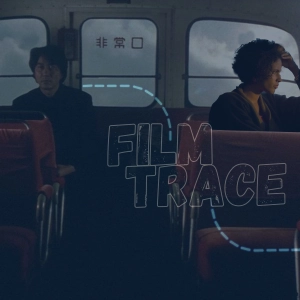
Cure (1997) and One False Move (1992)

Cure (1997) and One False Move (1992)

Author: Film Trace September 22, 2024 Duration: 1:11:32

In episode four of our Manhunt series, we explore two films that veer off the beaten path of their genre linenage. From Japan, Cure (1997), an atmospheric and fatalist horror film that helped launched J-Horror and the concept of elevated horror. From the United States, One False Move (1992), a raw and politically charged on-the-run film that still feels edgy and uncomfortable thirty years after its release.

Special Guest: Good friend of the show, and our resident Japan expert, Harry Brammer

Everyone loves a good villain, especially in a horror film. We might even root for them, see Jason Takes Manhattan. But every so often a horror antagonist comes along that we would like to forget. Mamiya is one of those bad guys. Cure plunges us into the existential dread of modern existence: dull grey concrete mixed with blinding fluorescence, devoid of all natural light and warmth. The film ties together a series of seemingly unrelated murders into one terrifying thread: a unknown force compelling ordinary people to commit unthinkable acts. Director Kiyoshi Kurosawa crafts an oppressive world out of everyday urban life. The conjuring of Mamiya seems so simple and casual until a shock of violence erupts. The film's realism anchors the fantasy to make it believable, and then Kurosawa has us in his hands.

One False Move doesn't have good guys or bad guys. The film opens with unspeakable acts of violence and cruelty committed by our supposed protagonists. In this sense, the film is defiantly postmodern as it brackets out any notion of morality or propriety. Directed by Carl Franklin, it weaves a suspenseful and oddly poignant story of feckless fugitives on the run, crossing paths with a small-town sheriff who yearns for excitement. Here, the manhunt is not just a chase but an exploration of racial tension, broken dreams, and the suffocating weight of the past. The chase builds to a showdown that erupts with a flurry of gunfire, and the finale comes quick. But no answers are given, just lives squandered and lost.


Ever find yourself falling down an internet rabbit hole after the credits roll, clicking from a film’s trivia page to the director’s biography and then to some obscure piece of production history? That’s the exact feeling Film Trace aims to capture and expand upon in audio form. This isn't just another review show. Instead, each episode is a deep, meticulously researched excavation of a single movie’s entire journey. We start with the initial spark of an idea-the script found in a drawer, the chance meeting that got it greenlit-and follow every twist and turn through casting, chaotic production, and post-production. The story continues to the film’s release, its critical and cultural reception, and what legacy it holds now. Think of it as a comprehensive, narrative-driven biography of a film, built on primary sources and genuine curiosity. The hosts at Film Trace use their collective nerd superpowers to do all that obsessive digging for you, weaving together context, history, and behind-the-scenes details into a compelling story about how art gets made. You’ll come away from each installment of this podcast not just with an opinion on a movie, but with a real understanding of its place in the wider world of TV and film. It’s for anyone who believes the story off-screen is just as fascinating as the one projected on it.
Author: Language: English Episodes: 131

Film Trace
Podcast Episodes
Sorcerer (1977) [not-audio_url] [/not-audio_url]

Duration: 57:48
The fifth film in our Existential Thriller cycle is William Friedkin's grim and precise Sorcerer (1977).Released in the shadow of Star Wars and Friedkin's own masterpiece, The Exorcist, this bizarre down-and-out adventur…
The Crying Game (1992) [not-audio_url] [/not-audio_url]

Duration: 1:14:29
The fourth film in our Existential Thriller cycle is Neil Jordan's infamous 1992 political enigma, The Crying Game (1992).A film's notoriety can easily mute or distort what is actually on the screen. The Crying Game is a…
The Game (1997) [not-audio_url] [/not-audio_url]

Duration: 1:02:29
The third film in our new Existential Thrillers cycle is David Fincher's Norcal mindbender, The Game (1997)David Fincher is one the most powerful and popular auteurs working in film and tv today. We revisit what has stra…
Michael Clayton (2007) [not-audio_url] [/not-audio_url]

Duration: 1:02:20
The second film in our new Existential Thrillers cycle is Tony Gilroy's aughtie classic, Michael Clayton (2007).On paper, Michael Clayton probably seems like a taut legal thriller played to the middle-aged set, a John Gr…
Men (2022) [not-audio_url] [/not-audio_url]

Duration: 1:02:00
The first film in our new Existential Thrillers cycle is Alex Garland's bizarre and bold Men (2022).Alex Garland has quietly made himself into one of the more exciting filmmakers of the A24 set. The former novelist turne…
The Last House on the Left (1972) [not-audio_url] [/not-audio_url]

Duration: 1:01:07
The sixth and final film in our Self-Aware Horror cycle is the landmark exploitation film, The Last House on the Left (1972). Made off the proceeds of a successful pornographic film, this genuinely gonzo horror film spar…
Creepshow (1982) [not-audio_url] [/not-audio_url]

Duration: 59:55
The fifth film in our Self-Aware Horror cycle is 1982's mashup of George Romero and Stephen King, Creepshow. Creepshow is an anthology horror film created as an hommage to the trashbin mid-century comic series, EC Comics…
Dead Alive (1992) [not-audio_url] [/not-audio_url]

Duration: 1:02:21
The fourth film in our Self-Aware Horror cycle is 1992's gonzo horror splatterfest Dead Alive aka Braindead Dead Alive is a shocking film for a variety of reasons, but perhaps most astonishing is that it came from the sa…
28 Days Later (2002) [not-audio_url] [/not-audio_url]

Duration: 58:28
The third film in our Self-Aware Horror cycle is 2002's zombie renaissance 28 Days Later 28 Days Later reanimated the zombie subgenre of horror, which had been left for dead and maligned where it always had been. Yes, te…
The Cabin in the Woods (2012) [not-audio_url] [/not-audio_url]

Duration: 56:51
The second film in our Self-Aware Horror cycle is the 2012 postmodern bonanza The Cabin in the Woods. What happens when the Post-Scream style of ironic horror goes past the event horizon? The infamous Joss Whedon teamed…