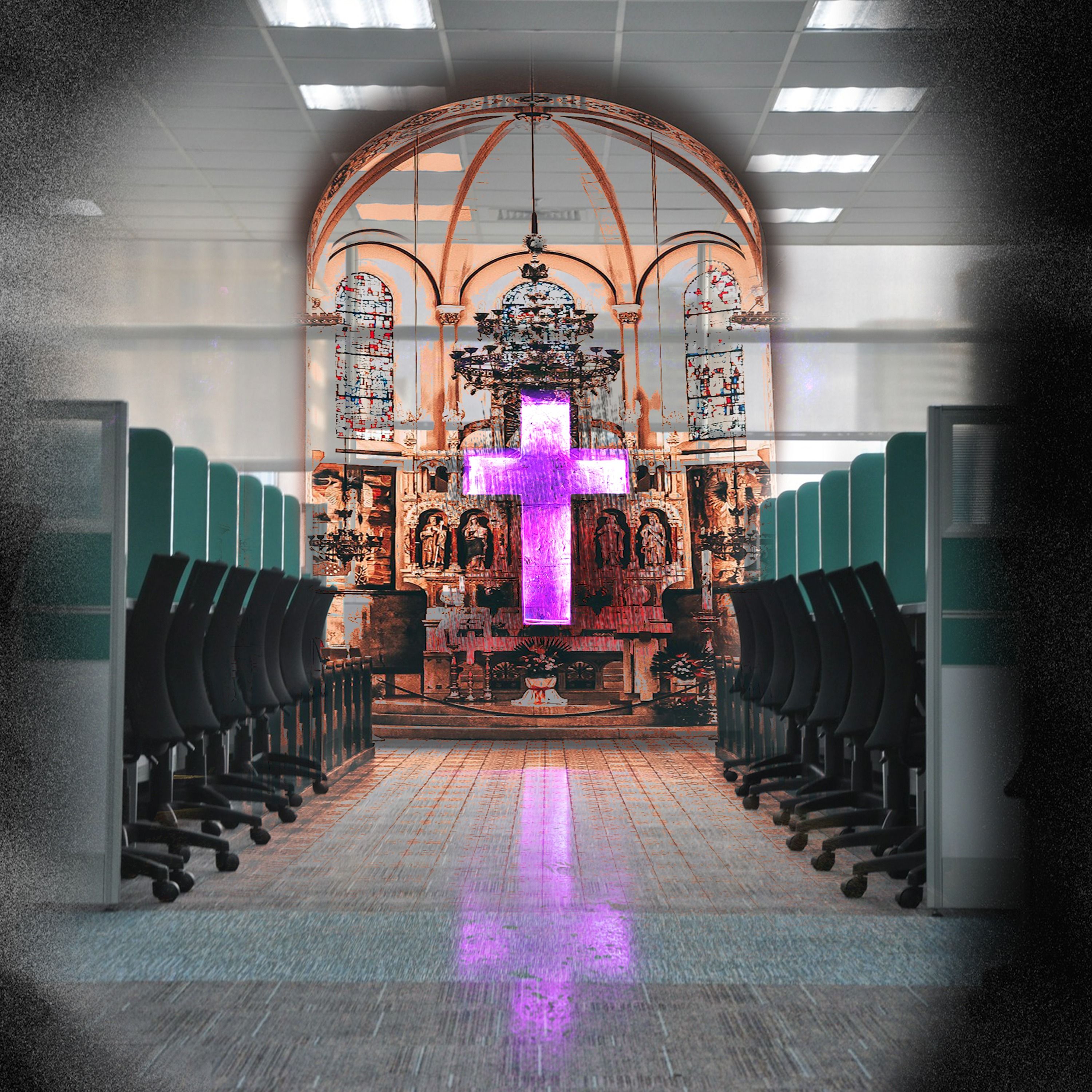
Which is greater: action or contemplation? Which is more excellent and therefore more central and determinative in human flourishing? A life of action—focused outward in service of humanity and exterior, public, practiced love? Or a life of contemplation—focused inward in reflection and meditation and communion with God, a private, interior castle of wisdom?
You might be quick to point out that it's a false dilemma and of course we need both. But this is quite an old conundrum in both the history of philosophy and the history of Christianity and it continues to find expression in contemporary life as we struggle with the idea of personal morality and social justice.
The world today is as broken a place as ever; individual people are as broken as ever—and what will heal us? Meditation and mindfulness and prayer? Or doing justice, loving mercy, and walking humbly?
If the answer is in fact both, what unites the contemplative life with active life in your life?
Today on the show, Sameer Yadav joins us for a conversation on mysticism, activism, and wonder. He explains the history of thinking about these jointly necessary elements of human flourishing, understanding the terms in relation to spirituality and contemporary activism, and drawing together two thinkers from different cultures and times: the Cappadocian Father Gregory of Nyssa and the spiritual father of the American Civil Rights movement, Howard Thurman. They share fascinating perspectives on what it means to be human, the need for cooperative caretaking as a reflection of God's relation to the world, and an attentiveness to wonder as a hinge between the contemplative and active life, with lasting implications for everything from interpersonal relationships, to democracy, to ecological care.
Show Notes
- “The basic consideration has to do with the removal of all that prevents God from coming to Himself in the life of the individual”
- The ‘altar of the heart’ and Thurman’s theology
- “Social action is never an end in and of itself. It is for the sake of God's life manifest in oneself”
- Which is better, action or contemplation?
- Public love? or inwardness, communion with God?
- It’s a false question: we need both
- The state of the world today: what will heal us?
- “Is it meditation and prayer, or doing justice, loving mercy, and walking humbly? And if the answer is in fact both, what unites contemplative life with active life?”
- Mysticism, activism, and wonder
- Reflecting on Gregory of Nyssa and Howard Thurman
- Cooperative caretaking and attention to wonder
- How attention affects everything from relationships, to democracy, to ecological care
- The mystic versus the prophet, according to history
- “Dispell the idea that they’re at odds”
- Luke 10:38, Mary and Martha sitting at the feet of Jesus in contemplation and active service
- These have always been seen as two necessary components of a whole Christian life
- The relationship between imagining life and responding to it
- Gregory of Nyssa, a Christian thinker influenced by Greek philosophy, emphaisized virtue. The way we engage with the world is the way we engage with God.
- Howard Thurman, remove all “that prevents God from coming to himself within, in the life of the individual, whatever there is that blocks this, that's what calls for action."
- Social work enriches the individual
- The alter to God in the community is linked to the alter to God in the individual
- Direct experience versus experience mediated by God
- “Be a mirror of God’s own relationship to creatures. It’s a form of caretaking”
- Seeing humanity as one, as the mystics do, motivates the way we care for the world
- “In self-help, attention is getting a lot of attention. The economy of our attention, how what we pay attention is driving our experience of the world”
- How do you understand spiritual attention versus social attention?
- Attention is not just emotion, it’s virtue. The way we perceive is shaped by the kind of person we are
- Wonder versus attention
- “Wonder is a kind of interest directed on the final value of a thing, not its usefulness. Final value appears to us as mysterious. It’s also attractive.”
- “Wonder is like a hinge between contemplation and action”
- Epistemic humility, what can we know about each other?
- Wonder as a moral emotion
- Martha Nussbaum, Upheavals of Thought: the Intelligence of Emotions
- Jeremy Bendik-Keymer, "our ecological responsibility is unlikely to be met purely out of a sense of duty"
- To wonder at the natural order actually makes us responsible to it
- Wonder creates sacredness, and that gives rise to a need for preservation and care
- “Wonder and be drawn to it, before rushing into judgment”
- Wonder and danger
- Alex Nava, Wonder and Exile in the New World
- Lorraine Daston and Katherine Park, Wonders and the Order of Nature, 1150-1750
- What does it look like to see the world of injustice through the attentiveness of the mystic?
- “Seeing God manifest through the oppressor, not just the oppressed. How the oppressor’s own humanity is distorted and disfigured
- The oppressor as morally injured
- Forming a moral disposition requires forming a practice.
- What are some of those practices?
- “The formations of dispositions is not a flash of light and insight, but rather a long slow life of contemplation”
- “Cultivation of wonder requires engagement with each other and the natural world. People who work on ecological ethics, it’s through positive engagements with the natural world, through exposure”
- Attending to the natural world, rather than getting something done by it”
- “Sometimes activism is geared towards creating the opportunity for the attention and engagement that makes contemplation possible”
About Sameer Yadav
Sameer Yadav is Associate Professor of Religious Studies at Westmont College and specializes in systematic and philosophical theology, theology and race, and mysticism and religious experience. He is the author of The Problem of Perception and the Experience of God (Fortress Press, 2015), and has published in various journals including The Journal of Analytic Theology, Journal of Religion, Faith and Philosophy and Pro Ecclesia. Dr. Yadav has reading competency in biblical Aramaic, Greek, Hebrew, French and German. He is a member in American Academy of Religion, Society of Christian Philosophers, Society of Christian Ethics, and Society of Scriptural Reasoning.
Production Notes
- This podcast featured Sameer Yadav
- Edited and Produced by Evan Rosa
- Hosted by Evan Rosa
- Production Assistance by Martin Chan & Nathan Jowers
- A Production of the Yale Center for Faith & Culture at Yale Divinity School https://faith.yale.edu/about
- Support For the Life of the World podcast by giving to the Yale Center for Faith & Culture: https://faith.yale.edu/give






![Season of Rebellion / Esau McCaulley on Lent [From the Archives]](https://image.simplecastcdn.com/images/439f5b68-08cc-4af1-a803-93ec0aa4f838/f874f796-8726-4729-8607-d7821f74b1ad/3000x3000/2023_02_mccaulley_lent_sq3000.jpg?aid=rss_feed)