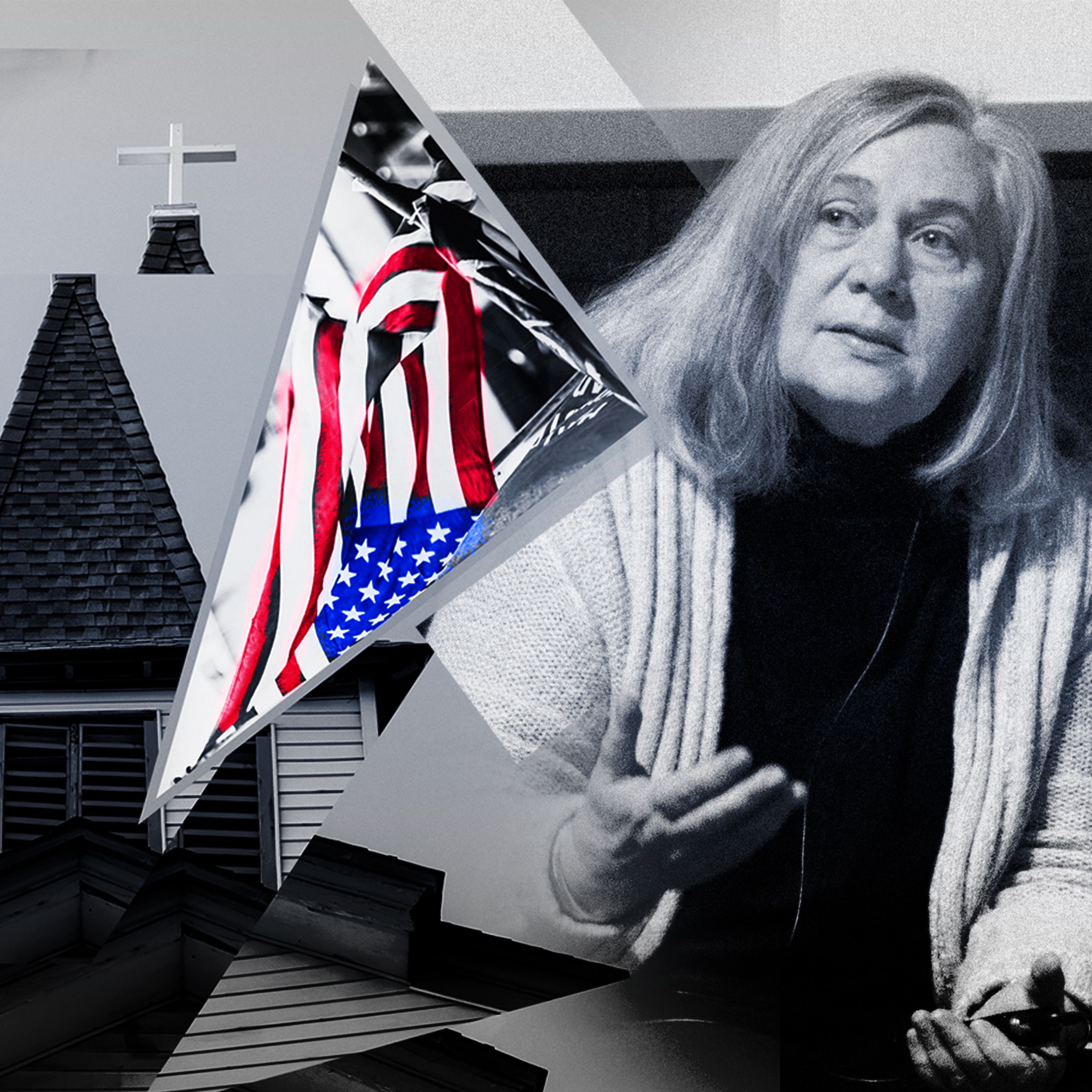
This is a political moment characterized by stridency, suspicion, resentment, anger, and despair—where shared commitments to truth, debate, free speech, and simple good faith in one another (these core elements of democratic society)—these are under threat of outright rejection by those in power. But the Pulitzer Prize-winning novelist and essayist Marilynne Robinson sees an opportunity for putting aside the resentment, suspicion of the other, and despair, and instead renewing a love of democracy, grounded in the sacredness of the person, and she sees more hope in a patriotism closer to familial love than America-first Christian nationalism.
To watch the video of this conversation, visit: https://www.youtube.com/watch?v=TUMN011pamw
Show Notes
- Pursuing theology instead of literature
- America as a family
- The incredible singularity of the human being
- “When we don’t treat someone with respect, we impoverish them."
- How does the sacredness of humanity apply to our political moment?
- Christian Nationalism and the founding of America.
- The crises of Christianity and democracy
- What democracy makes possible for human beings.
- Democracy, Education and Honoring the Sacred in Humanity
- An anthology of the brilliance of humankind
- Structural wrongs and personal morality
- “I miss civilization, and I want it back."
- Truth, trust, and being available to each other
- "Honor everyone."
- Truth, conspiracy, and demonism (QAnon, blood libel, and twisted fantasies that prevent rational engagement)
- Primordial goodness, fallenness, and the bearing of original sin on democracy
- Suspicion, twisting the truth, and returning to seeing each other with eyes of grace
- Costly grace and Marilynne Robinson’s love of her characters
- Our political challenges are challenges about our humanity
- Pagan values in Trumpian politics
- Transitioning from fighting for others’ rights to fighting for our own rights
- The relation between Marilynne Robinson’s Christian identity and her political identity / Reformation Christianity and political progressivism
- Retrieving the beauty of the faith
- “The deepest kind of deep thought is sustained by Christian tradition. It’s a condescension.”
- Jesus as moral stranger—"almost everything important to us, wasn’t important to him; almost everything important to him, isn’t important to us."
Marilynne Robinson is an award-winning American novelist and essayist. Robinson was born and raised in Sandpoint, Idaho. Christian spirituality and American political life is a recurring theme in Robinson's fiction and non-fiction.
In a 2008 interview with the Paris Review, Robinson said, "Religion is a framing mechanism. It is a language of orientation that presents itself as a series of questions. It talks about the arc of life and the quality of experience in ways that I've found fruitful to think about."
Her novels include: Housekeeping (1980, Hemingway Foundation/Pen Award, Pulitzer Prize finalist), Gilead (2004, Pulitzer Prize), Home (2008, National Book Award Finalist), Lila (2014, National Book Award Finalist), and most recently, Jack (2020). Robinson's non-fiction works include Mother Country: Britain, the Welfare State, and Nuclear Pollution (1989), The Death of Adam: Essays on Modern Thought (1998), Absence of Mind: The Dispelling of Inwardness from the Modern Myth of the Self (2010), When I was a Child I Read Books: Essays (2012), The Givenness of Things: Essays (2015), and What Are We Doing Here?: Essays (2018). Marilynne Robinson received a B.A., magna cum laude, from Brown University in 1966 and a Ph.D. in English from the University of Washington in 1977.
She has been writer-in-residence or visiting professor at many universities, included Yale Divinity School in Spring 2020. She currently teaches at the Iowa Writers' Workshop at the University of Iowa. She has served as a deacon, and sometimes preaches, for the Congregational United Church of Christ. Robinson lives in Iowa City.
Miroslav Volf is the Henry B. Wright Professor of Theology at Yale Divinity School and is the Founder and Director of the Yale Center for Faith and Culture. He was educated in his native Croatia, the United States, and Germany, earning doctoral and post-doctoral degrees (with highest honors) from the University of Tübingen, Germany.
He has written or edited more than 20 books, over 100 scholarly articles, and his work has been featured in the Washington Post, NPR, Christianity Today, Christian Century, Sojourners, and several other outlets. Some of his more significant books include: Exclusion and Embrace: A Theological Exploration of Identity, Otherness, and Reconciliation (1996/2019), Free of Charge: Giving and Forgiving in a Culture Stripped of Grace (2006), Allah: A Christian Response (2011), After Our Likeness: The Church as the Image of the Trinity (1998), A Public Faith: How Followers of Christ Should Serve the Common Good (2011), The End of Memory: Remembering Rightly in a Violent World (2006/2020), Flourishing: Why We Need Religion in a Globalized World (2016), For the Life of the World: Theology that Makes a Difference (2019, with Matthew Croasmun).



![Season of Rebellion / Esau McCaulley on Lent [From the Archives]](https://image.simplecastcdn.com/images/439f5b68-08cc-4af1-a803-93ec0aa4f838/f874f796-8726-4729-8607-d7821f74b1ad/3000x3000/2023_02_mccaulley_lent_sq3000.jpg?aid=rss_feed)