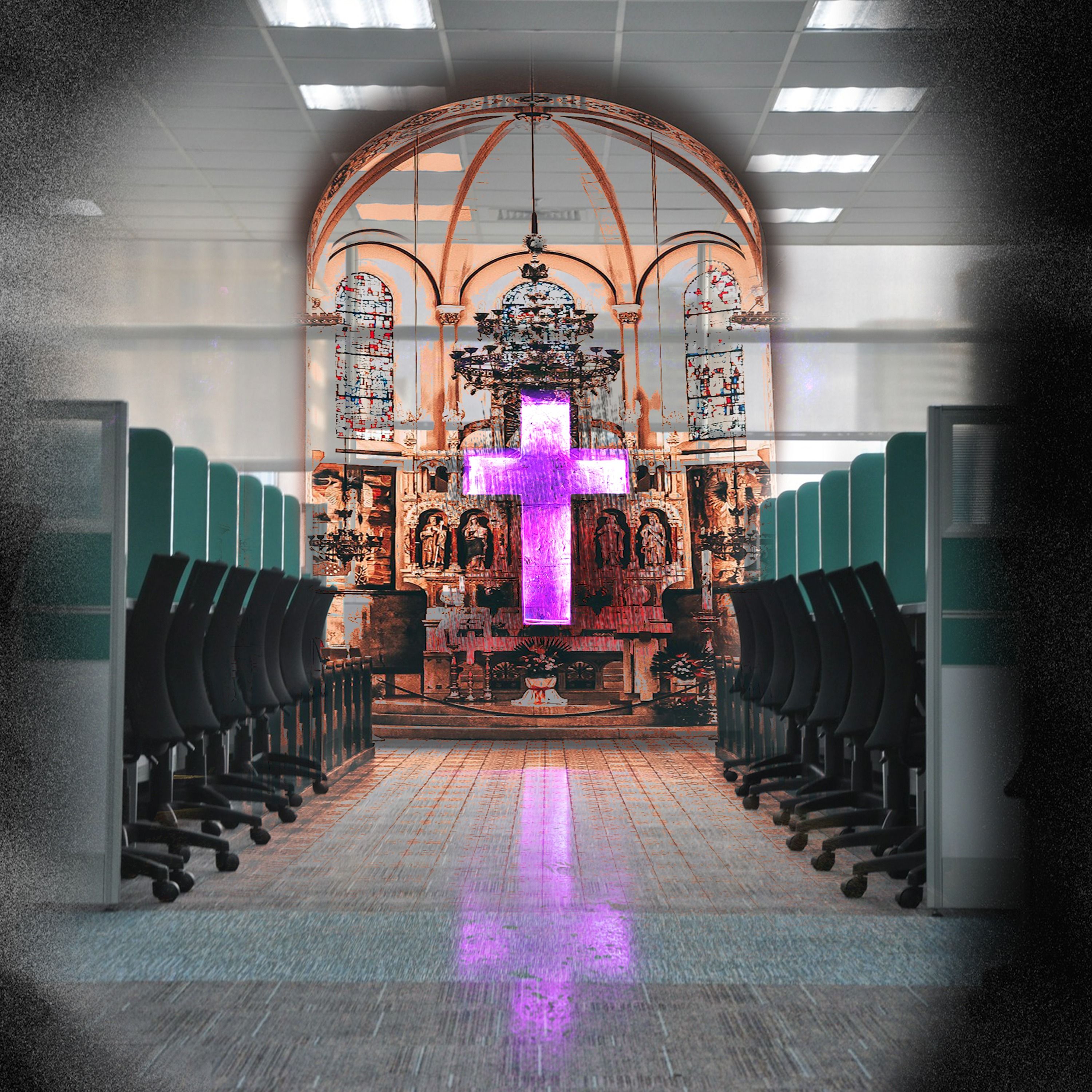
A conversation on the ancient wisdom of Christian forgiveness, between Yale psychologist Laurie Santos (host, The Happiness Lab) and Miroslav Volf. Recently appearing on The Happiness Lab, Miroslav and Laurie discuss his older brother's tragic death as a child and his family's response to forgive. Miroslav reflects on the formative impact of these events. He contrasts forgiveness as an obligation with forgiveness as a gift that frees one from captivity to the past and opens up possibilities for the future. Forgiveness, for him, is more than an event but a practice cultivated throughout life, offering a way of recognizing the sacred and holy in the other.
Reposted with permission from The Happiness Lab. Listen and subscribe at www.happinesslab.fm.
Show Notes
- Introduction: Evan Rosa
- "Forgive us our trespasses as we forgive those who trespass against us."
- Subscribe to The Happiness Lab: https://www.happinesslab.fm/
- The story of Miroslav Volf's family forgiving the soldier responsible for the death of his brother as a child
- Forgiveness as transcending the rage and deep sorrow
- "Forgive one another as you have been forgiven in Christ." (Ephesians 4:32)
- The love of enemy as a fundamental Christian stance
- How many times should I forgive: 70 x 7
- A definition of forgiveness—dealing with resentment, or freeing one's life from the burden of injury.
- Gift
- "Unstick the deed from the doer. This is what forgiveness does."
- Nietzsche against forgiveness, treating all injury as minor and ineffectual.
- "Time does not run backwards."
- In the gift of forgiveness, I relate to you as if you had not done that particular wrong.
- Forgiveness as an arduous process; a release into new possibilities for the future.
- "We are often held captive by the past."
- Forgiveness reconfigures the relationship with have the other. We give the possibility (not the actuality) for a different future. Imagine and live into a joint future.
- Forgiveness must be a voluntary act.
- We shouldn't think of forgiveness as a burden, but as a gift.
- Life becomes better when we can transcend the self.
- Turning from injury and loss to a new life. "Forgiveness made it possible for her to invest herself into the good around her."
- Release into the future
- The Volf family's forgiveness of the soldier who was responsible for their son's death.
- Practical steps to move toward forgiveness
- Invoking the command to forgive
- "Forgiveness isn't a one-time event. ... It's a messy process. It's in this messiness—in this gradual character of forgiveness—that we actually grow into forgiveness. And forgiveness ends up being not so much an act as it ends up being a a practice."
- Prodigal Son governs the logic of Christianity
- "People have a hard time forgiving themselves."
- "To forgive myself, I somehow have to distinguish between who the core of myself is, and what I have done. I cannot have an account of the self that is simply the sum of what I have suffered and what I have committed. If I have that kind of account of the self, there's no way to delete that from the self, because that wrongdoing is integral to the self. ... In the Christian tradition—other traditions as well, to a significant degree—there's always been a sense that there is a core of the self that is loved by God, and that we ought to love in each other that is untouched by anything that person might or might not have done, or what that person has suffered."
- "Would you love me if I turned into a donkey?"
- Seeing the sacred in the other
About Laurie Santos
Dr. Laurie Santos is Professor of Psychology and Head of Silliman College at Yale University. Dr. Santos is an expert on human cognition and the cognitive biases that impede better choices. Her course, “Psychology and the Good Life,” teaches students what the science of psychology says about how to make wiser choices and live a life that’s happier and more fulfilling. The class is Yale’s most popular course in over 300 years and has been adapted into a free Coursera program that has been taken by over 3.3 million people to date. Dr. Santos has been featured in numerous news outlets including the New York Times, NBC Nightly News, The Today Show, CBS This Morning, NPR, GQ Magazine, Slate, CNN and O, The Oprah Magazine. Dr. Santos is a winner of numerous awards both for her science and teaching from institutions such as Yale and the American Psychological Association. She has been featured as one of Popular Science’s “Brilliant 10” young minds and was named TIME's “Leading Campus Celebrity.” Her podcast, The Happiness Lab, launched in 2019 has over 35 million downloads.
Production Notes
- This podcast featured Miroslav Volf and Laurie Santos
- Edited and Produced by Evan Rosa
- Hosted by Evan Rosa
- Special thanks to Laurie Santos, Ryan Dilley, and Pushkin Media
- Production Assistance by Martin Chan & Nathan Jowers
- Listen and subscribe to The Happiness Lab at www.happinesslab.fm
- A Production of the Yale Center for Faith & Culture at Yale Divinity School https://faith.yale.edu/about
- Support For the Life of the World podcast by giving to the Yale Center for Faith & Culture: https://faith.yale.edu/give






![Season of Rebellion / Esau McCaulley on Lent [From the Archives]](https://image.simplecastcdn.com/images/439f5b68-08cc-4af1-a803-93ec0aa4f838/f874f796-8726-4729-8607-d7821f74b1ad/3000x3000/2023_02_mccaulley_lent_sq3000.jpg?aid=rss_feed)