How governments in northern Africa are left with only repression as they are unable to govern

How governments in northern Africa are left with only repression as they are unable to govern

Author: Arezki Daoud January 22, 2021 Duration: 10:46

This week (ending 21 January 2021), Tunisia made the front pages of global media with Tunisians clashing with security forces over the past days to complain about their living conditions. The riots, which are still underway, have been taking place in several regions, concentrating largely on disadvantaged areas and neighborhoods.  In Morocco, the detention of thousands of suspects awaiting trial is clear evidence of a regime that has no interest in upholding its human rights obligations. In Algeria, the situation is even worse as the regime continues to harass activists, opposition politicians and Hirak militants. Egypt is probably the worst human rights offender in the North Africa region. This week marks the anniversary of the demonstrations in Cairo’s Tahrir Square, which broke out on 25 January 2011, and which toppled another Arab tyrant Hosni Mubarak. This is a podcast by Arezki Daoud of MEA Risk LLC and Editor of The North Africa Journal.


Trying to make sense of the world's complex power struggles and regional conflicts can feel overwhelming. Geopolitics Simplified by Arezki Daoud cuts through that noise with clear, accessible commentary. Host Arezki Daoud, drawing from his professional background with MEA Risk LLC, focuses his lens primarily on the intricate dynamics of Africa and the Middle East, regions often at the heart of global shifts but frequently misunderstood. Each episode breaks down a current event or a longer-term strategic development, explaining not just what is happening, but the historical roots and potential consequences behind the headlines. You'll hear a straightforward analysis that avoids academic jargon, designed for anyone curious about how international relations affect economics, security, and daily life in different corners of the planet. This isn't about dry recitations of facts; it's about connecting dots in a way that provides genuine understanding. The podcast delivers these insights with a consistent and informed perspective, making even the most tangled geopolitical situations comprehensible. For regular listeners, this becomes an essential tool for forming a more nuanced view of global news, moving beyond simplistic narratives to grasp the underlying forces shaping our interconnected world.
Author: Language: English Episodes: 59

Geopolitics Simplified by Arezki Daoud
Podcast Episodes
Can foreign and regional powers give Libya a break? [not-audio_url] [/not-audio_url]

Duration: 3:10
Foreign meddling may have been even more troubling than any other source of instability. Governments in Russia, the UAE, France, Turkey, etc.. have been central in preventing the Libyans from negotiating a future that wo…
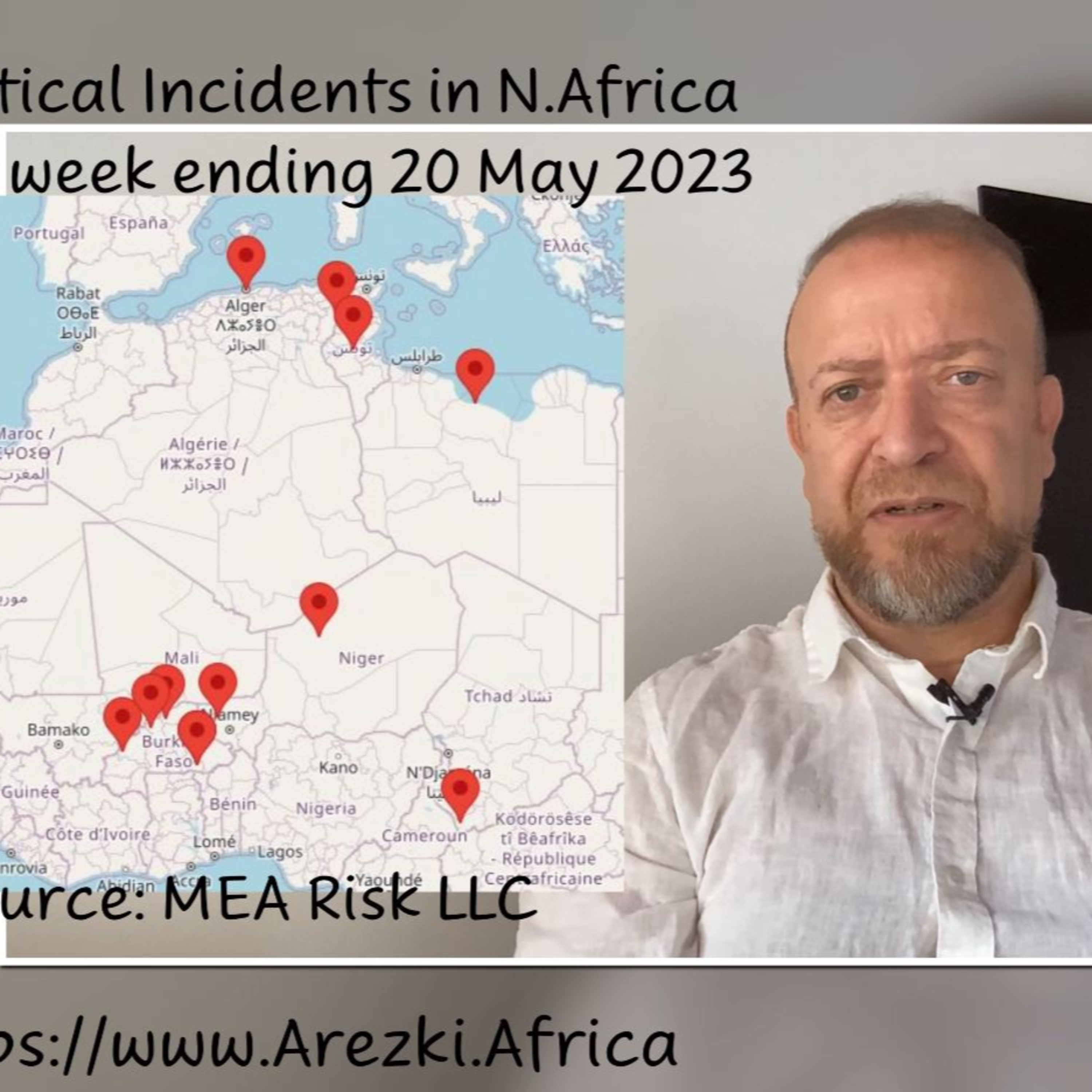
North Africa and the Sahel week-in-review | 20 May 2023 [not-audio_url] [/not-audio_url]

Duration: 19:22
Welcome to this episode of North Africa and the Sahel week-in-review, for the period ending Saturday, 20th of May. Today is the 22nd of May and greetings to all. So the week in the northern half of Africa ended with a lo…
A world turned on its head: Egypt's loyalty to the US in question [not-audio_url] [/not-audio_url]

Duration: 7:02
In Egypt, a country that gets substantial military and economic aid from the United States, General Abdelfattah el-Sissi has allegedly ordered the manufacture of 40,000 rockets for the benefit of Russia, in the midst of…
Mali’s painful post-colonial transition. [not-audio_url] [/not-audio_url]

Duration: 11:39
The nation of Mali in the Sahel is headed toward an even more painful period. Bad governance, catastrophic environment, deadly terrorism, and a war between the west and Russia starting on its territory are conspiring to…
Instability and Coups in Sahel Nations [not-audio_url] [/not-audio_url]

Duration: 4:52
In this brief episode, Arezki Daoud reports on the latest attempts to topple regimes in the Sahel and that more of there are expected.