The Sahel in turmoil: How Bamako and Paris lost most of Mali's territory

The Sahel in turmoil: How Bamako and Paris lost most of Mali's territory

Author: Arezki Daoud January 18, 2022 Duration: 24:56

The year 2021 was a horrendous period for the region. All the problems that one can imagine were there, from the massacre of civilians to two military coups in Mali and of course, an aggressive expansion of the jihadist groups.  Early last year saw the massacre of more than 100 people in two villages of northwestern Niger, in an area bordering Burkina Faso, Mali and Niger.  The targeting of civilians is now so intense that more civilians were killed than soldiers. Between January and November 2021, no fewer than 600 civilians in Niger were slaughtered in terrorist attacks, mainly conducted by an Islamic State offshoot. The figures of this year's killings are shilling: 200 people were killed in March in a single operation in the Tahoua region, in northwestern Niger. Another 160 civilians were killed in June in the village of Solhan, northeastern Burkina Faso.

In this podcast, MEA Risk analyst and editor of The North Africa Journal, Arezki Daoud, address the Sahel's descent to chaos as we start the year 2022.


Trying to make sense of the world's complex power struggles and regional conflicts can feel overwhelming. Geopolitics Simplified by Arezki Daoud cuts through that noise with clear, accessible commentary. Host Arezki Daoud, drawing from his professional background with MEA Risk LLC, focuses his lens primarily on the intricate dynamics of Africa and the Middle East, regions often at the heart of global shifts but frequently misunderstood. Each episode breaks down a current event or a longer-term strategic development, explaining not just what is happening, but the historical roots and potential consequences behind the headlines. You'll hear a straightforward analysis that avoids academic jargon, designed for anyone curious about how international relations affect economics, security, and daily life in different corners of the planet. This isn't about dry recitations of facts; it's about connecting dots in a way that provides genuine understanding. The podcast delivers these insights with a consistent and informed perspective, making even the most tangled geopolitical situations comprehensible. For regular listeners, this becomes an essential tool for forming a more nuanced view of global news, moving beyond simplistic narratives to grasp the underlying forces shaping our interconnected world.
Author: Language: English Episodes: 59

Geopolitics Simplified by Arezki Daoud
Podcast Episodes
Can foreign and regional powers give Libya a break? [not-audio_url] [/not-audio_url]

Duration: 3:10
Foreign meddling may have been even more troubling than any other source of instability. Governments in Russia, the UAE, France, Turkey, etc.. have been central in preventing the Libyans from negotiating a future that wo…
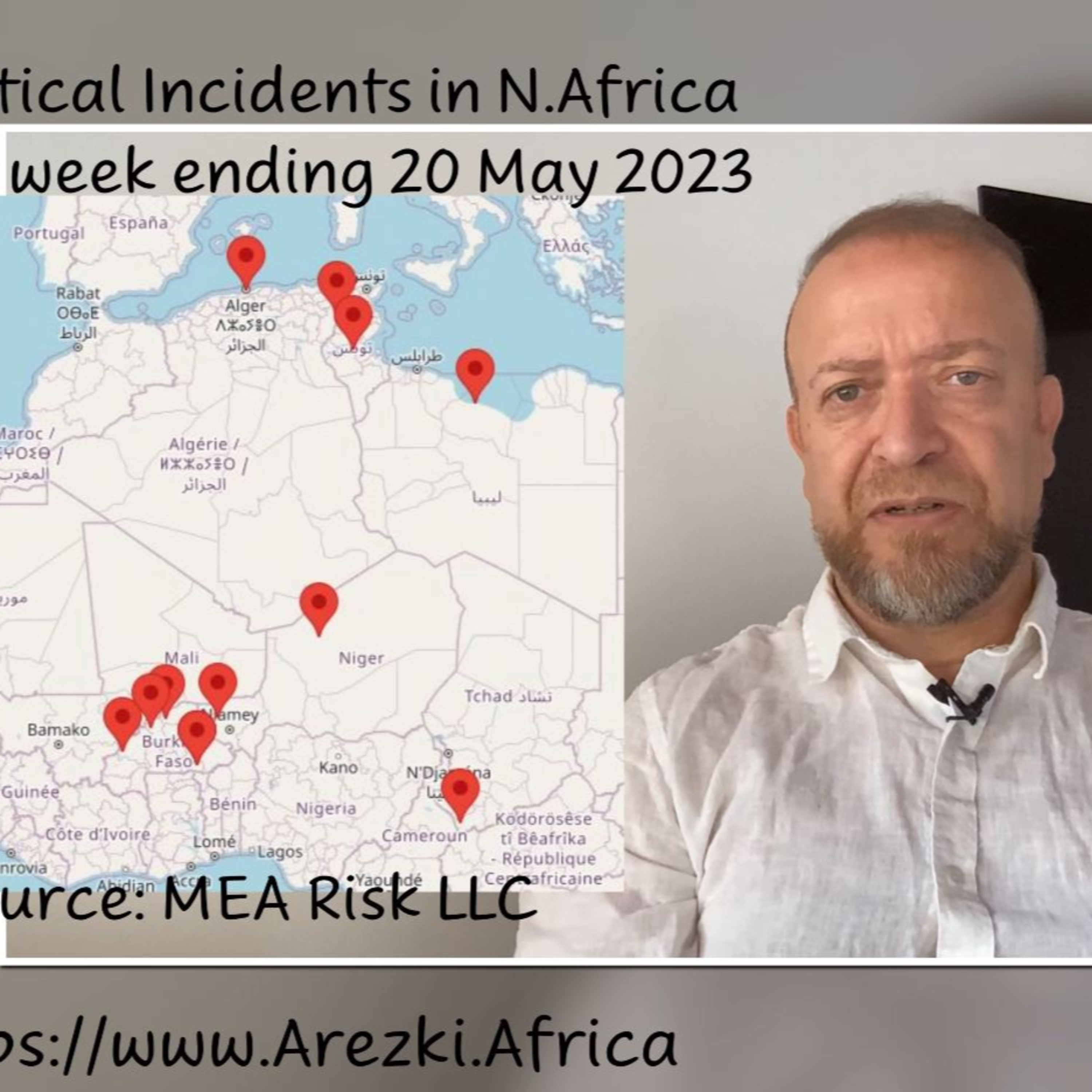
North Africa and the Sahel week-in-review | 20 May 2023 [not-audio_url] [/not-audio_url]

Duration: 19:22
Welcome to this episode of North Africa and the Sahel week-in-review, for the period ending Saturday, 20th of May. Today is the 22nd of May and greetings to all. So the week in the northern half of Africa ended with a lo…
A world turned on its head: Egypt's loyalty to the US in question [not-audio_url] [/not-audio_url]

Duration: 7:02
In Egypt, a country that gets substantial military and economic aid from the United States, General Abdelfattah el-Sissi has allegedly ordered the manufacture of 40,000 rockets for the benefit of Russia, in the midst of…
Mali’s painful post-colonial transition. [not-audio_url] [/not-audio_url]

Duration: 11:39
The nation of Mali in the Sahel is headed toward an even more painful period. Bad governance, catastrophic environment, deadly terrorism, and a war between the west and Russia starting on its territory are conspiring to…
Instability and Coups in Sahel Nations [not-audio_url] [/not-audio_url]

Duration: 4:52
In this brief episode, Arezki Daoud reports on the latest attempts to topple regimes in the Sahel and that more of there are expected.