Potentially Unsafe Low-evidence Treatments: Adam Marks, Laura Taylor, & Jill Schneiderhan

Potentially Unsafe Low-evidence Treatments: Adam Marks, Laura Taylor, & Jill Schneiderhan

Author: Alex Smith, Eric Widera April 24, 2025 Duration: 45:26

More and more people are, "doing their own research."  Self-identified experts and influencers on podcasts (podcasts!) and social media endorse treatments that are potentially harmful and have little to no evidence of benefit, or have only been studied in animals.  An increasing number of federal leaders have a track record of endorsing such products.

We and our guests have noticed that in our clinical practices, patients and caregivers seem to be asking for such treatments more frequently.  Ivermectin to treat cancer.  Stem cell treatments. Chelation therapy.  Daneila Lamas wrote about this issue in the New York Times this week -after we recorded - in her story, a family requested an herbal infusion for their dying mother via feeding tube.

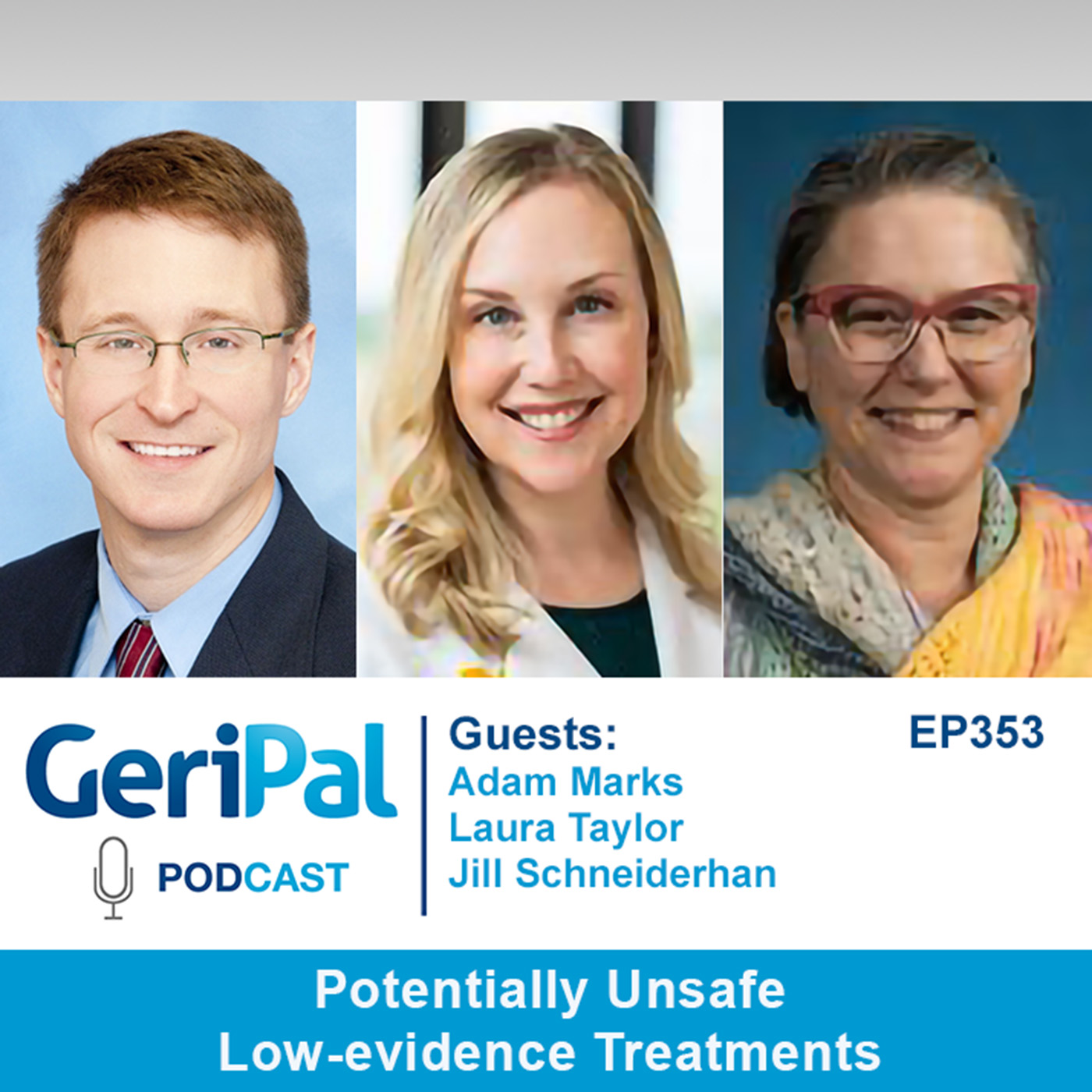
Our guests today, Adam Marks, Laura Taylor, & Jill Schneiderhan, have coined a term for such therapies, for Potentially Unsafe Low-evidence Treatments, or PULET. Rhymes with mullet (On the podcast we debate using the French pronunciation, though it sounds the same as the French word for chicken).  We discuss an article they wrote about PULET for the American Journal of Hospice and Palliative Medicine, including:

  • What makes a PULET a PULET?  Key ingredients are both potentially unsafe and low evidence.  If it's low evidence but not unsafe, not generally an issue.  Think vitamins. If it's potentially unsafe, but has robust evidence, well that's most of the treatments we offer seriously ill patients!  Think chemo.

  • What counts as potentially unsafe? They include what might be obvious, e.g. health risks, and less obvious, e.g. financial toxicity.

  • What counts as low-evidence?  Animal studies? Theoretical only?

  • Does PULET account for avoiding known effective treatments?

  • Do elements of care that are often administered to seriously ill patients count? Yes. Think chemotherapy to imminently dying patients, or CPR.

  • How does integrative medicine fit in with this?  Jill Schneiderhan, a family medicine and integrative medicine doc, helps us think through this.

  • How ought clinicians respond?  Hint: If you're arguing over the scientific merits of a research study, you're probably not doing it right.  Instead, think VitalTalk, REMAP, and uncover and align with the emotion behind the request.

  • Does the approach shift when it's a caregiver requesting PULET for an older relative who lost capacity? How about parents advocating for a child?

For more, Laura suggests a book titled, How to Talk to a Science Denier.  

And I am particularly happy that the idea for this podcast arose from my visit to Michigan to give Grand Rounds, and the conversations I had with Adam and Laura during the visit.  We love it when listeners engage with us to suggest topics that practicing clinicians find challenging.

And I get to sing Bon Jovi's Bad Medicine, which is such a fun song!

-Alex Smith


Hosted by UCSF physicians Alex Smith and Eric Widera, GeriPal-A Geriatrics and Palliative Medicine Podcast creates a vital space for conversation at the intersection of aging and serious illness care. This isn't a dry lecture series; it's a dynamic dialogue where Eric and Alex bring on leading experts to unpack the complexities of geriatric and palliative medicine. They delve into the latest research that should change practice, tackle the ethical dilemmas that provoke debate, and explore the nuanced clinical challenges that professionals face daily. The tone is engaging and often surprisingly lighthearted, with moments of humor and even the occasional song, making profound topics more accessible. Whether you're a clinician, nurse, social worker, or any professional dedicated to this field, this podcast offers a blend of evidence-based insights and practical wisdom you can use. It’s a resource that acknowledges the weight of the work while fostering connection and continued learning. For those seeking formal education credits, AMA PRA Category 1 CME and MOC credit are also available through the show. Tune in to join a community committed to improving care for older adults and those with serious illness.
Author: Language: English Episodes: 100

GeriPal - A Geriatrics and Palliative Medicine Podcast
Podcast Episodes
What instead? Alternatives to Beers: Todd Semla and Mike Steinman [not-audio_url] [/not-audio_url]

Duration: 44:38
On a prior podcast we talked with Todd Semla and Mike Steinman about the update to the AGS Beers Criteria of potentially inappropriate medications in older adults (Todd and Mike co-chair the AGS Beers Criteria Panel). On…
We Need a Care Revolution: Victor Montori [not-audio_url] [/not-audio_url]

Duration: 47:41
In his book, "Why We Revolt," Victor Montori decries the industrialization of healthcare. We've become a healthcare factory, beholden to health systems motivated by profit. In particular, he laments the loss of the "care…
Death Anxiety: Dani Chammas & Keri Brenner [not-audio_url] [/not-audio_url]

Duration: 1:00:23
What is death anxiety? We spend the first 15 minutes of the podcast addressing this question. And maybe this was unfair to our guests, the fabulous dynamic duo of palliative psychiatrists Dani Chammas and Keri Brenner (l…
Health and Wealth Shocks: Lauren Hunt, Rebecca Rodin, Tsai-Chin Cho [not-audio_url] [/not-audio_url]

Duration: 44:35
June Lunney famously characterized the end of life functional course of people with dementia as a slow dwindle over time. Tom Gill later found that people with dementia do indeed have persistent severe disability through…
