Jessica Weiss: Happiness Works

Jessica Weiss: Happiness Works

Author: Chris Schembra January 20, 2026 Duration: 37:48

Episode Summary

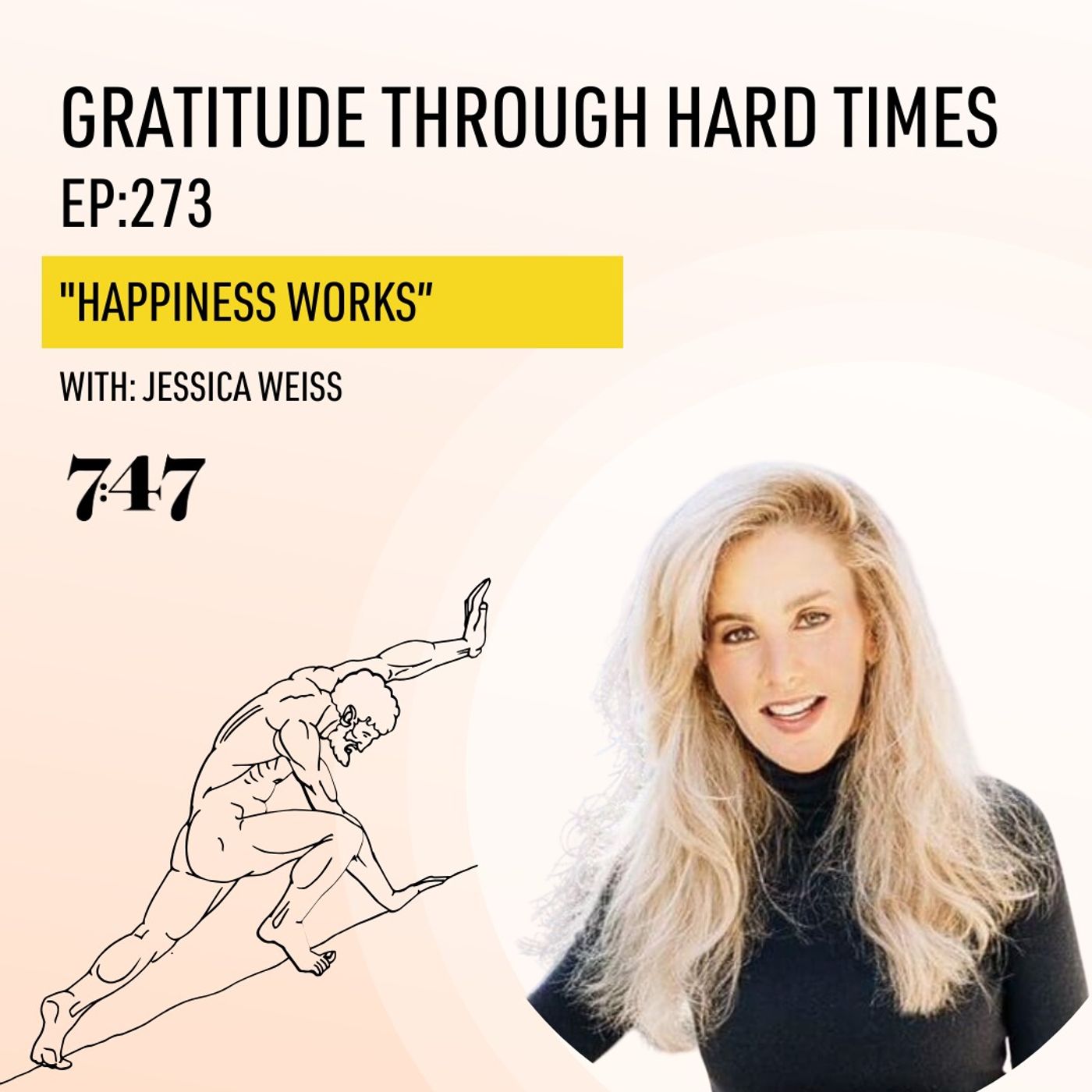
In this episode, Chris Schembra sits down with Jessica Weiss to unpack a radical but practical idea: happiness at work isn’t something you wait for in a distant future, it’s something you actively create, even in imperfect conditions. Drawing from Jessica’s book Happiness Works, the conversation reframes happiness not as a fleeting mood or a vague “choice,” but as a set of tangible, science-backed tools anyone can use right now. They explore why the single most powerful first step toward happiness is simply finding a friend at work, how resilience is a muscle built through small, confidence-building decisions, and why “good enough” choices often lead to more satisfaction than endless optimization. Together, they dismantle common myths about happiness, connect gratitude and joy to long-term resilience, and show how depersonalizing failure and using feedback as data can transform setbacks into progress. The episode culminates in Jessica’s five-part framework—connection, resilience, optimism, trust, and progress—offered not as a rigid sequence, but as a buffet of tools listeners can draw from as needed. At a moment defined by burnout, uncertainty, and rapid change, this conversation makes a compelling case that happiness isn’t fluffy or naïve; it’s a strategic advantage for individuals, teams, and organizations alike.

10 Quotes

  1. “Happiness isn’t something you wait for in the future; it’s something you build, even in imperfect conditions.”
     
  2. “The fastest way to improve your happiness at work is shockingly simple: find a friend.”
     
  3. “Happiness is not the absence of unhappiness; it’s having tools you can rely on when things get hard.”
     
  4. “Resilience isn’t a personality trait. It’s a muscle, and you build it through small decisions.”
     
  5. “Good enough decisions often create more happiness than perfect ones that take forever.”
     
  6. “Happiness isn’t a choice. It’s strategies, tactics, and habits you practice every day.”
     
  7. “Failure is inevitable. The real skill is learning how to depersonalize it and extract the lesson.”
     
  8. “Trust is the foundation of feedback—if you don’t trust the source, the message won’t land.”
     
  9. “Gratitude and joy aren’t just reflections; they’re mindset-shifting tools that build resilience.”
     
  10. “You don’t need to change your entire life to be happier—small, consistent actions change the trajectory.”
     

10 Takeways

  1. Happiness is actionable.
    It’s not a vague feeling or personality trait—it’s built through repeatable tools and behaviors.
     
  2. Connection comes first.
    Having even one genuine friend at work dramatically improves engagement, wellbeing, and performance.
     
  3. Resilience is built in micro-moments.
    Small, quick decisions create confidence and momentum over time.
     
  4. Perfection kills happiness.
    “Maximizers” suffer more than “satisficers.” Aim for progress, not perfection.
     
  5. Tools beat willpower.
    Relying on “choosing happiness” isn’t sustainable. Systems and habits are.
     
  6. Gratitude trains the brain.
    Practices like joy journaling rewire attention toward presence, meaning, and resilience.
     
  7. Depersonalizing failure is a superpower.
    Treat setbacks as data, not identity, to grow faster and suffer less.
     
  8. Trust enables honest feedback.
    Without psychological safety and trust, feedback becomes noise or threat.
     
  9. Progress fuels motivation.
    Ending the day knowing you moved something forward is essential to long-term happiness.
     
  10. Happiness scales across life stages.
    From basic security to meaning and purpose, happiness tools apply at every level of Maslow’s hierarchy.
Chris Schembra, known as the "Gratitude Guru" by USA Today and a columnist for Rolling Stone, hosts Gratitude Through Hard Times. For nearly a decade, he has traveled the globe facilitating meaningful human connection, work that extends directly from his #1 Wall Street Journal bestselling book of the same name. In this podcast, he moves beyond simple self-help platitudes, creating a space where ancient Stoic wisdom meets contemporary neuroscience and psychology. Each episode is a practical exploration of how to find genuine appreciation and resilience not in spite of difficulty, but because of it. Schembra acts as both guide and fellow traveler, using his experience as a dinner host and facilitator to frame profound questions and share conversations that dissect the mechanics of fulfillment. Listeners will hear a blend of personal narrative, philosophical insight, and actionable science, all aimed at reframing life's inevitable challenges. This isn't about blind optimism; it's about building a durable, grounded perspective that serves in both business and personal relationships, in moments of entrepreneurial stress and cultural shifts. The Gratitude Through Hard Times podcast provides a thoughtful, evidence-based toolkit for anyone seeking to cultivate a deeper sense of purpose and connection in a complex world, proving that gratitude is a skill forged precisely when it feels most out of reach.
Author: Language: English Episodes: 100

Gratitude Through Hard Times
Podcast Episodes
Dorie Clark: The Long Game [not-audio_url] [/not-audio_url]

Duration: 44:06
It can be hard to slow down enough to consider long-term goals in our fast-paced world. Especially when social media constantly shows us the successes and accolades of everyone we know. But to create a meaningful life, w…
Monica Pool Knox: Leading with Humanity [not-audio_url] [/not-audio_url]

Duration: 41:19
The world is riddled with uncertainty and challenges. We can let the uncertainty crush us or let the uncertainty propel us. One way to use uncertainty to propel us is to lead with humanity by giving grace, empathy, and u…
Esther Raphael: Inspired Community [not-audio_url] [/not-audio_url]

Duration: 37:13
Belonging is often described as a feeling of security, support, acceptance, and inclusion. In addition, it's directly linked to decreased turnover, reduced sick days, and increased performance. People who feel like they…
Faith Jones: You Can Heal [not-audio_url] [/not-audio_url]

Duration: 49:24
You can heal your trauma. Whether your trauma is unprocessed or you're using it to fuel you, you can heal and live in a place of contentment, joy, and peace, where you create healthy relationships and success in business…
Karen Mangia: Success From Anywhere [not-audio_url] [/not-audio_url]

Duration: 40:53
Do you think that you are living in a dress rehearsal? This is a one-act play called your life. What kind of role do you want to play? Because you don't get to do this again. The genesis of living a meaningful life is kn…
Tyler Wagner: Chase Fulfillment [not-audio_url] [/not-audio_url]

Duration: 44:56
Life is all about trial and error. Therefore, it's vital to try as many new things as possible in order to discover what you really want to do in life. By chasing fulfillment over pleasure, you'll create a rich life whil…
Lt Col Dan Rooney: Fly Into the Wind [not-audio_url] [/not-audio_url]

Duration: 43:37
Every single person deals with down moments in life. Yet, it's in those hard times where our legacy is forged. So don't look at those challenging times as problems; instead, become a problem solver. Welcome difficulty in…
Rosa Nunez: It's Never Too Late To Do The Right Thing [not-audio_url] [/not-audio_url]

Duration: 48:37
Action now is better than never. This is especially true in the DEI space. When it comes to DEI, we can start driving change with more education, access to opportunities, and the creation of systematic changes. But all o…
Zander Fryer: Sh*t You Don’t Learn In College [not-audio_url] [/not-audio_url]

Duration: 53:04
Our education system has created a massive gap in individuals for feeling true fulfillment, true creativity, and true contribution in the world because it's focused more on creating cogs in a wheel than actually individu…
Paul Park: It's Never Too Late [not-audio_url] [/not-audio_url]

Duration: 35:21
It's never too late to start new. It's never too late to jump horizontally. It's never too late to keep living a little bit more of your truth. Progress is not linear. Paul Park knows that it's never too late to find you…