Wine and Holy Week 3-20-2024

Wine and Holy Week 3-20-2024

Author: Gus Clemens March 19, 2024 Duration: 4:06

This is the weekly column

For Christians, the coming days are a transition from the promise of Christmas to the time of fulfillment of Easter.

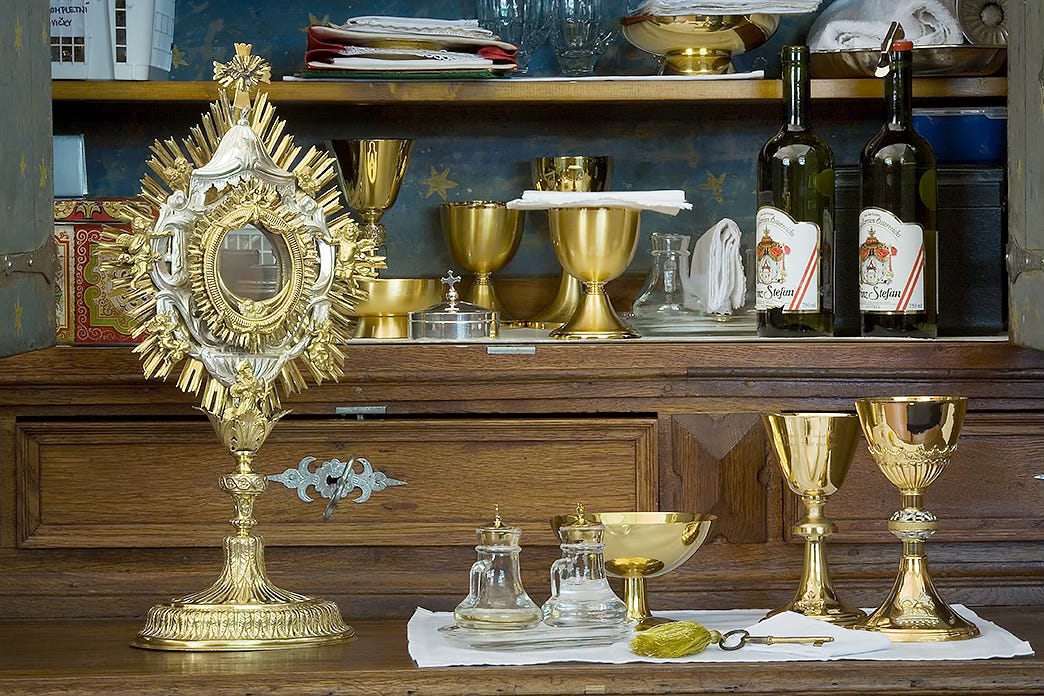
Jesus’s first reported miracle—the wedding feast at Cana—and his last miracle, at the Last Supper, involved wine. Roman Catholic, Eastern Orthodox, and Greek Orthodox churches include wine in every celebration. Viewed differently theologically, Episcopalians and Lutherans also include wine in their services. Jews use wine in such celebrations as Passover.

© Jorge Royan / http://www.royan.com.ar / CC BY-SA3.0

So, what is the story? Can you use “just any old wine” on the altar or seder meal? Heavens, no. There are strict canonical rules governing “fruit of the vine and work of human hands.” Let’s explore.

According to Roman Catholic canon law, sacramental “wine must be natural, made from grapes of the vine, and not corrupt.” Eastern Orthodox, Greek Orthodox, and Jewish rules are similar.

What does “not corrupt” mean? Does adding sulfites to preserve wine constitute corruption? Generally, no—sulfites occur naturally in all wine. What about adding more? Without sulfites, white wines in particular have a shorter shelf life. That is real problem for altar wines often stored for months or longer. Thus, blessed be sulfites.

How about adding spirit alcohol to prevent souring or spoilage? Add away as long as the spirit is distilled from grapes (grape brandy), is added during fermentation, and the alcohol level of the final product does not exceed 18 percent. Follow the rules, peace be with you. If congregants drink from a common cup, the risk of transmitting sickness is significantly reduced with fortified wine.

General notes:

• Sacramental wine is different from consumer wine. Different labeling. Different licensing. Different federal and state taxes. That is why wine shops and liquor stores do not carry the product, and why altar wine is not sold to the general public except in California.

The general public can buy wine made to altar wine standards, but those will be labeled and taxed as a general consumer product. Typically, the label on such wine might read something like: “Approved for altar use.”

• High alcohol is not required of altar wine. This misconception flows from popularity of Angelica-style wine. Angelica is 18 percent alcohol, the highest permitted by Catholic canon law. Angelica also is popular because it tastes fruity and sweet in small sips.

• Sacramental wine production was permitted during Prohibition. Sacramental wine sales increased from two million gallons to three million gallons in first two years of Prohibition. Probably not caused by increased number of communicants at Mass services.

Last round

At home, I am  treated like God. I am ignored until someone wants something. Wine time.

Gus Clemens on Wine is a reader-supported publication. To receive new posts and support my work, consider becoming a free or paid subscriber.

Email: wine@cwadv.com

Newsletter: gusclemens.substack.com

Website:  gusclemensonwine.com

Facebook:  facebook.com/GusClemensOnWine/posts/

Twitter (X): @gusclemens

Long form wine stories on Vocal: Gus Clemens on Vocal


This is a public episode. If you'd like to discuss this with other subscribers or get access to bonus episodes, visit gusclemens.substack.com/subscribe
There’s a lot of noise in the world of wine, but Gus Clemens on Wine cuts through it with clarity and a good dose of humor. Drawing from his widely syndicated newspaper column and his daily online posts, Gus Clemens brings his accessible expertise directly to your ears. This isn’t a stuffy lecture series. Instead, each episode feels like a relaxed conversation with a knowledgeable friend who genuinely wants you to enjoy the journey as much as the glass in your hand. You’ll hear straightforward reviews, fascinating stories from wine history, and practical insights that make the entire subject feel approachable and fun. The podcast naturally extends Gus’s written work into a warm, audio format perfect for listening during a commute, while cooking, or simply relaxing. Whether you’re just starting to explore beyond the supermarket aisle or you’re a seasoned enthusiast looking for a fresh perspective, this series demystifies topics from grape varieties and regions to pairing ideas and the latest trends. It’s about the culture, the people, and the stories behind the bottle, all delivered with a consistent, engaging voice that turns every episode into a pleasant discovery. Tune in for a genuinely user-friendly guide to the wide, wonderful world of wine.
Author: Language: English Episodes: 100

Gus Clemens on Wine explores and explains the world of wine in simple, humorous, fun posts
Podcast Episodes
Wine name revolution 10-2-2024 [not-audio_url] [/not-audio_url]

Duration: 4:19
This is the weekly columnIf you go into almost any wine shop, liquor store, or supermarket wine section in the United States—and now in most places in the world—you will find wine bottles arranged and named by the variet…
Wine barrels 9-25-2024 [not-audio_url] [/not-audio_url]

Duration: 4:10
This is the weekly columnWinemakers: To oak or not to oak, that is the question. Whether ’tis nobler in the mind to suffer the slings and arrows of outrageous fortune, or to take up oak to craft your wine to shake the sp…
Great wine comes from great vineyards 9-18-2024 [not-audio_url] [/not-audio_url]

Duration: 4:57
This is the weekly columnWhat makes a great wine? There is a hard and fast answer: “great wine comes from great vineyards.”What makes a great vineyard?• Terroir. This is big net answer because the French term includes so…
Five enemies of wine 9-11-2024 [not-audio_url] [/not-audio_url]

Duration: 4:29
This is the weekly columnWine is your friend, especially when sipped with friends during a convivial meal. You are obliged to protect it from its enemies.Classic factors that negatively impact wine quality:• Oxygen. Expo…
How to be a good wine snob 9-4-2024 [not-audio_url] [/not-audio_url]

Duration: 4:15
This is the weekly columnWine snobbery is a detestable trait. But you can be a “good” wine snob. Here’s how.• Respect the preferences of others. Never be condescending or judgmental. Basically, don’t be a jerk. Good advi…
Malolactic fermentation/conversion 8-28-2024 [not-audio_url] [/not-audio_url]

Duration: 5:09
This is the weekly columnEven if you only dip your big toe into wine wonkiness, you likely encounter the term “malolactic fermentation” or MLF. What is that?Well, this being wine, it actually is not fermentation, which i…
Commercialization defines wine 8-21-2024 [not-audio_url] [/not-audio_url]

Duration: 4:19
This is the weekly columnCommercialization defines wine 8-21-2024Wine is fermented grape juice, an agricultural product like green beans and corn. But that is not how we think about wine. Why?We think of wine as a conseq…
Did dinosaur extinction lead to wine? 8-14-2024 [not-audio_url] [/not-audio_url]

Duration: 4:43
This is the weekly columnDid the extinction of dinosaurs play a part in the creation of wine? While it may sound far-fetched, according to an article in the prestigious, peer-reviewed scientific journal Nature Plants, th…
There is no definition for rosé 8-7-2024 [not-audio_url] [/not-audio_url]

Duration: 4:05
This is the weekly columnAugust. For many, triple digit degree days. Time to beat the heat with chilled rosé.Except, what exactly is rosé? Surprisingly, in the often rigid, rule-ridden world of wine, there is no consensu…
Your taste buds 7-31-2024 [not-audio_url] [/not-audio_url]

Duration: 4:12
This is the weekly columnTasting science used to be so simple. Alas, no more.Back in 1901, a German scientist opined various taste receptors were orderly segregated on your tongue in specific places. Sweet on your tip, s…