Wood and wine 11-6-2024

Wood and wine 11-6-2024

Author: Gus Clemens November 5, 2024 Duration: 4:09

This is the weekly column

Wine is an agricultural product. Hardly an earth-shattering revelation. But consider its scope. Not just wine vines, as essential as they may be, but in many cases—trees.

Wine and wood have a marriage dating back millions of years. Wine vines are tree climbers, a relationship accelerated after the astroid-Armageddon when 75% of all plant and animals species became extinct. Trees and grapevines survived and flourished in the aftermath.

Fast forward to recent times and the intimate nexus of wood and grape juice becomes more significant. Not only do/did trees provide grape vines a trellis upon which to climb to sunlight, they provide flavors and nuances for finishing wine.

Time scales underscore the magnificence of wine creation. Vines must grow for three years before they deliver anything useable as wine fruit, and 20 or 30 or 100 years for the best. Forests are even more long term. Better quality oak in France and America are at least 200 years old, best longer than that—top French oak comes from 400-year-old trees. Think of that. Wood that enhances and finishes the quality wine you drink today began when the American Revolution began. George Washington could have seen the sapling that grew to make the barrel used in making the red wine in your glass tonight.

Just as there are grapes of varying quality and characteristics, so with oak trees. Wood factories divide raw product according to quality. Oak designated for wine barrels cannot have flaws, so only around 20% is used for wine barrels. The remaining wood goes for furniture, home construction, and other products.

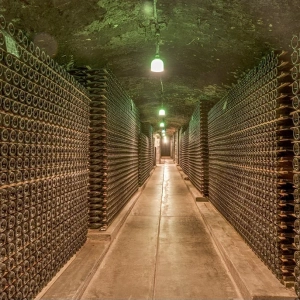
After seasoning for several years, wood destined for wine barrels is sawed into staves. Staves are evaluated for grain and flavor. Smell is important here as staves of different flavors and smell are used depending on what characteristics the winemaker intends. Then staves age two or more years before they go into the cooperage to be fashioned into barrels.

Just as winemakers blend grapes from different plots and different grape varieties, so do barrel makers blend different types of oak, different types of wood grains, and other variables. The variable of grain ranges from extra fine grain to big grain. The tighter the grain, the lesser the micro-oxygenation, which is the interaction between the juice inside the barrel and the atmosphere outside the barrel. There is no one-size-fits-all answer. It depends on what sort of wine the maker wishes to make.

Once staves are cut, they go to the cooperage. Another complex story.

Last round

A fool and his money are soon parted, especially in a wine bar.

Email: wine@cwadv.com

Newsletter: gusclemens.substack.com

Website:  Gus Clemens on Wine website

Facebook:  facebook.com/GusClemensOnWine/posts/

Twitter (X): @gusclemens

Long form wine stories on Vocal: Gus Clemens on Vocal

Links worth exploring

Diary of a Serial Hostess Ins and outs of entertaining; witty anecdotes of life in the stylish lane.

As We Eat Multi-platform storytelling explores how food connects, defines, inspires.


This is a public episode. If you'd like to discuss this with other subscribers or get access to bonus episodes, visit gusclemens.substack.com/subscribe

There’s a lot of noise in the world of wine, but Gus Clemens on Wine cuts through it with clarity and a good dose of humor. Drawing from his widely syndicated newspaper column and his daily online posts, Gus Clemens brings his accessible expertise directly to your ears. This isn’t a stuffy lecture series. Instead, each episode feels like a relaxed conversation with a knowledgeable friend who genuinely wants you to enjoy the journey as much as the glass in your hand. You’ll hear straightforward reviews, fascinating stories from wine history, and practical insights that make the entire subject feel approachable and fun. The podcast naturally extends Gus’s written work into a warm, audio format perfect for listening during a commute, while cooking, or simply relaxing. Whether you’re just starting to explore beyond the supermarket aisle or you’re a seasoned enthusiast looking for a fresh perspective, this series demystifies topics from grape varieties and regions to pairing ideas and the latest trends. It’s about the culture, the people, and the stories behind the bottle, all delivered with a consistent, engaging voice that turns every episode into a pleasant discovery. Tune in for a genuinely user-friendly guide to the wide, wonderful world of wine.
Author: Language: English Episodes: 100

Gus Clemens on Wine explores and explains the world of wine in simple, humorous, fun posts
Podcast Episodes
Wine bottle sizes 2-19-2025 [not-audio_url] [/not-audio_url]

Duration: 4:05
This is the weekly columnIt is a new year and there are sweeping changes in wine bottle sizes in America. Yep, wine makers and glass blowers have a whole new tool kit to entice you into experiencing whatever elixir they…
Wine for Valentine 2-12-2025 [not-audio_url] [/not-audio_url]

Duration: 4:33
This is the weekly columnValentine’s Day cometh, time for expressing love and affection, although one can argue that should be on your to-do list every day.The celebration has roots as far back as ancient Rome. It was th…
Gripes and opinions 2-5-2025 [not-audio_url] [/not-audio_url]

Duration: 4:46
This is the weekly columnWine columnists are expected to have opinions, and I have many. Here are four to rile up readers.• Stemless wine glasses. They do hold wine and they are harder to break and easier to clean than t…
Blending terms 1-29-2025 [not-audio_url] [/not-audio_url]

Duration: 5:20
This is the weekly columnWine labels and wine reviews may include various references to wine blending. Some are specific and informative. Others are distinctions without a difference. Let’s explore the most common blendi…
Types of blends 1-22-2025 [not-audio_url] [/not-audio_url]

Duration: 4:24
This is the weekly columnBlending is essential to making some of the world’s most iconic wines. We explored the several ways to blend last week. This week, specific wines created by blending.• Champagne can be a blend of…
Varietals and blends 1-15-2025 [not-audio_url] [/not-audio_url]

Duration: 4:09
This is the weekly columnIn general, wines can be divided into varietals and blends. This being wine, it is not so black-and-white simple. Let’s explore.A varietal wine has a single variety of grape on the label. That me…
Wine scores 1-8-2025 [not-audio_url] [/not-audio_url]

Duration: 4:09
This is the weekly columWine scores. Oh, my. On one level, ridiculous. On another level, essential to wine’s success over the past half century. Some observations.Anyone who ever took a test or got a report card in grade…
Winter wine survival 1-1-2025 [not-audio_url] [/not-audio_url]

Duration: 4:39
This is the weekly columnHappy New Year. We survived another sun circumnavigation. Sunlight grows slowly longer. Spring rebirth looms over the sere, cold-swept horizon. Endure these last temperature-challenging months, a…
Christmas 12-25-2024 [not-audio_url] [/not-audio_url]

Duration: 4:28
This is the weekly columThis column runs on Wednesdays in most markets—Christmas Day in 2024. If you have not secured your wine before now, no chance today. We can, however, look forward to New Year’s Eve and New Year’s…
Holiday wine pairing insight 12-18-2024 [not-audio_url] [/not-audio_url]

Duration: 4:18
This is the weekly columWith Christmas/holiday feasts coming soon, what is the ideal alcohol percentage for wine paired with food? The answer is 10-14%. Why?U.S. labeling laws are loony, so the ABV amount on the label ca…