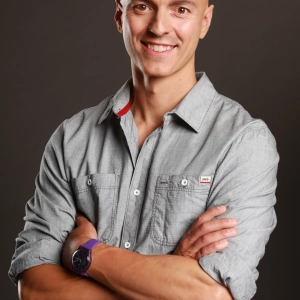
Yuri Elkaim is a popular name in the world of health and nutrition, but it wasn't like that before. In fact, Yuri was practically clueless when it came to nutrition, but he did love sports especially soccer/football. His life changing moment was when he realized his bouts of hair loss were brought about by an autoimmune issue called alopecia. Doctors couldn't explain why, so he thought he would live the rest of his life hairless.
It wasn't until he learned about holistic nutrition that he ended up curing himself. He has since strived to help those around him, to give them hope that there is still a way to treat whatever health issues they might have.
Today, Yuri tells us his story of how he became the Yuri we know now, his thoughts on the whole "Metabolism is like a fireplace" analogy, why he thinks fasting is good for you, the importance of sleep when it comes to making decisions, and why we should learn to decipher when we're hungry and when we're full without relying on an eating schedule.
"There's no law that says 'thou shall have to do cardio after my weight training.'" Yuri Elkaim
In this episode, you'll learn:
- The typical North American diet is not healthy at all.
- The fireplace analogy on metabolism is a myth. Eating all the time to "stoke the flames" won't help you lose weight. In fact, it might lead to more unnecessary weight gain and energy crashing.
- Metabolism is the sum of all the breakdown and buildup in your body; catabolism and anabolism.
- 70% of the calories you burn come from BMR or the calories burned at rest. This is heavily dependent on lean muscle mass.
- If you want to lose weight you have to pack on some muscle. It's a long-term approach to not just weight loss but overall wellness too.
- Fasting is not starving yourself. When done right, you can fast regularly aka intermittent fasting.
- People can be psychologically hungry or physiologically hungry. Psychologically hunger is triggered by environmental or emotional cues to make you feel comfortable in certain situations.
- Listening to your body can mean not eating at the usual time; breakfast at 1 PM is when you break your fast.
- Too much cardio crushes your thyroid and the problem is not the exercises themselves but the duration and frequency. Endurance cardio is not exactly the ideal form of exercise for long-term.
- Leptin and Ghrelin are hunger hormones sensitive to sleep. Leptin tells you to stop eating and Ghrelin tells you to keep eating. Less sleep produces more ghrelin and reduces leptin.
Key Takeaways:
- Eat when you're hungry and stop when your full. You have to be aware "when" you're hungry.
- Women shouldn't be worried about building muscle as they are not as naturally capable of bulking compared to men.
- When you sleep, try to make the room a lot like a dark, cold tomb. It'll boost the quality of your sleep more than sleeping in a warm room penetrated by light.
Connect with Cathe Friedrich:
Rate, Review, Connect, Inspire
Stay updated on new episodes, guest interviews, and health, wellness, and fitness information and resources by subscribing to the HealthCastNow Podcast Show on iTunes. Every day we bring you actionable insight, demystified truth, and simple steps to help you navigate the complex, often confusing health, wellness, and fitness information and answer the questions you've been asking.
Visit HealthCastNow.Com or subscribe on iTunes today!