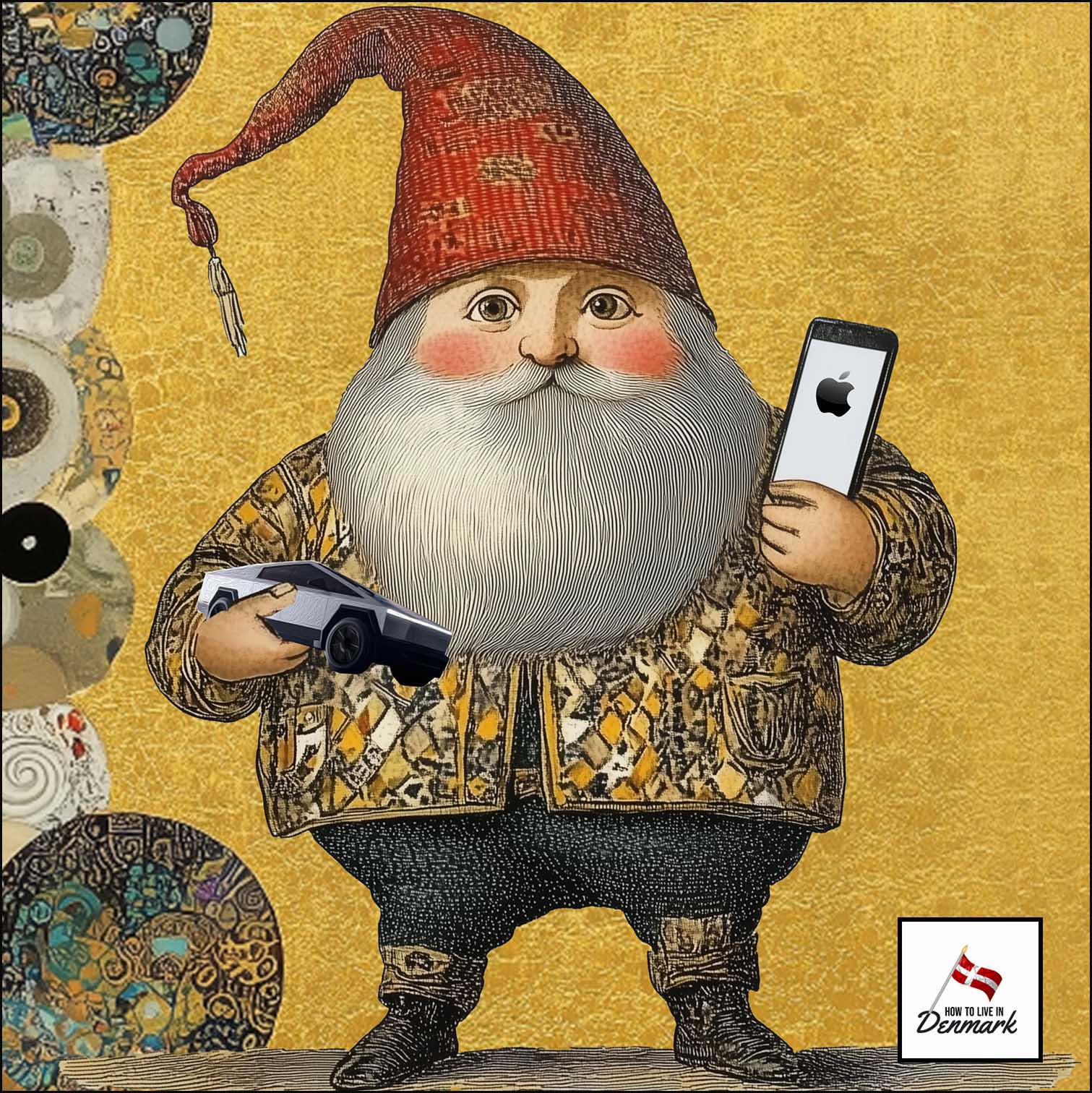
December: Little Nisse, Big Money: The Danish Year Part 12

December: Little Nisse, Big Money: The Danish Year Part 12

Author: Kay Xander Mellish December 3, 2025 Duration: 7:04

The nisse is a centuries-old figure in Danish folklore, and every December these tiny, mischievous spirits take center stage. While Santa Claus makes one big appearance late in the month, the nisse are active the whole season long.

With their short stature and bright red hats, nisse are often mistaken for Santa's elves, but they live very different lives. Rather than helping in a workshop, nisse belong to individual households. They slip in and out of the walls at night, hide everyday objects, turn milk strange colors, and generally make harmless trouble. On December 24 they expect a bowl of rice pudding, and if they don't get it, they're known to act out.

In modern Denmark, nisse aren't just folklore—they're also big business. At the housewares shop where I work during the Christmas rush, we stock more than 450 nisse-related products. There are soft dolls, tree ornaments, and hand-painted figurines with names like Asbjørn, Thorkild, Elvin, Liam, and Olivia.

And then there are the accessories: tiny doors for the nisse to "enter" the home, miniature doormats, wooden shoes, rocking chairs, honey cakes, buckets, sleds, toolboxes, and of course the classic bowl of rice pudding. Many families—especially those with small children, and a surprising number of older women living alone—create small nisse worlds inside their homes.

Some families also hang kravlenisser, the little paper nisse that "crawl" up walls and windows. They're not as popular as they once were, mostly because they're inexpensive and don't fuel the booming nisse economy.

Nisse season extends into the workplace, too. Danes might be assigned a nisseven, or "nisse friend," for secret gift-giving at the office. And at holiday parties, even managers may don the pointed red nisse hat—a cheerful symbol of community and self-irony that sometimes surprises international colleagues.

From home traditions to office fun, the nisse remain an essential part of Christmas in Denmark: tiny spirits with big personalities, and an even bigger cultural footprint.

This is the final episode in our 12-part series, The Danish Year.  Read more at howtoliveindenmark.com, or buy our books at books.howtoliveindenmark.com.

You can book Kay Xander Mellish, the voice behind the How to Live in Denmark podcast, for a speech or workshop on Danish culture or Danish working culture at events.howtoliveindenmark.com. Learn more about Kay at kxmgroup.dk. 


For anyone curious about or currently navigating Danish life from the outside, How to Live in Denmark serves as an essential, on-the-ground guide. Hosted by Kay Xander Mellish, an American writer who has made Denmark her home for over ten years, this conversation cuts straight to the heart of the everyday realities in one of the world's most homogenous-and often puzzling-societies. Rather than lengthy lectures, you'll find concise, ten-minute episodes packed with practical advice and cultural translation. This isn't just about travel tips; it's a deep dive into the unspoken rules of Danish social etiquette, the nuances of the local workplace, and the sometimes surprising path to feeling at home in a country frequently labeled the world's happiest. Mellish draws from her own long-term experience to explain everything from navigating the infamous Jantelov to understanding the Danish approach to business meetings and casual Friday night hygge. As Denmark's longest-running English-language podcast, it has become a trusted resource for internationals, whether they are planning a move, newly arrived, or have been settled for years but still occasionally find themselves wondering, "Why do Danes do it that way?" Each episode feels like a chat with a well-informed friend who helps decode the complexities of a fascinating culture, making your time there richer and a lot less confusing.
Author: Language: en-us Episodes: 100

How to Live in Denmark
Podcast Episodes
Danish union vs A-kasse: What's the difference? [not-audio_url] [/not-audio_url]

Duration: 10:43
When you first arrive in Denmark to work or look for work, the last thing you need is another monthly expense. So many foreigners "save money" by not joining a union. And I was one of them. To be honest, joining a union…
The Danish art of taking time off [not-audio_url] [/not-audio_url]

Duration: 6:52
When I first began working in Denmark, people used to start saying around April or May, "So – are you taking three or four?" What they meant was, are you taking three or four weeks off for your summer vacation? Now, in t…
The Danish job interview [not-audio_url] [/not-audio_url]

Duration: 10:08
If you've been asked for a job interview at a Danish company, congratulations. Danish companies don't like to waste time, so they wouldn't be setting aside time to meet you if they didn't think there was a solid chance t…
How to date a Dane: The two-speed bicycle and the flexible word [not-audio_url] [/not-audio_url]

Duration: 6:35
In Denmark, romance is like a two-speed bike. Speed one is casual sexual affairs with someone you may never see again: speed two is a serious relationship where you'll be expected to go to all your partner's dull family…
