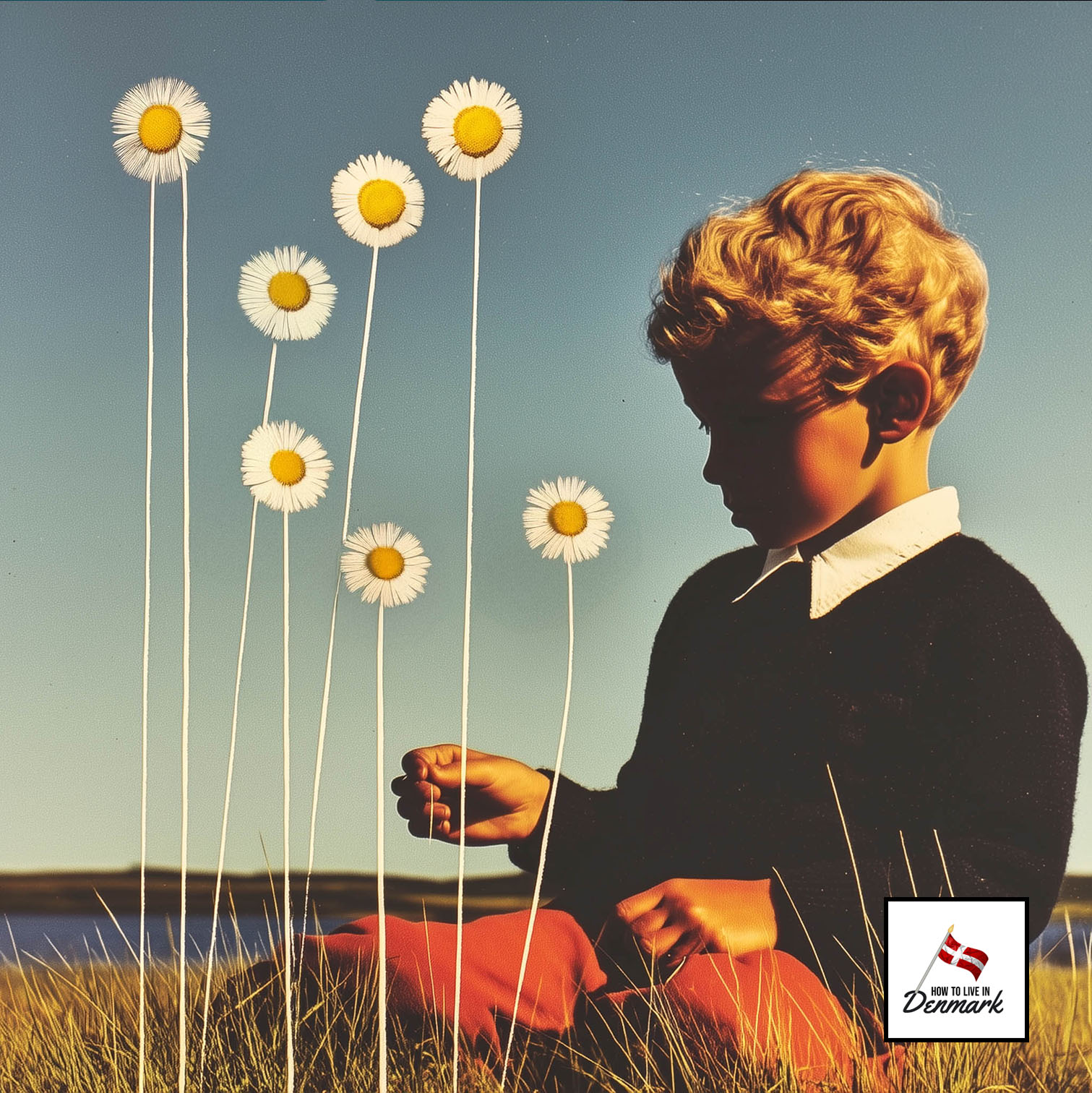
July is vacation month in Denmark, and it's ironic that many Danes go elsewhere on vacation at just this time of year, when you have the best chance of good weather in Denmark. And I do mean chance – there is never any guarantee.
Some Danes go abroad, driving vacations to Southern Europe are popular. There's a well-known cycle in which the summer weather is good one year, so everyone plans a vacation in Denmark the following year, and then the weather is awful, so everyone plans a foreign vacation the next year, and then the weather is good, and so on.
You can surf in Denmark
Staying in Denmark, even if you don't own one of the famous Danish summer houses, can be a great choice. There's a surprising amount of nature to experience in this small, flat, country that isn't as densely populated as the UK, or the Netherlands, or even Germany.
You can surf in Denmark, along the windy west coast, and when you're done explore the ever changing sand dunes. Maybe visit the little lighthouse that is slowly being swallowed up by the sand.
Hike through ancient forests in Denmark
In Denmark you can hike through ancient forests, and even sleep there in some of the public forest shelters. Most of the forest shelters are big wooden boxes with one side entirely open, but with a roof to protect you from the rain.
You can walk through beautiful meadows filled with wildflowers and butterflies. Watch whales along the coastline. Tramp through marshes and see red foxes and white-tailed eagles. Visit open grasslands with a few wild horses.
Chalk cliffs and fossil hunting in Denmark
You can enjoy almost any type of Nordic landscape except mountains, because Denmark doesn't really have any. It's tallest peak, Møllehøj, is 1/3 the height of the Empire State Building.
But if you insist on rocky peaks, you can visit some lovely chalk cliffs in Denmark and try fossil hunting in the sand.
And what ties them all together is the Marguerite Route, or Daisy Route, that runs all over Denmark.
The Daisy Route isn't a straight line from one place to another, like Route 66 in the US or the Trans-Siberian express.
It's 4200 kilometers, or 2600 miles, that looks like a plate of spaghetti, with lots of curves and twists. It takes you on back roads where you can see the quiet side of Denmark. It never doubles back on itself and, with one significant exception – the Big Belt Bridge between Zealand and Fyn – it involves no highways.
Margueritruten Route or the Daisy Route
The Daisy Route is named after the former queen, Margrethe, who inaugurated it on her 50th birthday in 1991. Her nickname is Daisy. And the signs you will follow on the Daisy Route are brown squares with white daisies.
The Daisy Route is a great way to enjoy Danish nature, although, unfortunately, it works best with a car.
Bikes in the city, cars in the countryside
One of Denmark's little secrets is that despite all the tourism pictures of healthy Danes riding bicycles, bicycle infrastructure is best in the big cities.
Many roads in the countryside don't have a bike lane, and you probably don't want to be on a lonely country road on your bike with a cement mixer truck behind you.
Outside of those big cities, most Danes do own cars – and there are more cars in Denmark every year, even though they're very expensive and parking enforcement is draconian.
From the window of my home in Copenhagen, I watch cars being hit with parking fines every single weekday.
Denmark's founding document, the Jelling Stone
What about mass transit? Can you enjoy the Daisy Route using trains and buses?
You can indeed, if you want to see some of the major cultural spots on the route. For example, the Jelling Stone, the giant carved stone that is Denmark's founding document, kind of its Magna Carta or Declaration of Independence.
Put up by King Harold Bluetooth in the year 965, it marks Denmark's transition to the centralized monarchy it still has today. And yes, Bluetooth on your phone is named after him. The Jelling Stone is very easy to reach by train.
Finding Fossils on Møns Klimt
Or Kronborg Castle in Helsingør, also known as Elsinore in Shakespeare's play Hamlet. You can easily take public transport to the castle, where Hamlet lived in the play, and the guard Marcellus said "Something is Rotten in Denmark."
Although Shakespeare apparently never visited the castle himself, you can. It's a simple trip with train, bus, or even ferry from Sweden.
But the some of the best stops on the Daisy Route in Denmark don't work well with mass transit.
For example, Møns Klimt is a dramatic white chalk cliff on an island in southeast Denmark. You can walk along the beach finding prehistoric fossils during the day or go stargazing at night, because there's very little light pollution.
Summer vacation chill in Denmark
To get to Møns Klimt from my home in Copenhagen is a 90 minute car trip…or a 4-hour odyssey involving three trains, two buses, and a long walk. Or a 7-hour bike trip.
It can be done without a car, but it may take away some of your vacation chill.
And vacation chill is what July in Denmark is all about.
Everything closes down
Many companies in Denmark shut down for the last two weeks of July and sometimes the first week of August, restaurants and shops are closed, many church services are suspended. Even my local ice cream shop in Copenhagen closes down, although I'm sure the ones in tourist locations are open and very busy.
You may get to enjoy this in glorious summer sunshine, and on a sunny day, there is no country as pretty as Denmark.
Or you could experience it in cold, pelting rain – possibly on the same day. Danish summer weather has no guarantees.