May, the candle in the window, and getting old in Denmark: The Danish Year Part 5

May, the candle in the window, and getting old in Denmark: The Danish Year Part 5

Author: Kay Xander Mellish May 2, 2025 Duration: 8:19

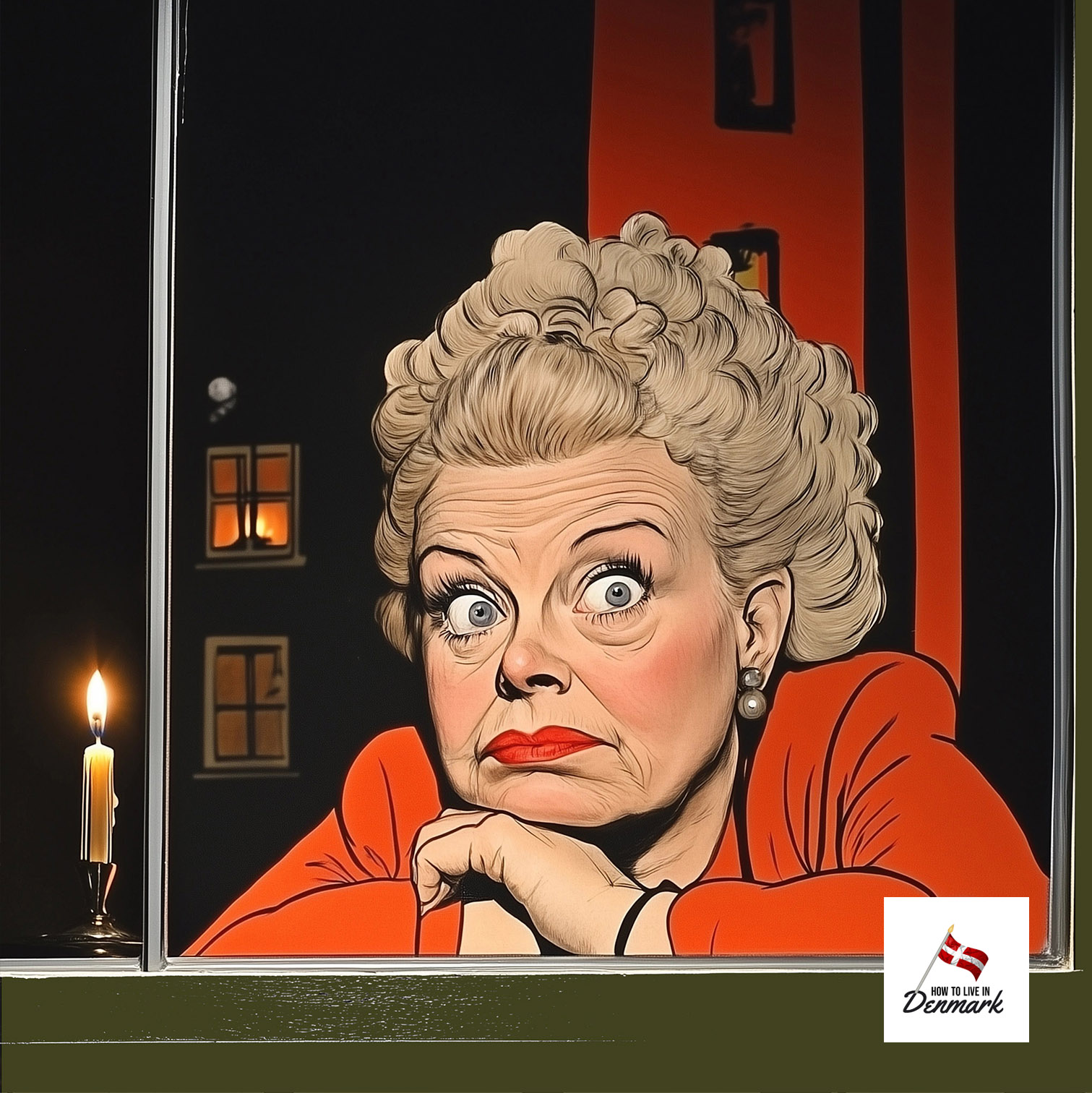
There's a lovely May tradition in Denmark of setting a candle in the window on the evening of May 4. This is to commemorate the surrender of the Germans and the end of the Nazi occupation in 1945. 

The Nazis imposed a blackout on Denmark to confuse the Allied air forces, so now that they were defeated, a candle in a window became a small symbol of rebellious light.

I intend to participate every year on May 4, but I often forget, and to be honest I see very few candles in windows these days. 

A rememberance ceremony, forgotten

You'd have to be aged 85 or older now to remember the war, and Germany is one of Denmark's greatest friends and Allies. 

In addition, the elderly who do remember the occupation and the blackout generally do not live with their families in Denmark, families to whom they might pass on the tradition. 

Old people in Denmark primarily live alone, and municipal employees come to their house once or twice a week to help with cleaning and make sure they take their medicine. 

When they can no longer take care of themselves, they're moved to a publicly-funded care home or a hospice, but this is generally only for the last few months of life.

Living cooperatives against loneliness

The elderly in Denmark are often lonely. 

In India or the Middle East, older people usually live with their families; in the US, where I come from, they join "active adult" communities where they can golf and have affairs. 

The Danish policy that encourages old people to remain in their homes as long as they can isolates them, in my opinion. 

That's why the Danish government, mindful of the fact that the average age in Denmark is advancing quickly, is encouraging the idea of bofæelleskab, or living cooperatives.

That's when a number of older people live together in a house or large apartment, a bit like university students, with a shared kitchen and laundry facilities. 

This gives them a bit of company and, not coincidentally, frees up a lot of individual houses for younger families to move in when the old people move out. 

You're not the hip new designer or management trainee

Now, when I say old people, I'm talking about people over 67, which is the current Danish pension age. That will crawl up to age 70 for kids born today. 

The problem for many people is that it's hard to get a job after age 60. No one wants to hire you as a hip new designer or innovative pharma developer or management trainee. 

Older people at the very top of the success ladder often spend this time on various Boards of Directors, leveraging their years of business experience. 

Below that I meet a lot of older people who have tossed their career and their specialized educations aside and become office managers, or work in retail, or work in kindergartens. 

They're done climbing the career ladder and want something people-focused that is, and I quote, "something to do until I retire."

A word to honor the old in Denmark
Old people don't get any special respect in Danish culture. 

I taught a group of Nepali students in Denmark once, and after the presentation in the Q&A period, they wanted to know if there were some special Danish word they could use to honor the elderly, an important part of their culture in Nepal. 

But there's no specific word in Denmark to honor the elderly. Especially these days, when the people who are old now are the former 1960s hippies who got rid of honorifics like Herr Hansen and Fru Jensen. 

The elderly today in Denmark are called by their first names, just like everyone else. 

Read more at howtoliveindenmark.com.

For anyone curious about or currently navigating Danish life from the outside, How to Live in Denmark serves as an essential, on-the-ground guide. Hosted by Kay Xander Mellish, an American writer who has made Denmark her home for over ten years, this conversation cuts straight to the heart of the everyday realities in one of the world's most homogenous-and often puzzling-societies. Rather than lengthy lectures, you'll find concise, ten-minute episodes packed with practical advice and cultural translation. This isn't just about travel tips; it's a deep dive into the unspoken rules of Danish social etiquette, the nuances of the local workplace, and the sometimes surprising path to feeling at home in a country frequently labeled the world's happiest. Mellish draws from her own long-term experience to explain everything from navigating the infamous Jantelov to understanding the Danish approach to business meetings and casual Friday night hygge. As Denmark's longest-running English-language podcast, it has become a trusted resource for internationals, whether they are planning a move, newly arrived, or have been settled for years but still occasionally find themselves wondering, "Why do Danes do it that way?" Each episode feels like a chat with a well-informed friend who helps decode the complexities of a fascinating culture, making your time there richer and a lot less confusing.
Author: Language: en-us Episodes: 100

How to Live in Denmark
Podcast Episodes
Can I date my Danish colleague? [not-audio_url] [/not-audio_url]

Duration: 6:16
Many Danes meet their future spouses at work. Yet there are also strict laws in Denmark against sexual harassment. Where do you draw a line between harassment and two adults developing tender feelings for each other? ---…
The Danish Flag: 800 years old and going out fashion? [not-audio_url] [/not-audio_url]

Duration: 5:32
People visiting Denmark can't help but notice that the Danish flag is everywhere. Christmas trees here are decorated with little Danish flags. Cucumbers in the supermarket have Danish flags on them to show they're grown…
Your free daily banana and five weeks off:  Job benefits in Denmark [not-audio_url] [/not-audio_url]

Duration: 8:37
On-the-job benefits in Denmark come in three categories: the kind every Danish worker gets, the kind everyone at your company gets, and the kind everyone at a certain level in your company gets. When you talk with a futu…
Danish gangsters: Night-time helicopters and the risks of a knit hat [not-audio_url] [/not-audio_url]

Duration: 5:10
If you live in Denmark or follow the Danish media, you'll know there's been a lot of talk of gangsters over the past week. One Danish gang is trying to expand at the expense of another gang, and this summer there have be…
The Trailing Spouse in Denmark [not-audio_url] [/not-audio_url]

Duration: 8:43
If you're coming from abroad to work in Denmark, you may be bringing along your spouse. That can be great – it's nice to have someone to shiver through the Danish summer with. But unhappy spouses are one of the main reas…
Why job titles aren't important in Denmark [not-audio_url] [/not-audio_url]

Duration: 7:41
One of the most important words in the Danish language is "ligestilling" – equality. The belief that all (Danish) people are basically equal permeates every relationship and every interaction. Fancy job titles do not fit…