Christmas Lectures 2020: How can we look after our planet?

Christmas Lectures 2020: How can we look after our planet?

Author: Our Media December 7, 2020 Duration: 36:11
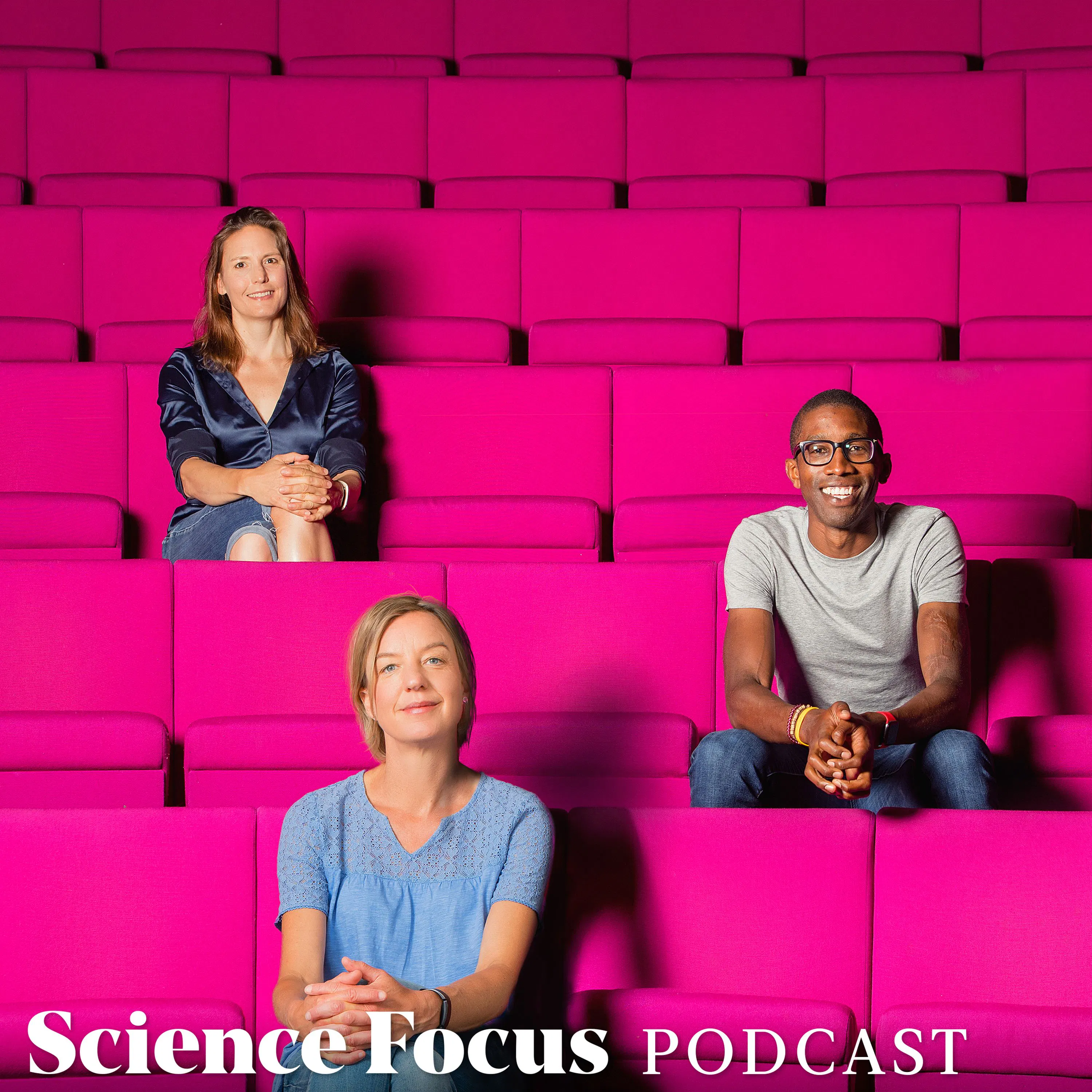
Started by Michael Faraday in 1825, and now broadcast on national television, the Christmas lectures bring a science topic to our screens over three nights every year. The series of lectures has always been held within the Royal Institution in London, but this year, of course, is going to be slightly different. In this week's episode, editorial assistant Amy Barrett is joined today by three expert scientists, Tara Shine, Chris Jackson and Helen Czerski, who are going to be presenting the 2020 Christmas lectures, titled Planet Earth: A User's Guide. In lecture one, geologist Chris Jackson will reveal our Earth's climate story through the rocks and the fossil record. In lecture two, physicist and oceanographer Helen Czerski will talk about the part our oceans play in the climate crisis. And in lecture three, environmental scientist Tara Shine will talk about carbon emissions and what we're really breathing in. Let us know what you think of the episode with a review or a comment wherever you listen to your podcasts. Subscribe to the Science Focus Podcast on these services: Acast, iTunes, Stitcher, RSS, Overcast Read the full transcription [this will open in a new window] Listen to more episodes of the Science Focus Podcast: Hannah Fry: How much of our lives is secretly underpinned by maths? Royal Institution Christmas Lectures past and present Sir David Attenborough: How can we save our planet? Christiana Figueres and Tom Rivett-Carnac: Has climate change determined our future? Everything you ever wanted to know about... the deep sea with Dr Jon Copley Mark Miodownik: Are biodegradable plastics really better than traditional plastic? Hosted on Acast. See acast.com/privacy for more information. Learn more about your ad choices. Visit podcastchoices.com/adchoices

Curiosity doesn't have to be a deep dive; sometimes, you just want a clear, smart answer. That's the idea behind Instant Genius, a production from Our Media that brings the editorial expertise of BBC Science Focus Magazine into audio form. Each episode is a compact conversation with a leading researcher, scientist, or technologist, designed to unpack a complex topic in a single sitting. You might explore the mechanics of memory one day and the engineering behind quantum computers the next, all within the same accessible format. This podcast operates on the belief that profound understanding doesn't require hours of your time. Released every Monday and Friday, these bite-sized masterclasses are perfect for a commute or a coffee break, turning spare moments into genuine learning. The discussions are focused and surprisingly thorough, moving from fundamental principles to cutting-edge implications without getting lost in jargon. It’s for anyone who has ever wondered about the science of sleep, the truth about nutrition trends, or how black holes actually work, and wanted a reliable source to explain it clearly. Tuning into this podcast means getting a direct line to experts who are shaping our understanding of the world, all structured to deliver insight efficiently. The range is deliberately broad, spanning health, cosmology, technology, and everyday science, reflecting the endless questions a curious mind can hold.
Author: Language: English Episodes: 101

Instant Genius
Podcast Episodes
Sonia Contera: How will nanotechnology revolutionise medicine? [not-audio_url] [/not-audio_url]

Duration: 38:53
This week we talk to one of the world’s leading pioneers in the field of nanotechnology, Sonia Contera. Nanotechnology is the application of science at a truly nano scale. To put that in perspective, if a nanometre were…
Neil Shubin: How do big changes in evolution happen? [not-audio_url] [/not-audio_url]

Duration: 38:19
The first time a fish crawled out of the water and onto land, it was a turning point that led to brand new kinds of life. But this couldn’t happen on its own: that fish would have needed both lungs and legs. Neil Shubin,…