No Thinking Without a Thinker: Dr. Mihretu Guta on Consciousness

No Thinking Without a Thinker: Dr. Mihretu Guta on Consciousness

Author: Discovery Institute February 21, 2026 Duration: 1:27:33
Starting this month, ID The Future listeners will get to enjoy a new episode each month (as well as a bingecast archive episode) from our sister podcast Mind Matters News, a production of the Discovery Institute’s Walter Bradley Center for Natural and Artificial Intelligence. The Mind Matters News podcast brings you interviews and insight from computer scientists, engineers, inventors, neurosurgeons, and other experts who bring sanity to the conversation about natural and artificial intelligence, going beyond the hype to explore the undercurrents of these important ideas. And although the Mind Matters News podcast will not often explicitly discuss intelligent design, it regularly explores the nature of intelligence, the origin of information, and the things that make us uniquely human, concepts that are central to the theory of intelligent design. On this archive "bingecast" episode, hosts Robert J. Marks and Angus Menuge welcome Dr. Mihretu Guta to discuss his contribution to the book Minding the Brain. Dr. Guta discusses the nature of consciousness and the challenges in understanding it from a philosophical perspective. He argues that consciousness is a unique property that is deeply subjective and personal, making it difficult to study scientifically. Guta contrasts first-order and second-order approaches to understanding consciousness, emphasizing the need to go beyond just the empirical observation of mental phenomena and examine the underlying metaphysical and ontological questions. The discussion covers a number of relevant topics, highlighting the profound and puzzling nature of consciousness and the importance of philosophical inquiry in grappling with this fundamental aspect of human experience.

Source


Dive into the ongoing conversation at the intersection of science, philosophy, and culture with Intelligent Design the Future. Produced by the Discovery Institute, this podcast offers a focused exploration of the arguments and discussions surrounding intelligent design and evolutionary theory. Rather than lengthy lectures, it presents concise, digestible episodes that fit into your day, featuring direct conversations with researchers and thinkers actively engaged in this scientific field. You'll hear from scientists, scholars, and institute fellows who break down new developments, analyze recent publications, and address the broader implications of these ideas for education and society. The discussions are grounded in the perspective that nature presents evidence of design, tackling complex topics in astronomy, biology, and the philosophy of science with a specific point of view. Each episode aims to provide clarity on current debates, making the content accessible whether you're deeply familiar with the subject or just beginning to explore these fundamental questions. This is a place for substantive dialogue on one of the most enduring topics in modern thought, all packaged in a brief, engaging format that prioritizes depth over duration. Tune in to hear the voices shaping this particular strand of scientific discourse.
Author: Language: en-us Episodes: 100

Intelligent Design the Future
Podcast Episodes
How to Train Up a New Generation of James Clerk Maxwells [not-audio_url] [/not-audio_url]

Duration: 38:17
Is it possible to produce mathematicians today of the same caliber as greats like Sir Isaac Newton and James Clerk Maxwell? How can we help young people develop a genuine interest in mathematics, including its history, a…
Faith and Reason: A Profile of Mathematician James Clerk Maxwell [not-audio_url] [/not-audio_url]

Duration: 27:27
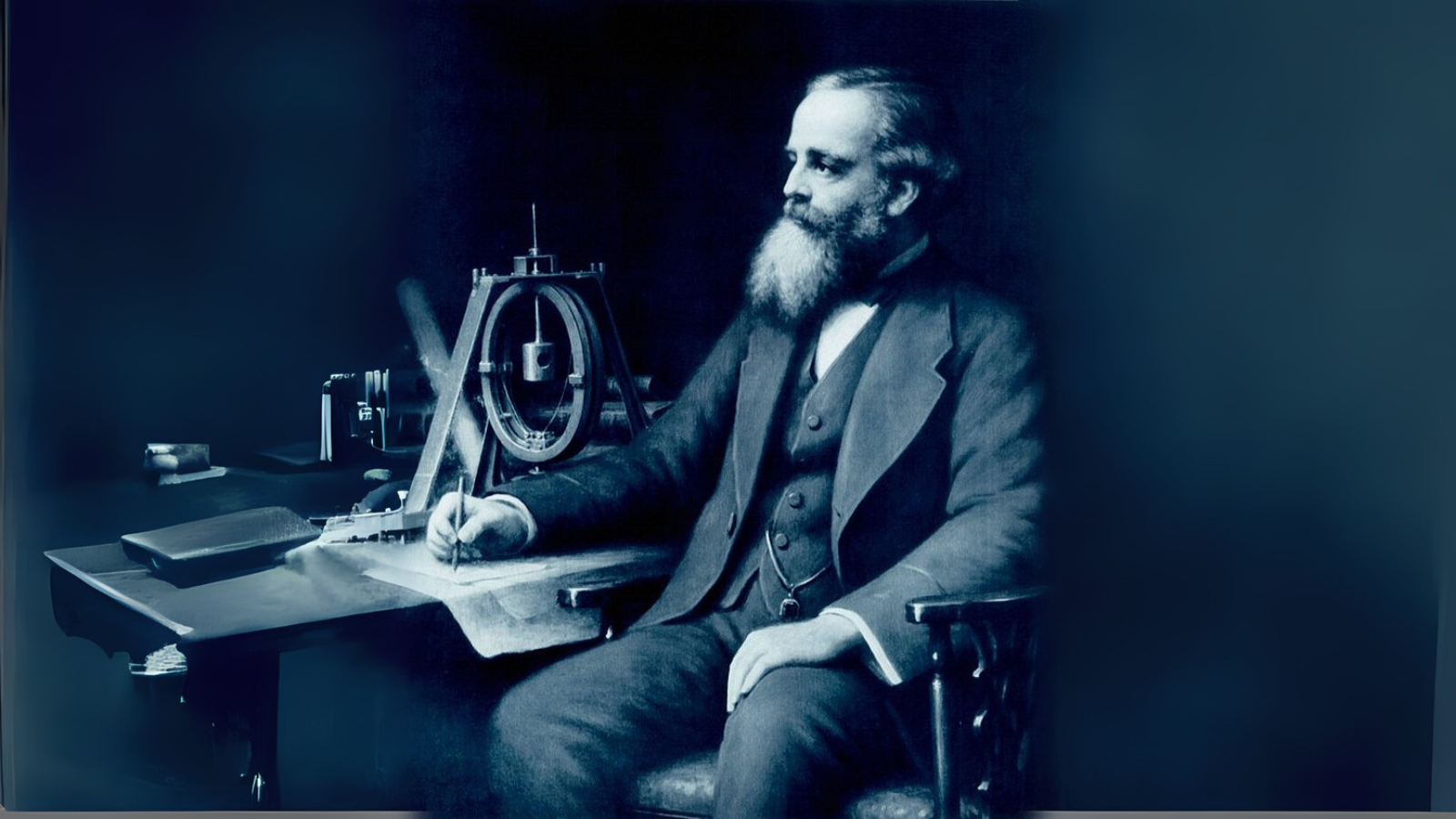
He's one of the most significant scientists of the 19th century, and his work laid the foundation for modern physics, quantum mechanics, and relativity. Scottish physicist and mathematician James Clerk Maxwell is a pivot…
Douglas Axe on the Human Element in Science [not-audio_url] [/not-audio_url]

Duration: 17:54
On this episode of ID the Future selected out of our vault, host Eric Metaxas begins a conversation with biologist and professor Dr. Douglas Axe on The Eric Metaxas show. Axe is the Maxwell Professor of Molecular Biology…
Irreducible Complexity: Michael Behe Breaks Down a Key ID Concept [not-audio_url] [/not-audio_url]

Duration: 58:32
Could you explain irreducible complexity to a friend? How about firing off three reasons you believe it to be true? You never know when you'll be asked to explain your scientific worldview to a family member, friend, or…
Evolution News Evolves: Introducing Science and Culture Today [not-audio_url] [/not-audio_url]

Duration: 29:18
For over 20 years, Evolution News has offered readers exclusive daily news and commentary on the evidence for intelligent design and the debate over evolution. Now, with a fresh design, a broader vision, and new name, Ev…
How Modern Physics Reveals Purpose in the Universe [not-audio_url] [/not-audio_url]

Duration: 23:16
Scientists agree that our universe is finely tuned for the existence of life. But is the fine-tuning a happy accident or the result of foresight? On this ID The Future, host Brian Miller continues his conversation with R…
Why Evolutionary Psychology Can’t Explain Heroism [not-audio_url] [/not-audio_url]

Duration: 35:54
If evolutionary psychology explains every complex human behavior as well as its opposite, does it really explain anything? Today, host Andrew McDiarmid concludes his conversation with geologist and attorney Dr. Casey Lus…
Which Origins Theory Better Explains Altruism and Morality? [not-audio_url] [/not-audio_url]

Duration: 23:13
Do evolutionary models adequately account for the reality of human altruism, moral conviction, and cooperation? Does intelligent design offer a better explanation? On this ID The Future, host Andrew McDiarmid begins disc…
Physics to God: Rational Arguments for Design in the Universe [not-audio_url] [/not-audio_url]

Duration: 25:53
Do you recognize the number 1/137.035999206? It might seem arbitrary, but if the fine structure constant were any higher or lower than it is, you might not exist! On this episode of ID The Future, host Brian Miller kicks…