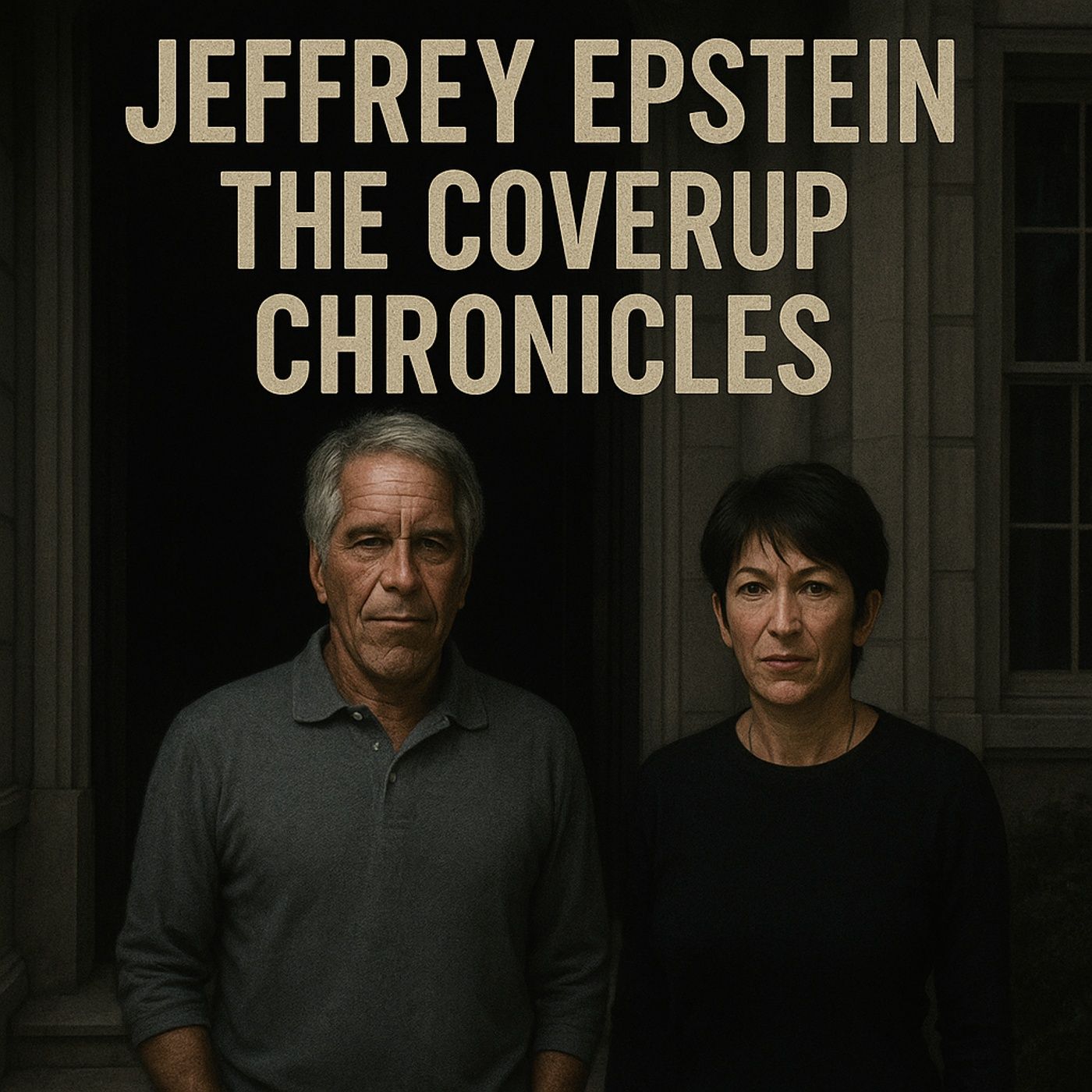
Jeffrey Epstein And His Wannabe Version Of Tom Hagan


Author: Bobby Capucci March 9, 2026 Duration: 16:29
Podcast episode
Jeffrey Epstein And His Wannabe Version Of Tom Hagan

The relationship between Jeffrey Epstein and Darren Indyke stretched back decades and went far beyond that of a typical attorney-client arrangement. Indyke served not only as Epstein’s personal lawyer but also as one of the central architects of his financial and legal infrastructure. Over the years, Indyke helped manage Epstein’s complex web of corporations, trusts, and shell entities that controlled vast sums of money and numerous properties around the world. He was deeply embedded in Epstein’s inner circle, acting as a trusted gatekeeper who handled legal affairs, property transactions, and financial structures that insulated Epstein from scrutiny. Even after Epstein’s 2019 arrest and subsequent death, Indyke remained in a position of extraordinary influence: Epstein’s will named him as a co-executor of the estate, placing him in charge of managing the very fortune tied to the crimes under investigation. That dual role—as longtime legal fixer and later steward of Epstein’s estate—raised serious questions about conflicts of interest and about how someone so closely connected to Epstein’s operations managed to remain largely insulated from criminal liability.

Critics have long argued that the decision by federal prosecutors and law enforcement agencies not to indict Indyke as a co-conspirator represents one of the most glaring omissions in the Epstein case. Prosecutors alleged that Epstein ran a sophisticated trafficking operation that relied on employees, recruiters, and facilitators, yet one of the individuals closest to Epstein’s financial and legal operations was never criminally charged. Indyke’s extensive involvement in structuring Epstein’s business affairs, managing his properties, and maintaining control of the financial apparatus surrounding him placed him in proximity to nearly every aspect of Epstein’s empire. For many observers, the absence of charges against Indyke highlights a recurring pattern in the Epstein scandal: lower-level participants and victims were scrutinized while powerful professionals who helped sustain Epstein’s system remained untouched. Whether due to evidentiary hurdles, prosecutorial caution, or institutional reluctance to pursue well-connected legal figures, the failure to treat Indyke as a potential co-conspirator has fueled enduring criticism that the Epstein investigation never fully followed the money or the professional enablers who helped make the operation possible.


to contact me:

bobbycapucci@protonmail.com


More episodes

Duration: 14:05
Court records and newly surfaced documents indicated that Jeffrey Epstein financed the tuition of a student attending the University of California, Berkeley School of Law. According to records reviewed in the report, Epstein paid roughly $26,000 in tuition for the law student. In return, the student allegedly helped recruit or refer young women to work for Epstein as “assistants,” a term widely used within Epstein’s network to describe women who often performed personal or administrative tasks around his operations. The arrangement appeared to mirror patterns seen in other parts of Epstein’s network, where financial support, gifts, or opportunities were provided in exchange for helping connect him with women.The report highlighted how Epstein leveraged money and influence to build relationships within elite institutions, including universities, where tuition payments and donations could open doors. Documents suggested that paying the Berkeley student’s tuition was part of a broader str…

Duration: 39:52
For years, British authorities appeared strikingly reluctant to pursue the allegations surrounding Jeffrey Epstein and his connection to Prince Andrew, even as evidence and public accusations mounted. After Epstein’s 2008 conviction in the United States for soliciting a minor, serious questions were raised about Andrew’s continuing relationship with the disgraced financier, yet meaningful scrutiny from UK law enforcement and government institutions remained conspicuously absent. Victims, journalists, and investigators repeatedly highlighted the prince’s ties to Epstein and the allegations made by Virginia Giuffre, but the British establishment largely treated the matter as an embarrassing royal scandal rather than a potential criminal issue that demanded urgent investigation. Critics argue that this reluctance reflected a broader institutional instinct to shield the monarchy from scrutiny, particularly when one of its most prominent members was at the center of explosive allegations.Th…

Duration: 27:16
In early 2016, Virginia Giuffre, through her counsel, filed a motion seeking to compel Ghislaine Maxwell to produce documents that had been withheld based on objections and privilege claims deemed improper by the plaintiff. Giuffre’s motion challenged Maxwell’s broad assertions of attorney‑client privilege, work‑product doctrine, vagueness, overbreadth, and undue burden. The motion was accompanied by detailed declarations—most notably by attorney Sigrid S. McCawley—which laid out why many of Maxwell’s objections appeared unjustified and why the requested materials were relevant and necessary for Giuffre’s case.The court reviewed both the motion and Maxwell’s opposition, which included memoranda of law and declarations defending her objections and maintaining that providing certain documents would violate privacy rights or exceed the scope of discovery. Ultimately, in a partially favorable ruling for Giuffre, the court granted the motion in part and denied it in part, indicating that wh…

Duration: 28:43
In early 2016, Virginia Giuffre, through her counsel, filed a motion seeking to compel Ghislaine Maxwell to produce documents that had been withheld based on objections and privilege claims deemed improper by the plaintiff. Giuffre’s motion challenged Maxwell’s broad assertions of attorney‑client privilege, work‑product doctrine, vagueness, overbreadth, and undue burden. The motion was accompanied by detailed declarations—most notably by attorney Sigrid S. McCawley—which laid out why many of Maxwell’s objections appeared unjustified and why the requested materials were relevant and necessary for Giuffre’s case.The court reviewed both the motion and Maxwell’s opposition, which included memoranda of law and declarations defending her objections and maintaining that providing certain documents would violate privacy rights or exceed the scope of discovery. Ultimately, in a partially favorable ruling for Giuffre, the court granted the motion in part and denied it in part, indicating that wh…

Duration: 13:53
The public reawakening to the Jeffrey Epstein story has exposed not just the scale of his crimes, but how profoundly they were misunderstood and minimized for years. Many who once dismissed deeper reporting on Epstein are now fully engaged as legacy outlets publish long retrospectives on his wealth, social connections, and early career, particularly his time at Bear Stearns. While this shift in coverage may appear overdue, it raises an uncomfortable question: why these stories are being told now, long after Epstein abused victims openly in New York and elsewhere with little sustained scrutiny. For years, major media organizations treated the more troubling implications of Epstein’s power as speculative, focusing on isolated scandals rather than the structural forces that allowed him to operate with impunity. The current reporting, much of it recycling information known for half a decade or more, still largely avoids confronting how Epstein repeatedly survived scandals that should have…

Duration: 11:33
The controversy over the Epstein file release centers on a fundamental failure to follow the law as written. Congress authorized only narrow redactions: those necessary to protect survivor identities and to preserve genuinely ongoing investigations. Instead, the released documents are riddled with blackouts that obscure names of federal employees, already-named co-conspirators, and individuals long discussed in court records and public reporting. These redactions are inconsistently applied, often contradicting information left unredacted elsewhere in the same files, which undermines any claim that they are carefully tailored or legally justified. Rather than protecting due process or preventing harm, the excessive redactions distort the record, block accountability, and create confusion where clarity is legally required.At the core of the problem is the refusal of the Department of Justice to fully embrace transparency in the Epstein case. The DOJ’s history—marked by delay, minimizatio…

Duration: 23:38
Ghislaine Maxwell was charged with two counts of perjury after federal prosecutors alleged she blatantly lied under oath during sworn depositions in 2016 tied to civil litigation brought by one of Jeffrey Epstein’s victims. In those depositions, Maxwell denied recruiting underage girls, denied facilitating sexual encounters, and denied any meaningful knowledge of Epstein’s abuse of minors. Prosecutors later argued those denials were not misunderstandings or memory lapses but deliberate falsehoods designed to obstruct justice and protect herself from mounting legal exposure. The perjury charges reflected the government’s position that Maxwell was willing to lie under oath to preserve her status, reputation, and freedom, even as evidence accumulated showing her deep involvement in Epstein’s trafficking operation.Although Maxwell was ultimately convicted in 2021 on multiple sex-trafficking conspiracy counts, the perjury charges were later dismissed on procedural grounds related to prior n…

Duration: 22:15
In the aftermath of Jeffrey Epstein’s death in federal custody in August 2019, his brother Mark Epstein met with investigators from the Department of Justice’s Office of the Inspector General (OIG) as part of the broader review into the circumstances surrounding the death at the Metropolitan Correctional Center in New York. During the meeting, Mark Epstein raised serious concerns about the official conclusion that his brother died by suicide, arguing that the available evidence left major questions unanswered. He told inspectors that he did not believe the suicide determination made sense given the injuries described in the autopsy and the unusual conditions surrounding Jeffrey Epstein’s detention in the days leading up to his death.Mark Epstein also questioned the failures inside the jail that night, including the fact that surveillance cameras in key areas reportedly malfunctioned and that the two correctional officers assigned to monitor the unit failed to perform regular security c…

Duration: 15:42
In the aftermath of Jeffrey Epstein’s death in federal custody in August 2019, his brother Mark Epstein met with investigators from the Department of Justice’s Office of the Inspector General (OIG) as part of the broader review into the circumstances surrounding the death at the Metropolitan Correctional Center in New York. During the meeting, Mark Epstein raised serious concerns about the official conclusion that his brother died by suicide, arguing that the available evidence left major questions unanswered. He told inspectors that he did not believe the suicide determination made sense given the injuries described in the autopsy and the unusual conditions surrounding Jeffrey Epstein’s detention in the days leading up to his death.Mark Epstein also questioned the failures inside the jail that night, including the fact that surveillance cameras in key areas reportedly malfunctioned and that the two correctional officers assigned to monitor the unit failed to perform regular security c…

Duration: 14:06
The House Oversight Committee voted to subpoena Attorney General Pam Bondi to testify about the Justice Department’s handling of the Jeffrey Epstein files, a move that reflected growing frustration in Congress over what lawmakers say has been a deeply flawed and opaque disclosure process. The subpoena passed in a 24–19 vote, with several Republicans joining Democrats in demanding that Bondi appear before the committee to explain why the department missed legal deadlines and failed to release large portions of the Epstein records despite the requirements of the Epstein Files Transparency Act. Lawmakers say that while the Justice Department released millions of pages of documents, investigators believe tens of thousands of files remain withheld or offline, raising serious concerns that the public has not been given the full picture. The vote to compel Bondi’s testimony amounted to a rare bipartisan rebuke of the nation’s top law-enforcement official and signaled mounting anger in Congres…

Duration: 17:44
A report highlighted controversy surrounding tens of thousands of Jeffrey Epstein–related files that were temporarily taken offline or withheld from public release, fueling accusations that key documents were missing. The Justice Department acknowledged that roughly 47,000 to 50,000 Epstein files had been removed from the public archive for additional review, with officials saying the materials required further redaction or processing before they could be released. The documents are part of the broader disclosure effort mandated by the Epstein Files Transparency Act, which requires federal authorities to release records connected to Epstein’s trafficking operation while protecting victim identities and privileged information.The controversy intensified after claims emerged that some of the withheld files contained FBI interview summaries and other records referencing unverified allegations involving Donald Trump, which he has repeatedly denied. Lawmakers and critics argued the missing…

Duration: 15:06
The U.S. House Oversight Committee requested testimony from several high-profile figures — including Bill Gates, Kathryn Ruemmler, and Leon Black — as part of its expanding investigation into connections surrounding Jeffrey Epstein. Committee Chairman James Comer sent letters asking seven individuals to appear before the panel, stating that the committee believes they may possess information relevant to its probe. Lawmakers are examining how Epstein and Ghislaine Maxwell built influence among powerful figures, as well as whether federal authorities mishandled aspects of the investigation into the pair’s alleged sex-trafficking operation. The requests came as Congress continues reviewing large batches of documents released by the Justice Department following legislation requiring disclosure of Epstein-related files.The documents and testimony requests highlight various previously reported interactions between Epstein and prominent figures. Gates has acknowledged meeting Epstein multiple…

Duration: 27:21
Jennifer Araoz filed a lawsuit against the Epstein Estate, alleging she was groomed and sexually assaulted by Jeffrey Epstein when she was a teenager. The lawsuit claims that Araoz was recruited outside her New York City high school by Epstein’s associates, who promised career opportunities and financial support. Over time, Epstein allegedly coerced her into repeated sexual encounters, culminating in a rape at his Manhattan townhouse when she was just 15 years old. Araoz contends that Epstein’s vast network of accomplices played an active role in enabling the abuse by fostering an environment of manipulation and control.The lawsuit not only targets Epstein’s estate but also implicates other individuals and entities that Araoz claims facilitated his criminal activities. Seeking both justice and compensation, Araoz’s suit is part of a broader legal effort by Epstein’s survivors to hold those connected to his network accountable. The case underscores the alleged systemic nature of Epstein…

Duration: 44:51
Jennifer Araoz filed a lawsuit against the Epstein Estate, alleging she was groomed and sexually assaulted by Jeffrey Epstein when she was a teenager. The lawsuit claims that Araoz was recruited outside her New York City high school by Epstein’s associates, who promised career opportunities and financial support. Over time, Epstein allegedly coerced her into repeated sexual encounters, culminating in a rape at his Manhattan townhouse when she was just 15 years old. Araoz contends that Epstein’s vast network of accomplices played an active role in enabling the abuse by fostering an environment of manipulation and control.The lawsuit not only targets Epstein’s estate but also implicates other individuals and entities that Araoz claims facilitated his criminal activities. Seeking both justice and compensation, Araoz’s suit is part of a broader legal effort by Epstein’s survivors to hold those connected to his network accountable. The case underscores the alleged systemic nature of Epstein…

Duration: 33:41
Jennifer Araoz filed a lawsuit against the Epstein Estate, alleging she was groomed and sexually assaulted by Jeffrey Epstein when she was a teenager. The lawsuit claims that Araoz was recruited outside her New York City high school by Epstein’s associates, who promised career opportunities and financial support. Over time, Epstein allegedly coerced her into repeated sexual encounters, culminating in a rape at his Manhattan townhouse when she was just 15 years old. Araoz contends that Epstein’s vast network of accomplices played an active role in enabling the abuse by fostering an environment of manipulation and control.The lawsuit not only targets Epstein’s estate but also implicates other individuals and entities that Araoz claims facilitated his criminal activities. Seeking both justice and compensation, Araoz’s suit is part of a broader legal effort by Epstein’s survivors to hold those connected to his network accountable. The case underscores the alleged systemic nature of Epstein…

Logo
Select station
VOL