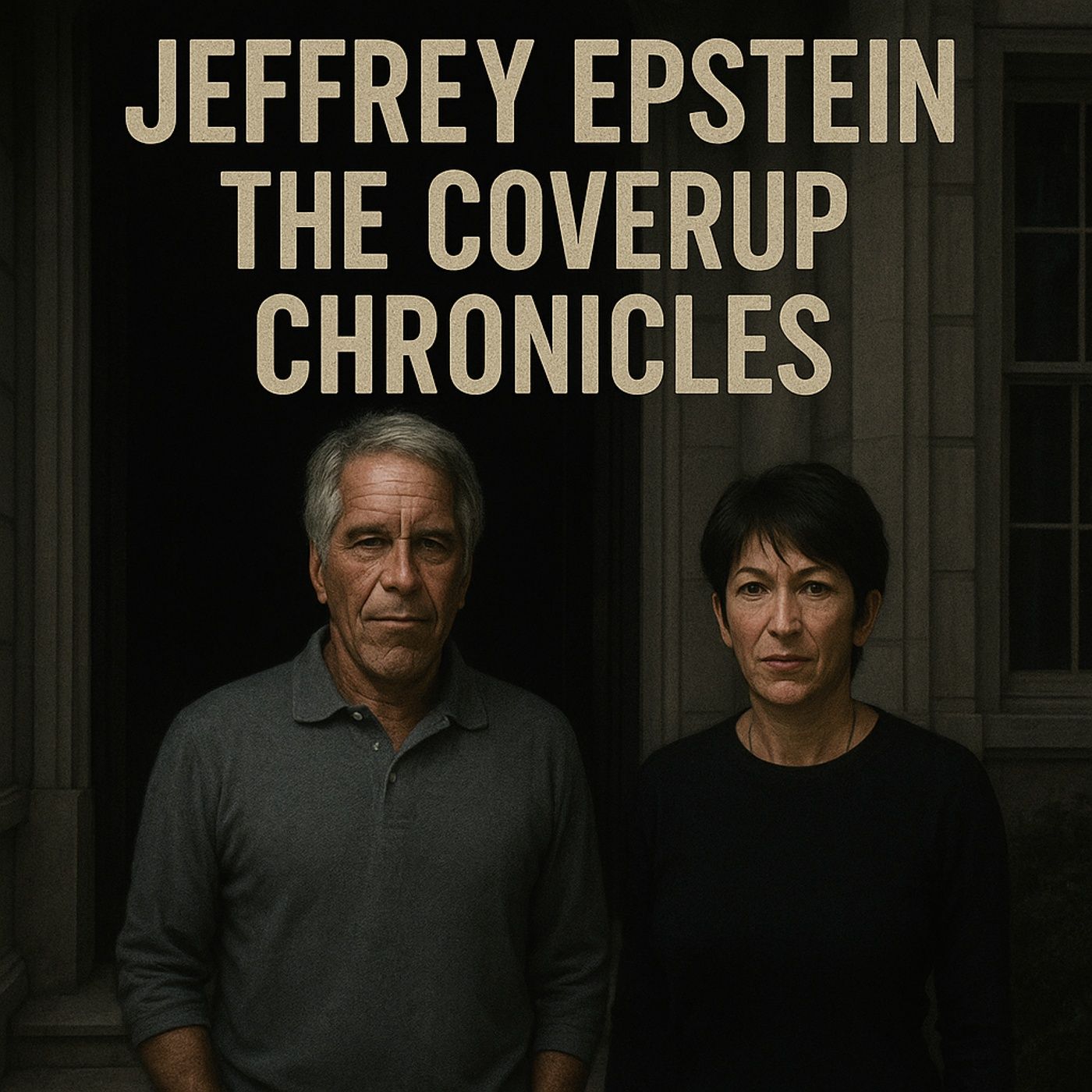
The SDNY And Their Pathetic Behavior When It Comes To Jeffrey Epstein


Author: Bobby Capucci March 8, 2026 Duration: 31:08
Podcast episode
The SDNY And Their Pathetic Behavior When It Comes To Jeffrey Epstein

For years, the U.S. Attorney’s Office for the Southern District of New York (SDNY) possessed extensive evidence connected to Jeffrey Epstein’s sex-trafficking operation but failed to act decisively, allowing the case to languish despite mounting allegations and investigative material. Federal agents had gathered witness statements, victim accounts, travel records, and financial evidence that painted a clear picture of a long-running trafficking enterprise involving underage girls. Yet despite the gravity of the allegations and the scope of the evidence, the SDNY did not bring charges for years, leaving Epstein free to continue operating within elite social and financial circles. Critics argue that this delay represents one of the most glaring failures of federal prosecution in recent memory. In their view, the evidence was not merely suggestive — it was substantial and deeply troubling, raising serious questions about why federal prosecutors waited so long before pursuing a full criminal case.

The eventual indictment of Epstein in 2019 only intensified scrutiny of the SDNY’s earlier inaction. By that point, victims had spent years fighting to be heard while Epstein moved freely among wealthy and powerful associates. Observers and advocates for the victims have argued that the SDNY’s delay allowed critical evidence to grow stale, witnesses to disperse, and the broader network surrounding Epstein to remain unexamined for far too long. The situation fueled suspicions that Epstein’s immense wealth and influential connections may have contributed to the reluctance to move forward sooner. Whether the delay stemmed from bureaucratic caution, prosecutorial hesitation, or something more troubling, the outcome was the same: a powerful predator operated for years while federal authorities who possessed significant evidence failed to bring him to justice in a timely manner.


to contact me:

bobbycapucci@protonmail.com

More episodes

Duration: 14:22
The House Oversight Committee is preparing to depose Richard Kahn, Jeffrey Epstein’s longtime accountant, as part of its expanding congressional investigation into how Epstein managed and protected his wealth while allegedly operating a years-long sex-trafficking network. Kahn worked for Epstein for more than a decade and helped oversee the financier’s complex financial structure, including trusts, shell entities, and other mechanisms that managed Epstein’s multimillion-dollar fortune. Lawmakers believe questioning Kahn could provide insight into how Epstein funded his operations, moved money through various accounts, and maintained financial secrecy while facing mounting allegations of abuse. The committee has indicated that Kahn’s knowledge of Epstein’s financial infrastructure may help clarify whether money flows or financial arrangements enabled or concealed the broader trafficking enterprise.The deposition is part of a broader congressional effort to map Epstein’s network of assoc…

Duration: 13:27
Charlotte Manley, a longtime aide to Andrew Mountbatten-Windsor (formerly Prince Andrew), has said she is willing to speak with police about her time working for him between 1996 and 2003 as investigators revisit issues connected to the Jeffrey Epstein scandal. Manley served in several senior administrative roles, including assistant private secretary, private secretary, and treasurer, and often accompanied Andrew during his tenure as the United Kingdom’s special trade envoy. During that time she handled travel arrangements, finances, and other official matters on his behalf. One detail drawing renewed attention is a £75 cheque she signed in 2000 from a Buckingham Palace account to pay a South African masseuse whose visit to Andrew was reportedly arranged by Ghislaine Maxwell. The woman who provided the massage later said the encounter at Buckingham Palace was awkward but not inappropriate, though the episode has become part of the broader scrutiny surrounding Andrew’s associations wit…

Duration: 44:02
In his interview with the DOJ Office of the Inspector General, Alex Acosta repeatedly framed the 2007–2008 Epstein non-prosecution agreement as a constrained, pragmatic decision made under pressure rather than a deliberate act of favoritism. He told inspectors that Epstein’s defense team, stacked with politically connected and aggressive lawyers, created what he described as a credible threat of a federal indictment collapse if prosecutors pushed too hard. Acosta emphasized that his office believed securing some conviction at the state level was better than risking none at all, and he claimed he was focused on avoiding a scenario where Epstein walked entirely. Throughout the interview, Acosta leaned heavily on the idea that the deal was the product of risk assessment, limited evidence, and internal prosecutorial judgment rather than corruption or improper influence, repeatedly asserting that he acted in good faith.At the same time, the OIG interview exposed glaring gaps and evasions in…

Duration: 35:56
In his interview with the DOJ Office of the Inspector General, Alex Acosta repeatedly framed the 2007–2008 Epstein non-prosecution agreement as a constrained, pragmatic decision made under pressure rather than a deliberate act of favoritism. He told inspectors that Epstein’s defense team, stacked with politically connected and aggressive lawyers, created what he described as a credible threat of a federal indictment collapse if prosecutors pushed too hard. Acosta emphasized that his office believed securing some conviction at the state level was better than risking none at all, and he claimed he was focused on avoiding a scenario where Epstein walked entirely. Throughout the interview, Acosta leaned heavily on the idea that the deal was the product of risk assessment, limited evidence, and internal prosecutorial judgment rather than corruption or improper influence, repeatedly asserting that he acted in good faith.At the same time, the OIG interview exposed glaring gaps and evasions in…

Duration: 40:14
In his interview with the DOJ Office of the Inspector General, Alex Acosta repeatedly framed the 2007–2008 Epstein non-prosecution agreement as a constrained, pragmatic decision made under pressure rather than a deliberate act of favoritism. He told inspectors that Epstein’s defense team, stacked with politically connected and aggressive lawyers, created what he described as a credible threat of a federal indictment collapse if prosecutors pushed too hard. Acosta emphasized that his office believed securing some conviction at the state level was better than risking none at all, and he claimed he was focused on avoiding a scenario where Epstein walked entirely. Throughout the interview, Acosta leaned heavily on the idea that the deal was the product of risk assessment, limited evidence, and internal prosecutorial judgment rather than corruption or improper influence, repeatedly asserting that he acted in good faith.At the same time, the OIG interview exposed glaring gaps and evasions in…

Duration: 10:45
Washington has long perfected the art of political theater, where outrage is loudly paraded before cameras only to evaporate when accountability is required. On the campaign trail, fiery speeches about corruption and justice come easy—rhetoric designed for applause, not action. Yet when those same figures sit under oath, the fire dies out, replaced by carefully hedged statements and dismissive legal jargon. It’s not about uncovering truth; it’s about protecting power.That’s the script Kash Patel followed to the letter. After crowing about Epstein’s crimes for political gain, he turned around and downplayed survivor testimony as “not credible” when speaking before the Senate. The hypocrisy couldn’t be clearer. What once served as an applause line became an inconvenient truth, quickly discarded in favor of denial. The mask slipped, the act collapsed, and what was revealed was not a defender of justice but yet another operator shielding the powerful under the guise of credibility.to conta…

Duration: 13:41
Jeffrey Epstein’s scheme to “pay” the girls he abused was never about compensation—it was a calculated legal shield designed by his attorneys to fabricate the appearance of consensual transactions. By handing traumatized, vulnerable minors a few dollars, Epstein built a defense to later claim they were “prostitutes” instead of victims, a narrative he deployed the moment law enforcement closed in. Even now, figures like Alan Dershowitz cling to that script, minimizing abuse with grotesque technicalities such as “she was 17 and 10 months,” and invoking a deeply compromised “investigation” as proof that nothing illegal happened. The arrogance of this defense relied on the assumption that the public would swallow whatever excuse powerful men delivered, and that the legal system would bend to protect them.The tragedy and absurdity deepen when Epstein defenders—including political cultists and media apologists—continue repeating these talking points like gospel. They treat loyalty to figures…

Duration: 13:37
Prince Andrew is the ultimate cautionary tale of wasted privilege. He was born with every advantage imaginable—castles, titles, taxpayer-funded luxury, and a job description so easy it bordered on parody: wave, cut ribbons, attend parades, and stay out of scandal. That’s all it would have taken to coast quietly into old age as a harmless relic of the monarchy. But instead, Andrew chose arrogance, sleaze, and stupidity. From clinging to Jeffrey Epstein after his conviction, to babbling about sweat conditions and Pizza Express alibis on Newsnight, to humiliating himself with excuses that became memes, he torched his reputation with breathtaking incompetence. Where A Bronx Tale’s Sonny mourned wasted talent, Andrew embodies wasted privilege—proving that even the most cushioned life can collapse when handled by a fool.Now stripped of duties and titles, Andrew haunts royal estates like a ghost, exiled by the very institution built to protect him. He isn’t remembered as a naval officer, a du…

Duration: 12:13
During the Office of Inspector General investigation into the death of Jeffrey Epstein at the Metropolitan Correctional Center in August 2019, correctional officer Tova Noel gave an interview describing how the morning unfolded when Epstein was discovered in his cell. According to her account, she and fellow officer Michael Thomas were assigned to monitor the Special Housing Unit overnight. Noel told investigators that when breakfast rounds began that morning, Thomas approached Epstein’s cell and noticed something was wrong. She said Thomas called out for assistance and that she moved toward the area, where Epstein was found hanging from a strip of bedding tied to the top bunk. Noel stated that Thomas entered the cell first and attempted to cut the ligature while she retrieved equipment to assist, after which they lowered Epstein to the floor so CPR could begin.However, the OIG investigation was highly critical of Noel’s conduct and the credibility of the circumstances she described. I…

Duration: 11:05
Kathleen Liggio, a senior investigator with the New York City Office of the Chief Medical Examiner, prepared an investigative report documenting the scene findings and physical evidence surrounding Jeffrey Epstein’s death inside the Special Housing Unit of the Metropolitan Correctional Center on August 10, 2019. Her investigation focused on reconstructing the conditions inside the cell and the physical circumstances in which Epstein was discovered. The report described Epstein being found unresponsive in a seated or kneeling position near the lower bunk with a ligature fashioned from a bedsheet tied to the bunk frame. Liggio documented the condition of the cell, the bedding materials used in the hanging, and the absence of evidence indicating a violent struggle within the confined space. The investigative summary also noted that the ligature marks on Epstein’s neck were consistent with the type of suspension observed in hangings involving improvised materials such as torn bedding. Phot…

Duration: 11:46
The Epstein Files Transparency Act was passed by Congress to compel the Department of Justice to release the full body of government records connected to Jeffrey Epstein’s investigations and prosecutions. The law was designed to force long-overdue transparency after decades of controversy surrounding how federal authorities handled Epstein’s crimes and the powerful figures linked to him. Despite the clear mandate for disclosure, the release of records has been fragmented, heavily redacted in places, and spread out over time rather than delivered as a single comprehensive archive. This approach has created confusion about whether the public is actually seeing the full scope of the government’s files on Epstein.The situation has intensified scrutiny of the Justice Department and raised broader questions about accountability. Even though millions of pages have been released, uncertainty remains about how many documents exist in total and whether important material has been withheld or del…

Duration: 16:22
The report described newly released FBI interview records in which a woman told investigators that when she was 16 years old Jeffrey Epstein instructed her to give him a massage at his Manhattan townhouse while he was speaking with Donald Trump on speakerphone. According to the FBI summary, the woman said Epstein directed her to remove her clothes and begin the massage while the call continued, and that she could hear Trump’s voice during the conversation. The account was recorded in an FBI FD-302 interview memo produced during the federal investigation into Epstein’s sex-trafficking operation.The information surfaced as part of a larger batch of Epstein investigative files that were released after previously being withheld from public disclosure. The documents included interview summaries from individuals who described encounters with Epstein and activities inside his homes. In the interview summary, the woman provided investigators with details about the room, the circumstances surro…

Duration: 17:51
Renewed scrutiny has focused on Jeffrey Epstein’s sprawling property in New Mexico, where investigators are now attempting to determine whether the ranch played a larger role in his trafficking operation than was previously examined. The renewed attention follows the release of millions of previously sealed government records related to Epstein. State authorities in New Mexico have reopened an investigation into the property after learning that earlier inquiries into alleged criminal activity there were halted years ago, leaving the ranch largely unexplored by law enforcement even as allegations mounted that underage girls were transported to the location.Officials and lawmakers in the state are now trying to reconstruct what may have occurred at the property despite the passage of time. The ranch has changed ownership and years have elapsed since the alleged crimes, which could make it difficult to recover physical evidence. Even so, investigators believe interviews with former employ…

Duration: 45:02
Ghislaine Maxwell’s appeal brief argued that her 2021 federal conviction for sex-trafficking related offenses should be overturned because the prosecution violated a prior non-prosecution agreement that Jeffrey Epstein reached with federal authorities in Florida in 2007. Her legal team contended that the agreement was intended to protect not only Epstein but also potential co-conspirators, which they argued should have shielded Maxwell from later prosecution in New York. The brief asserted that federal prosecutors ignored the scope of that agreement and proceeded with charges that were effectively tied to the same conduct already addressed in the earlier deal. Maxwell’s attorneys claimed this amounted to a fundamental legal error and asked the appellate court to vacate the conviction.The appeal also challenged several aspects of the trial itself, including evidentiary rulings and witness testimony. Maxwell’s lawyers argued that the court allowed testimony about allegations and conduct…

Duration: 45:10
Bill Richardson’s political career in New Mexico has long been shadowed by persistent allegations of corruption that never fully disappeared, even after federal prosecutors declined to bring charges. The most serious accusations centered on a suspected “pay-to-play” network in which state investment contracts and pension-fund deals allegedly flowed to major campaign donors during his tenure as governor. Multiple reports detailed how financial firms that contributed heavily to Richardson’s political committees later secured lucrative placement fees or state investment mandates, raising questions about whether public funds were being used to reward political loyalty rather than financial merit. Additional claims — including accusations that judicial applicants were pressured to donate to Richardson-aligned campaigns — only deepened public suspicion that political access and personal advancement in the state were intertwined in ways that undermined transparency and trust.Because these all…

Logo
Select station
VOL