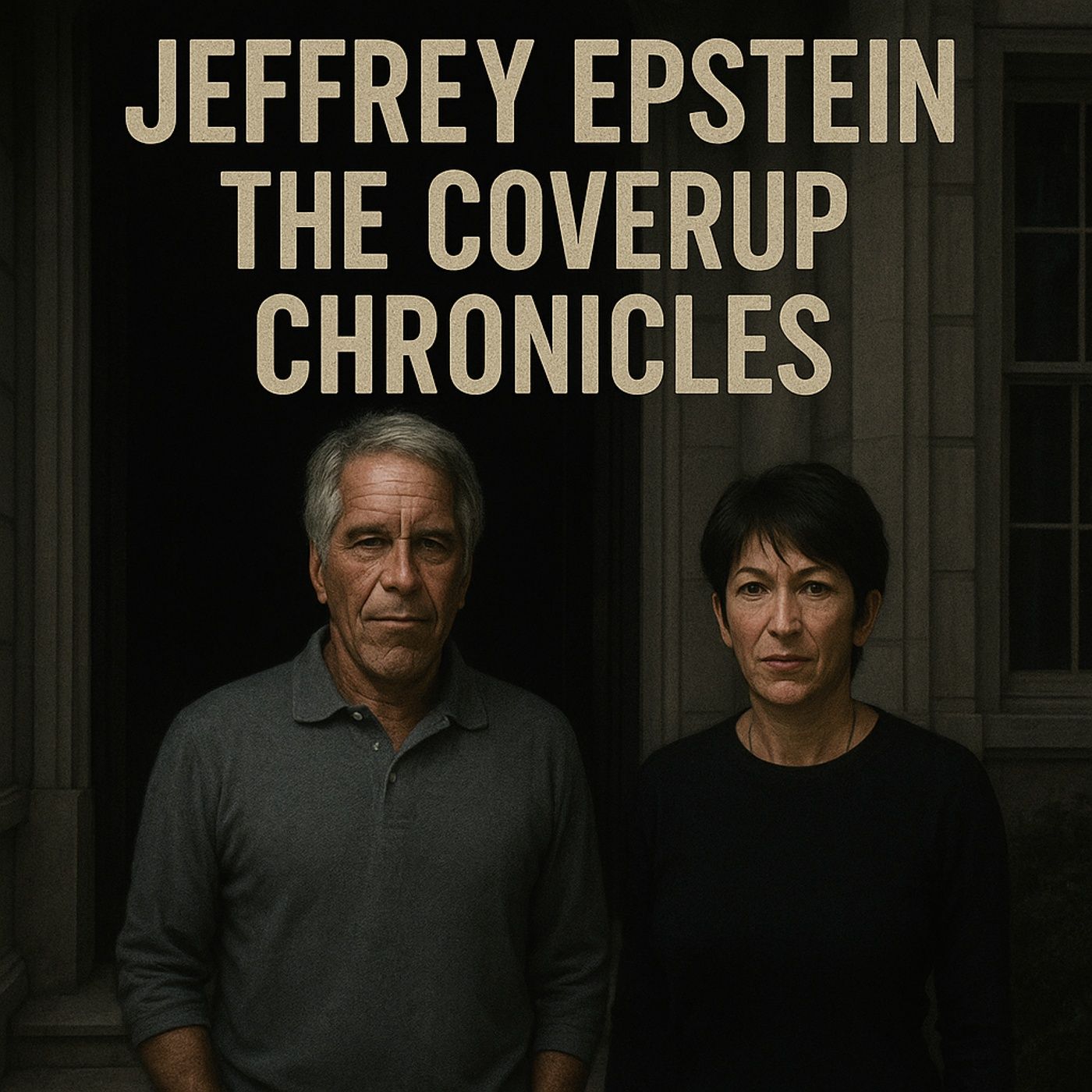
Too Big for RICO: How Epstein Escaped the One Law Built to Destroy Criminal Empires
Author: Bobby Capucci
April 24, 2026
Duration: 19:07
It makes no coherent sense that federal prosecutors reached for RICO in the cases of Sean “Diddy” Combs, R. Kelly, and Keith Raniere, yet refused to apply the same framework to Jeffrey Epstein and Ghislaine Maxwell—a pair whose conduct fits the statute more cleanly than almost any modern defendant. RICO is designed to dismantle criminal enterprises that rely on networks, enablers, financial infrastructure, and ongoing patterns of illegal activity. Epstein’s operation was exactly that: a long-running trafficking enterprise spanning multiple states and countries, involving recruiters, schedulers, pilots, accountants, lawyers, shell companies, and complicit financial institutions. Ghislaine Maxwell was not merely an associate; she was a central manager who procured victims, enforced compliance, and maintained the machinery that allowed the abuse to continue for decades. By any objective comparison, Epstein’s organization was more structured, more durable, and more dependent on coordinated criminal activity than the enterprises alleged in the Diddy, R. Kelly, or NXIVM cases.
The only explanation that accounts for this disparity is not legal logic, but institutional avoidance. A RICO case against Epstein and Maxwell would have required prosecutors to identify and pursue co-conspirators, financial facilitators, and upstream beneficiaries—names that extend far beyond the two defendants who were ultimately charged. Instead, the government chose narrow counts that isolated culpability, limited discovery, and minimized exposure of third parties, even as it aggressively used RICO elsewhere to sweep in assistants, employees, and peripheral figures. The result is a prosecutorial contradiction that undermines confidence in equal application of the law: RICO when the targets are disposable, restraint when the targets implicate power, money, and institutions. If RICO was appropriate for Diddy’s logistics, R. Kelly’s entourage, or Raniere’s inner circle, then its absence in the Epstein-Maxwell prosecution isn’t a legal judgment—it’s a decision to stop the case before it reached the people who mattered most.
to contact me:
bobbycapucci@protonmail.com