3I/ATLAS Metal Signals: What They Really Mean | Thomas Puzia and Rohan Rahatgaonkar

3I/ATLAS Metal Signals: What They Really Mean | Thomas Puzia and Rohan Rahatgaonkar

Author: John Michael Godier November 26, 2025 Duration: 1:33:25

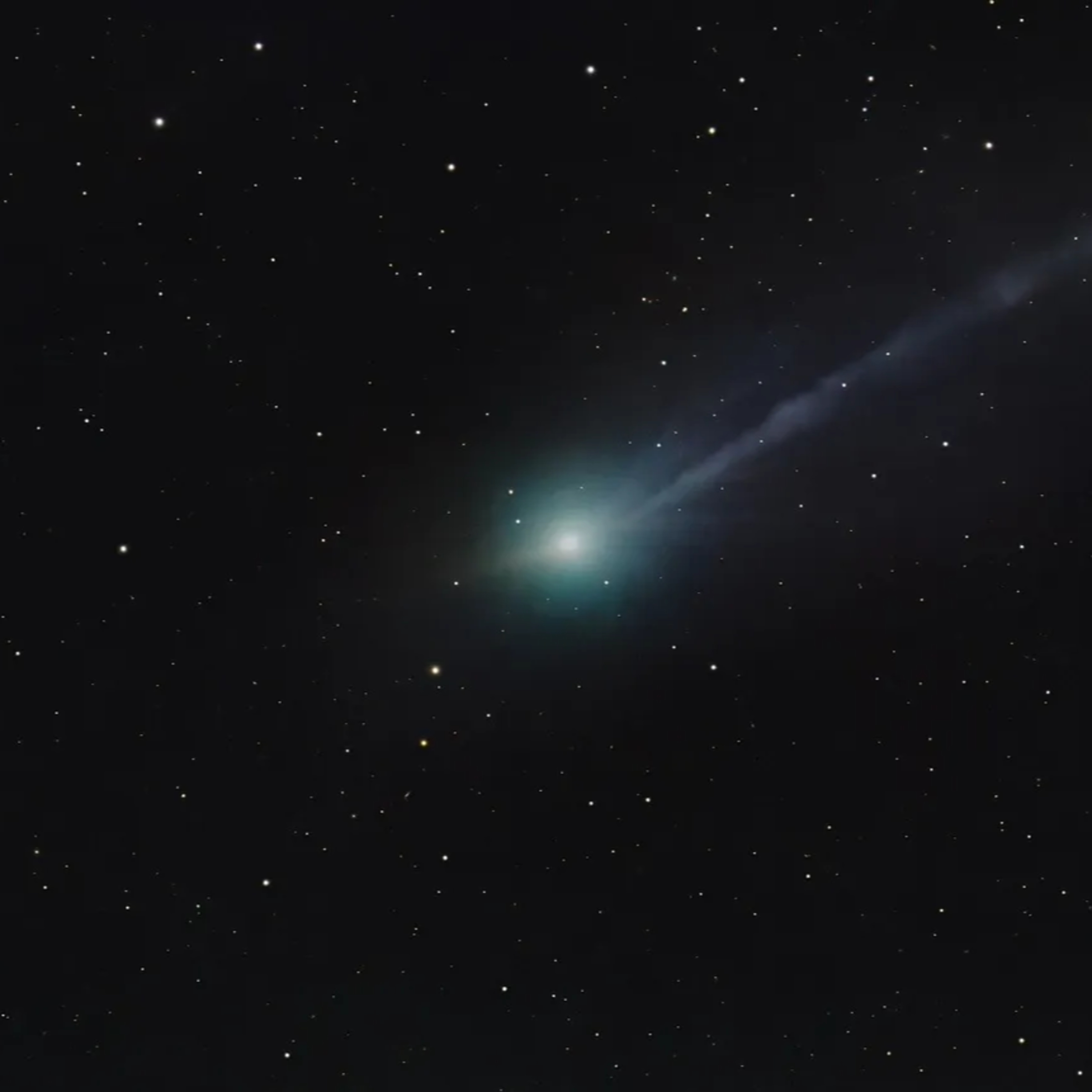
Interstellar object 3I/ATLAS has quickly become one of the most closely watched astronomical events of the decade. As only the third confirmed interstellar object ever detected, every new observation of 3I/ATLAS is reshaping how astronomers think about the chemistry, origins, and long-distance evolution of small bodies formed around other stars. In this interview, astrophysicists Dr. Thomas Puzia and Rohan Rahatgaonkar discuss the latest research as new spectroscopy, VLT monitoring, ALMA data, and upcoming JWST and Hubble observations reveal a complex story about this ancient visitor.Extreme NiI/FeI abundance ratio in the coma of the interstellar comet 3I/ATLAS⋆https://arxiv.org/pdf/2509.2605300:00 Introduction00:18 Guest introductions: Thomas Puzia and Rohan Rahatgaonkar02:21 What makes 3I/ATLAS unusual03:16 First signs of nickel and iron outgassing06:20 Formation clues from the ice line and heavy elements07:20 How 3I/ATLAS differs from typical solar system comets08:04 Comparing 3I/ATLAS to 2I/Borisov09:46 Nickel and iron abundance differences with solar system comets16:06 Could spacecraft intercept future interstellar objects?16:39 Is anything in 3I/ATLAS “too weird” to be natural?17:06 What post-perihelion data may reveal18:24 What exotic elements would mean (phosphorus, etc.)19:20 Why we know 3I/ATLAS is interstellar20:52 Ancient galactic environments 3I/ATLAS traveled through24:01 How strange could future interstellar objects get?28:07 Are biological building blocks present?29:39 Surface reflection limits and what JWST could do30:04 When Hubble and Webb will observe 3I/ATLAS next33:26 The effect of the U.S. government shutdown on data35:03 Using interstellar objects as Milky Way geological samples37:27 Phosphorus availability and why it matters for biology40:01 Non-gravitational acceleration explained43:02 Tail morphology and solar wind effects44:38 What we will learn at closest Earth approach45:21 Expected nucleus size and constraints47:01 Why nucleus size estimates vary so much49:59 Has 3I/ATLAS interacted with other star systems before?53:36 The Vera Rubin era: expected discovery rates55:02 How many interstellar objects per year we’ll find57:51 Using Rubin to protect Earth from NEAs58:03 Designing the ideal interstellar sample-return mission1:01:02 3I/ATLAS and the thick disc as a source region1:06:02 Have we already captured interstellar objects in our solar system?1:09:40 The mysteries we’ll never know: what ejected it1:10:09 Addressing the alien-technology speculation1:11:48 “Science is evidence-based”: why nothing suggests artificiality1:13:10 What real anomalies would actually look like1:17:02 Why the perceived “anomalies” are consistent with physics1:21:01 How the team collaborates to interpret data1:22:06 Could SETI use interstellar objects as technosignature probes?1:23:07 What an artificial object would look like1:25:01 Hypothetical “comet probe” ideas1:26:04 The “black swan” argument1:27:04 Attaching probes to future interstellar visitors1:28:11 Why returning data from deep space is hard1:29:00 How machine learning helps the research1:31:41 OutroMore JMG https://www.youtube.com/c/JohnMichaelGodierFollow us at other places!@JMGEventHorizonMusic:https://stellardrone.bandcamp.com/https://migueljohnson.bandcamp.com/https://leerosevere.bandcamp.com/https://aeriumambient.bandcamp.com/FOOTAGE:NASAESA/HubbleESO - M.KornmesserESO - L.CalcadaESO - Jose Francisco Salgado (josefrancisco.org)NAOJUniversity of WarwickGoddard Visualization StudioLangley Research CenterPixabay


Curiosity about the cosmos often starts with a simple question, and that's where John Michael Godier's Event Horizon finds its rhythm. Hosted by author and futurist John Michael Godier, this podcast delves into the profound and the perplexing at the edges of our understanding. Each episode builds a narrative, weaving together discussions on astronomy, astrophysics, and the latest space science news with broader themes of technology, history, and futurism. The conversations are grounded by special guests who bring expertise and diverse perspectives, turning complex ideas into engaging explorations. You'll find the dialogue moves from the concrete details of scientific discovery to the speculative implications for our future, all with a thoughtful and accessible tone. This isn't just a recap of headlines; it's a deep dive into the context and consequences of what we're learning about the universe. For anyone who looks up at the night sky and wonders about black holes, the potential for life elsewhere, or where our technology might take us next, this podcast offers a compelling space to linger on those big ideas. The production emphasizes clarity and depth, making even the most daunting topics feel within reach. Tune in for a regular journey to the frontiers of science and human thought.
Author: Language: en-us Episodes: 100

John Michael Godier's Event Horizon
Podcast Episodes
Life in the 18th Century with Jon Townsend [not-audio_url] [/not-audio_url]

Duration: 26:48
In part one of a two part episode we are joined by Jon Townsend who does historical reenactment, is the host of the youtube channel Townsend, and is the proprietor of the online store, https://www.townsends.us/John Micha…
3i/ATLAS Interstellar Comet Update For November 2025 [not-audio_url] [/not-audio_url]

Duration: 17:01
3i/ATLAS Interstellar Comet Update For November 2025 and how it might connect to the mysteriousTunguska Event of 1908. My Patreon Page:https://www.patreon.com/johnmichaelgodierMy Event Horizon Channel:https://www.youtube…
The Warning Signs of AI are Getting More Frequent [not-audio_url] [/not-audio_url]

Duration: 15:15
The Warning Signs of AI are Getting More FrequentPapers:"Darwin Among the Machines", Butler, 1863https://mediarep.org/server/api/core/bitstreams/e0da505d-200c-43ab-be4b-6604a4df816f/contentMusic:Cylinder Eight by Chris Z…
Using Black Holes to Traverse the Universe with Dr. David Kipping [not-audio_url] [/not-audio_url]

Duration: 51:05
The Halo Drive, using a laser to gain fuel free relativistic propulsion from a black hole. By shooting a laser close to the event horizon of a black hole, Dr. David Kipping's conceptual star drive could lead to traveling…
10 Unsettling Astronomical Incidents and Phenomena [not-audio_url] [/not-audio_url]

Duration: 18:47
An exploration of ten of the most unsettling astrophysical events including Dyson Sphere candidates, a star containing plutonium, the Wow! Signal and others. https://www.patreon.com/johnmichaelgodierhttps://www.youtube.c…
Surviving the End of the World Featuring Dr. Travis Langley [not-audio_url] [/not-audio_url]

Duration: 38:32
The Psychology of The Walking Dead - Zombie ScienceWith Rick Grimes leaving The Walking Dead we wanted to take an in depth look at the science behind zombies, the living dead, and the psychology behind what drives the pe…
10 Unsettling Future Technologies [not-audio_url] [/not-audio_url]

Duration: 14:11
And exploration of ten of the more unsetting possible future technologies. https://www.youtube.com/eventhorizonshowMusic:Cylinder Eight by Chris Zabriskie is licensed under a Creative Commons Attribution license (https:/…
What’s Hiding Under Mars | Dr. Sam Courville [not-audio_url] [/not-audio_url]

Duration: 51:03
Mars may look dead, but under its surface lies a record of its ancient water and perhaps even the ingredients for life. Planetary scientist Dr. Samuel Courville discusses the latest research on Martian ice, groundwater,…
Fermi Paradox: The Population Problem [not-audio_url] [/not-audio_url]

Duration: 10:45
An exploration into the concept of population and how that affects the Fermi Paradox question. Do advanced alien civilizations necessarily have the population numbers to colonize the galaxy entirely?Music:Cylinder Eight…

«1...678910