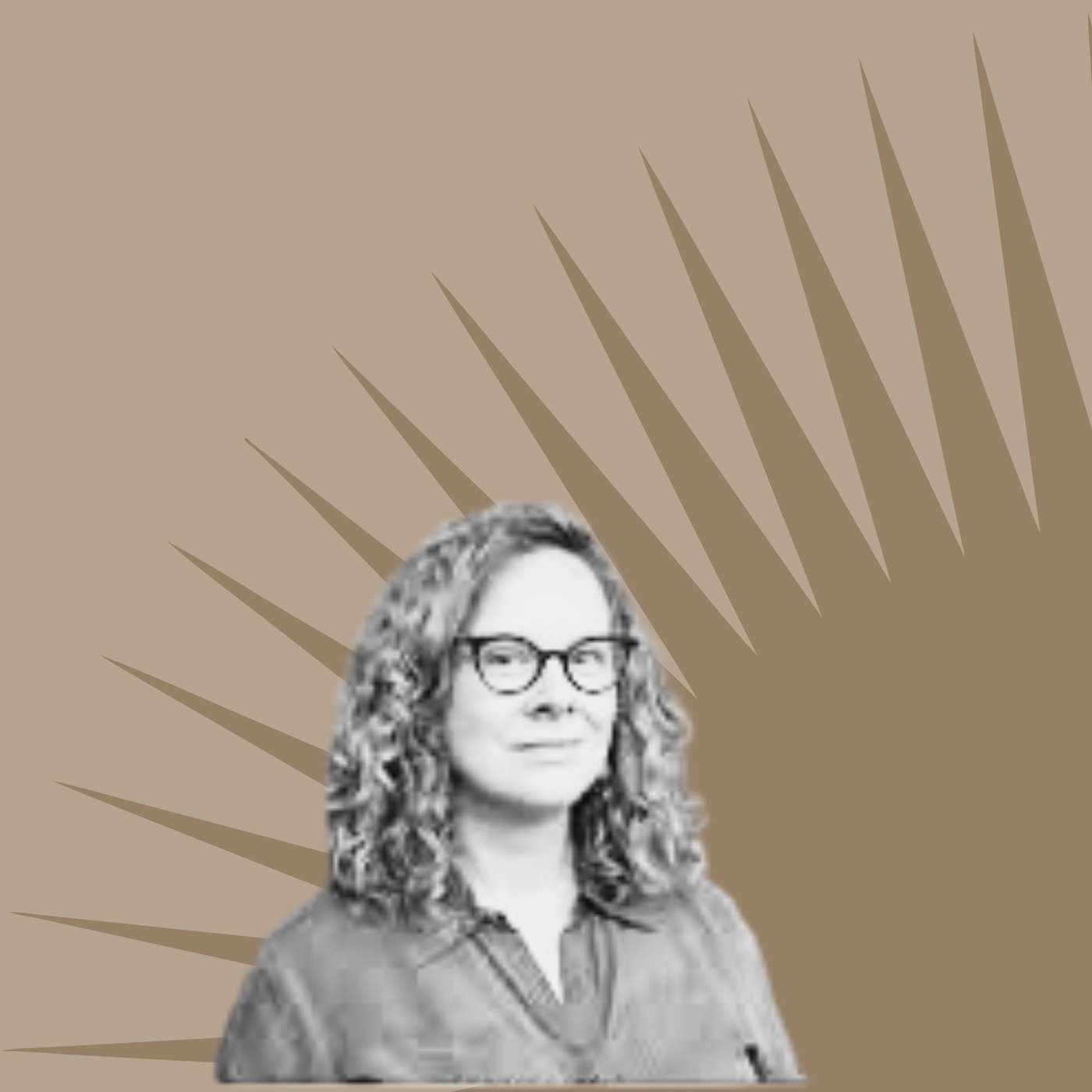
"I will say that QAnon was right and I was wrong." — Pepper Culpepper
From Bannon and Trump to Summers, Gates, Blavatnik and Chomsky, the Epstein scandal has revealed elites of all ideological stripes behaving shamefully together. The Oxford political scientist Pepper Culpepper argues this is exactly the kind of corporate scandal that can save democracy—not despite its ugliness, but because of it. His new co-authored book, Billionaire Backlash, shows how scandals activate "latent opinion," bringing long-simmering public concerns to the surface and triggering society-wide demand for regulation. We discuss why Cambridge Analytica led to California privacy law, how Samsung's bribery scandal sparked Korea's Candlelight Protests, and why China's authoritarian approach to corporate malfeasance actually undermines trust.
Culpepper, himself the Blavatnik Professor of Government at Oxford's Blavatnik School, acknowledges an uncomfortable truth. "I would say that QAnon was right," he admits, "and I was wrong." The specifics might have been fantasy, but the underlying suspicion about elite corruption was justified. And policy entrepreneurs—obsessive individuals who channel public outrage into actual legislation—matter more than we think. For Culpepper, billionaire backlash isn't a threat to democracy—it might actually be what saves it.
About the Guest
Pepper Culpepper is Vice Dean of the Blavatnik School of Government at the University of Oxford. He is the co-author, with Taeku Lee of Harvard, of Billionaire Backlash: The Age of Corporate Scandal and How It Could Save Democracy (2026).
References
Scandals discussed:
● The Epstein scandal revealed that elites across politics, finance, and academia were connected to Jeffrey Epstein's network of abuse—vindicating populist suspicions that "the system is broken."
● Cambridge Analytica (2018) exposed how Facebook leaked data on 90 million users, leading to the Digital Markets Act and Digital Services Act in the EU, and California's privacy regulations.
● The Samsung bribery scandal in South Korea led to the Candlelight Protests and President Park Geun-hye's resignation, demonstrating how corporate scandals can strengthen civil society.
● The 2008 Chinese milk scandal killed six infants due to melamine contamination; the government's cover-up during the Beijing Olympics destroyed public trust in domestic food safety.
● Volkswagen's Dieselgate scandal showed how companies cheat on regulations, bringing latent concerns about corporate behavior to the surface.
Policy entrepreneurs mentioned:
● Carl Levin was a US Senator from Michigan who shepherded the Goldman Sachs hearings and contributed to the Dodd-Frank Act.
● Margrethe Vestager served as EU Competition Commissioner and pushed for the Digital Markets Act and Digital Services Act.
● Max Schrems is an Austrian privacy activist who, as a student, discovered Facebook retained his deleted messages and eventually brought down the US-EU data transfer agreement.
● Alastair Mactaggart is a California property developer who pushed through the state's privacy regulations when federal action proved impossible.
● Zhao Lianhai was a Chinese activist who tried to organize parents after the 2008 milk scandal; the government arrested and imprisoned him.
Concepts discussed:
● Latent opinion refers to concerns people hold in the back of their minds that aren't front-of-mind until a scandal brings them to the surface.
● The Thermidor reference is to the French Revolutionary period when the radical Jacobins were overthrown—Culpepper suggests a controlled version might benefit democracy.
● The muckrakers were Progressive Era journalists whose exposés led to reforms like the Food and Drug Administration.
Also mentioned:
● Michael Sandel is a Harvard political philosopher known for arguing that "there shouldn't be a price on everything."
● Patrick Radden Keefe wrote Empire of Pain, the definitive account of the Sackler family and the opioid epidemic.
● Lee Jae-yong is the heir apparent to Samsung, implicated in the bribery scandal.
● Parasite, Squid Game, and No Other Choice are Korean cultural works that critique the country's relationship with its conglomerates.
About Keen On America
Nobody asks more awkward questions than the Anglo-American writer and filmmaker Andrew Keen. In Keen On America, Andrew brings his pointed Transatlantic wit to making sense of the United States—hosting daily interviews about the history and future of this now venerable Republic. With nearly 2,800 episodes since the show launched on TechCrunch in 2010, Keen On America is the most prolific intellectual interview show in the history of podcasting.
Website
Substack
YouTube
Apple Podcasts
Spotify
Chapters:
- (00:00) -
- (00:22) - The Epstein opportunity
- (01:21) - Elite overreach exposed
- (03:12) - Scandals without partisan charge
- (05:04) - The Vice Dean's credibility problem
- (06:21) - Latent opinion explained
- (09:39) - Is there anything wrong with being a billionaire?
- (11:47) - American vs. European scandals
- (14:48) - Saving democracy vs. saving capitalism
- (17:05) - Corporate scandals and economic vitality
- (18:33) - Policy entrepreneurs: Carl Levin and Margrethe Vestager
- (19:54...