Demystify Science and Humanize Scientists: How to Rebuild Scientific Trust in our Angry MAHA Times


Author: Andrew Keen September 4, 2025 Duration: 41:54
Podcast episode
Demystify Science and Humanize Scientists: How to Rebuild Scientific Trust in our Angry MAHA Times

In our angry MAHA times, how can we get people trusting science and scientists again. According to MIT’s Alan Lightman, one of America’s greatest scientific writers, we need to both demystify science and humanize scientists. Lightman is the co-author, with Martin Rees, of The Shape of Wonder, a timely collection of essays about how scientists think, work, and live. We need to learn from scientists like Albert Einstein, Lightman - himself the author of the 1993 classic Einstein’s Dreams, suggests. He argues that Einstein's "naive" willingness to challenge millennia of thinking about time exemplifies the wonder that drives great science. Lightman discusses why scientists have become entangled with "elite establishments" in our populist moment, and argues that critical scientific thinking—from balancing checkbooks to diagnosing a child's fever—belongs to everyone, not just scientists. So make America smart again (MASA), by demystifying science and humanizing scientists.

1. "Naive" questioning drives breakthrough science Einstein revolutionized physics at 26 by refusing to accept millennia of received wisdom about time—showing that great science requires childlike willingness to challenge fundamental assumptions.

2. Scientists are victims of populist backlash The mistrust of science isn't really about science—it's part of a global populist movement against "elite establishments," fueled by social media, immigration fears, and growing wealth inequality.

3. Wonder requires discipline, not just awe Unlike a child's wonder, scientific wonder comes with tools—both experimental and theoretical—for actually understanding how things work, making it "disciplined wonder."

4. Scientists shouldn't be authorities beyond science Even Einstein or Nobel laureates like Geoffrey Hinton have no special authority on ethics, philosophy, or politics—they're just smart people with opinions like everyone else.

5. Critical thinking belongs to everyone When you balance your checkbook or diagnose a child's fever, you're using scientific thinking. Science isn't an elite activity—it's a method we all already practice in daily life.

Keen On America is a reader-supported publication. To receive new posts and support my work, consider becoming a free or paid subscriber.


This is a public episode. If you'd like to discuss this with other subscribers or get access to bonus episodes, visit keenon.substack.com/subscribe

More episodes

Duration: 36:29
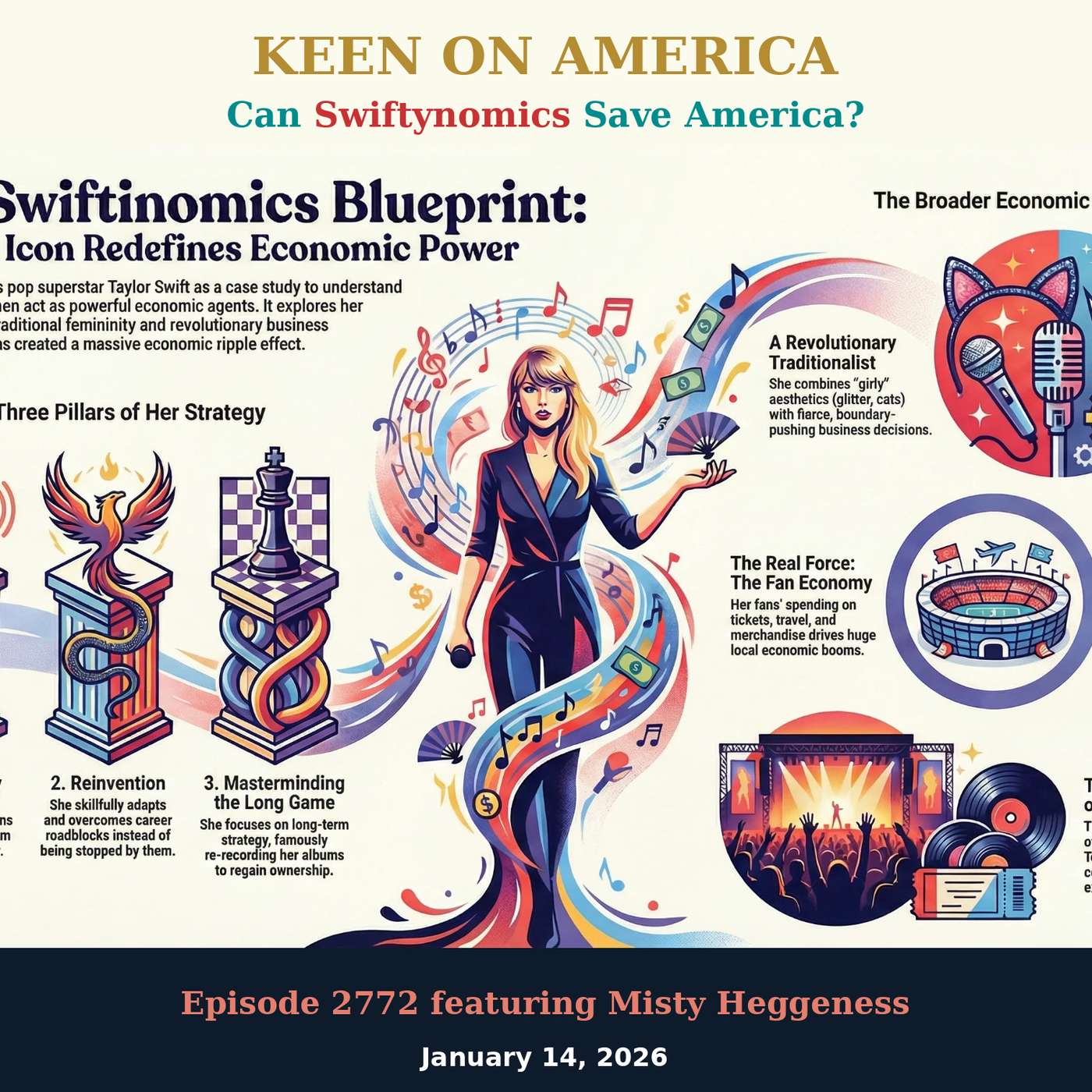
Can Swiftynomics save America? That’s the intriguing thesis at the heart of Misty Heggeness’ new book about Swift’s impact on the American economy. Entitled Swiftynomics, it’s as much about Taylor Swift’s fans as it is a…

Duration: 47:03
The Music Man was a 1957 Broadway show written by Meredith Willson, a musician from the small Iowa town of Mason City. The popular play (and later movie) featured a con man called Harold Hill who ripped off the naive peo…

Duration: 54:43
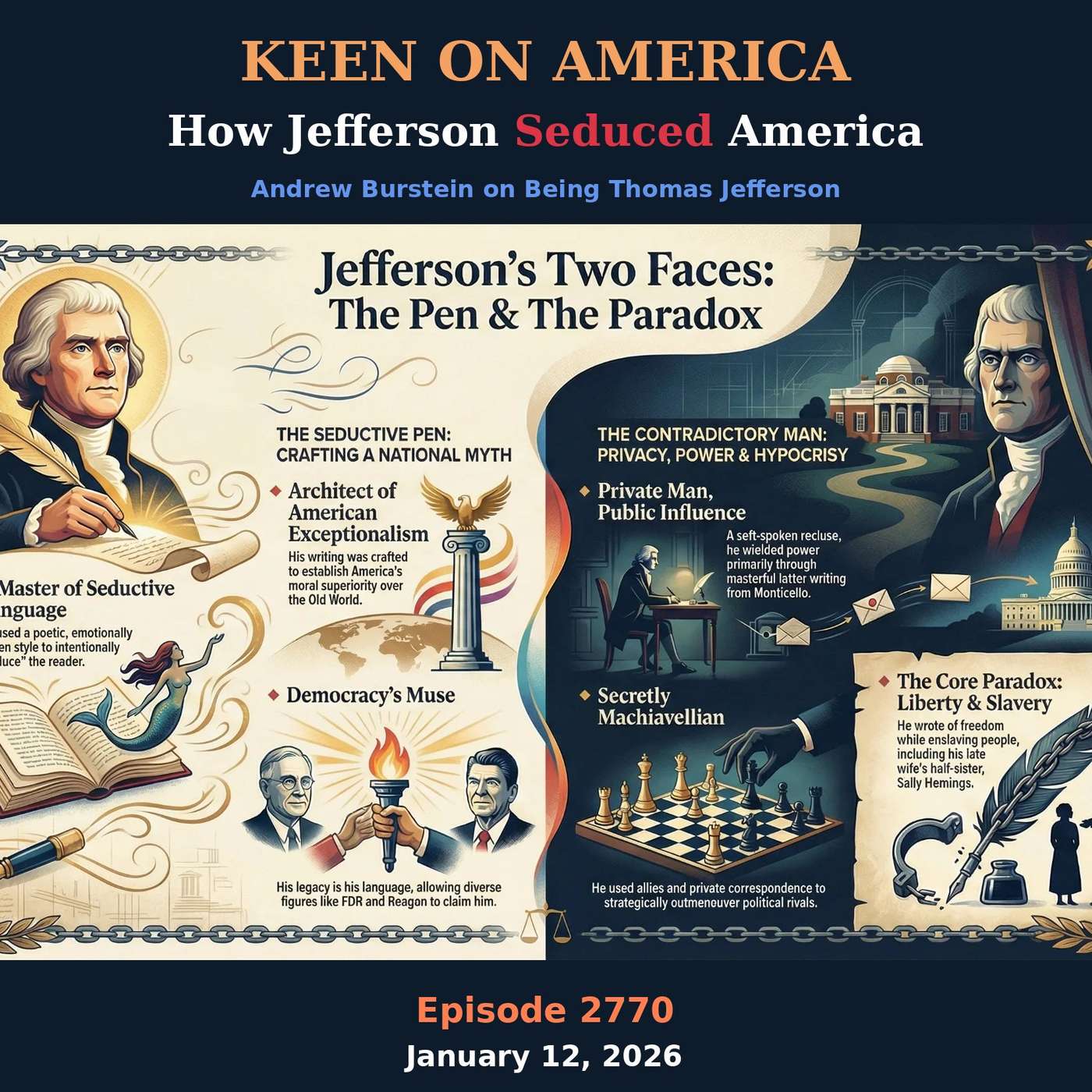
Few biographers can claim to know what it feels like to be Thomas Jefferson more than the Charlottesville-based historian Andrew Burstein. The author of many books about Jefferson, Burstein’s latest, Being Thomas Jeffers…

Duration: 39:13
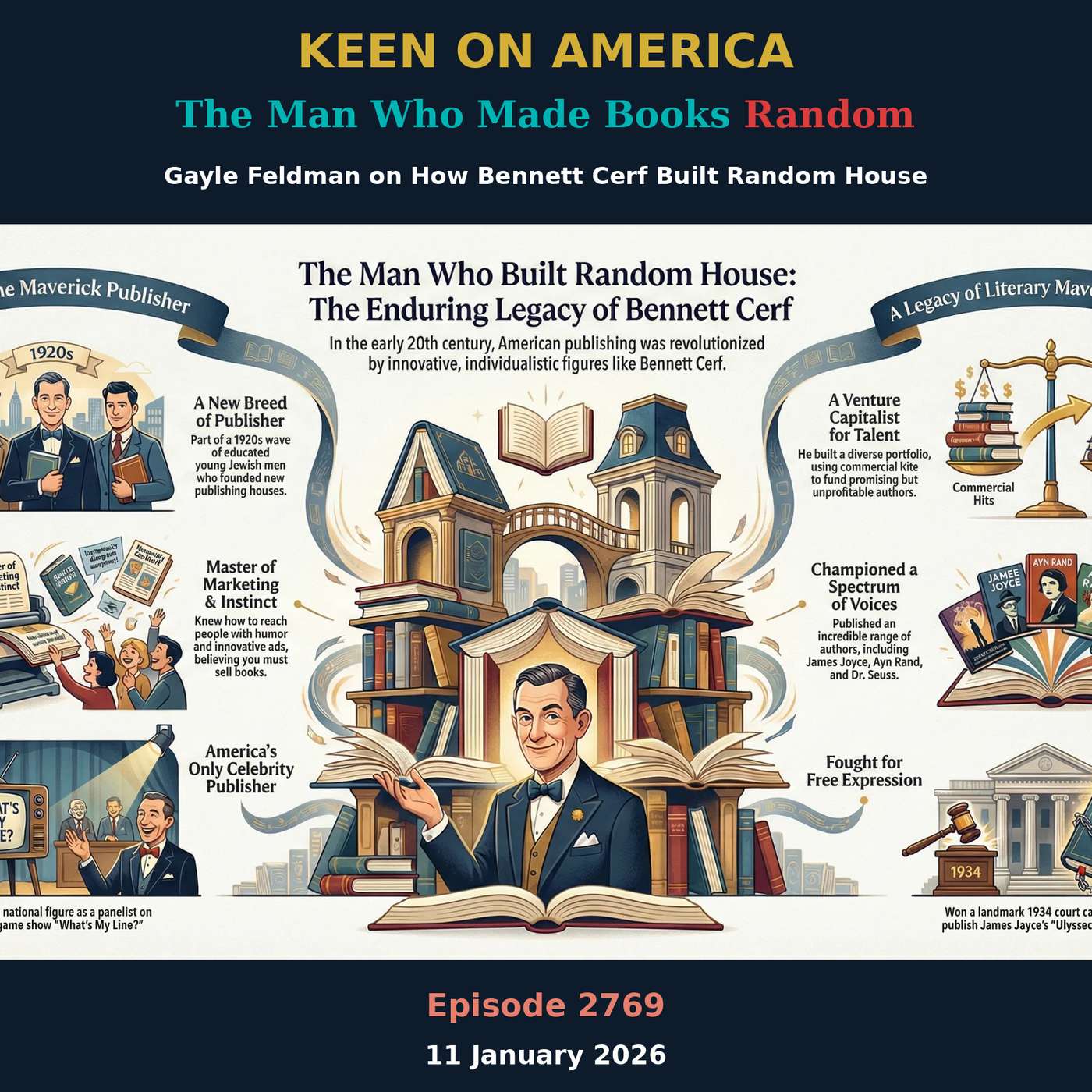
There was a time in the mid 20th century, the literary historian Gayle Feldman reminds us, when the book business was cool. Back then, New York publishing resembled Silicon Valley tech and the Mark Zuckerberg of his day…

Duration: 47:31
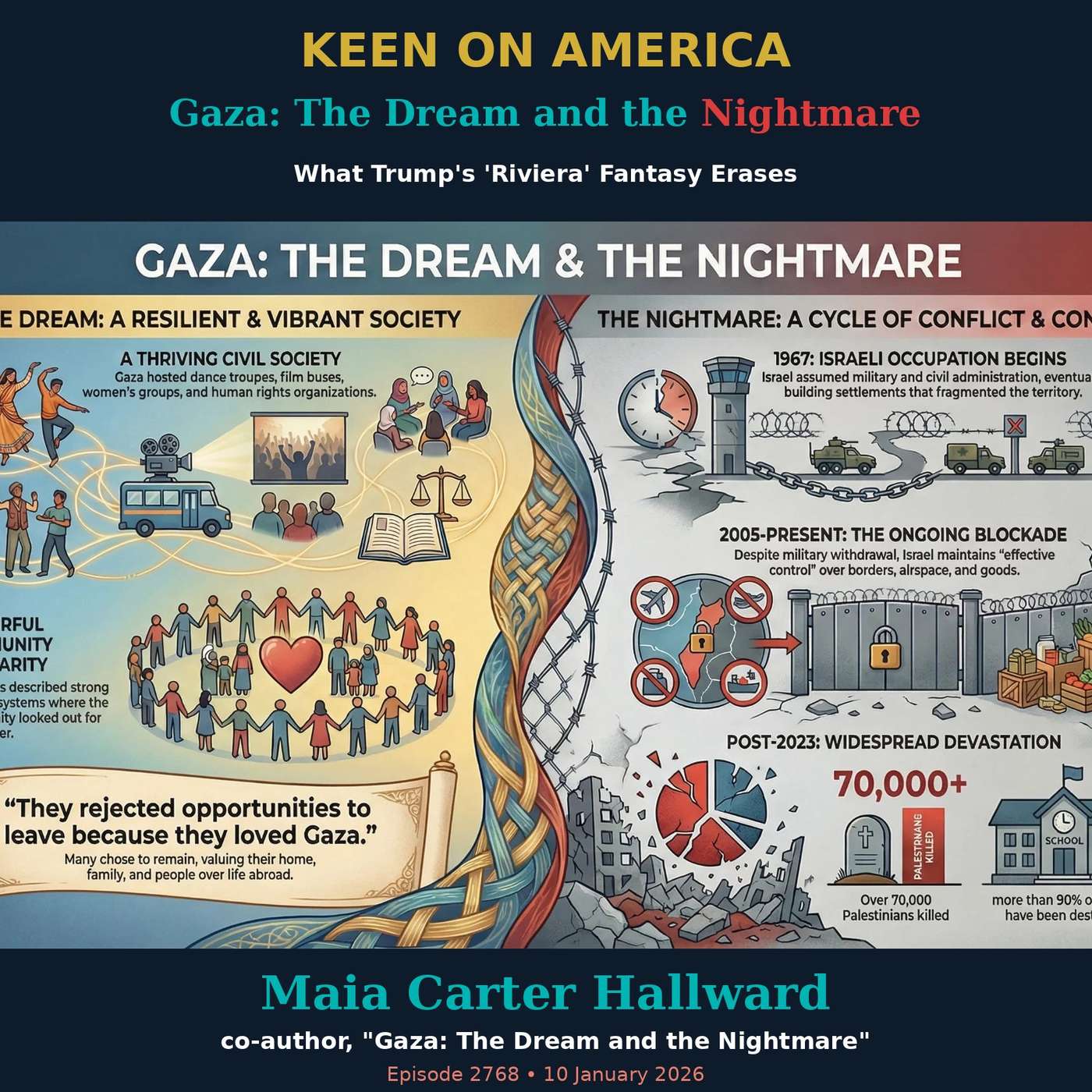
Trump’s Gazan dream is to overlay the complex human history with his own narcissistic real-estate fantasy. But for Maia Carter Hallward, co-author of a new contemporary history of Gaza, this once vibrant Mediterranean en…

Duration: 45:53
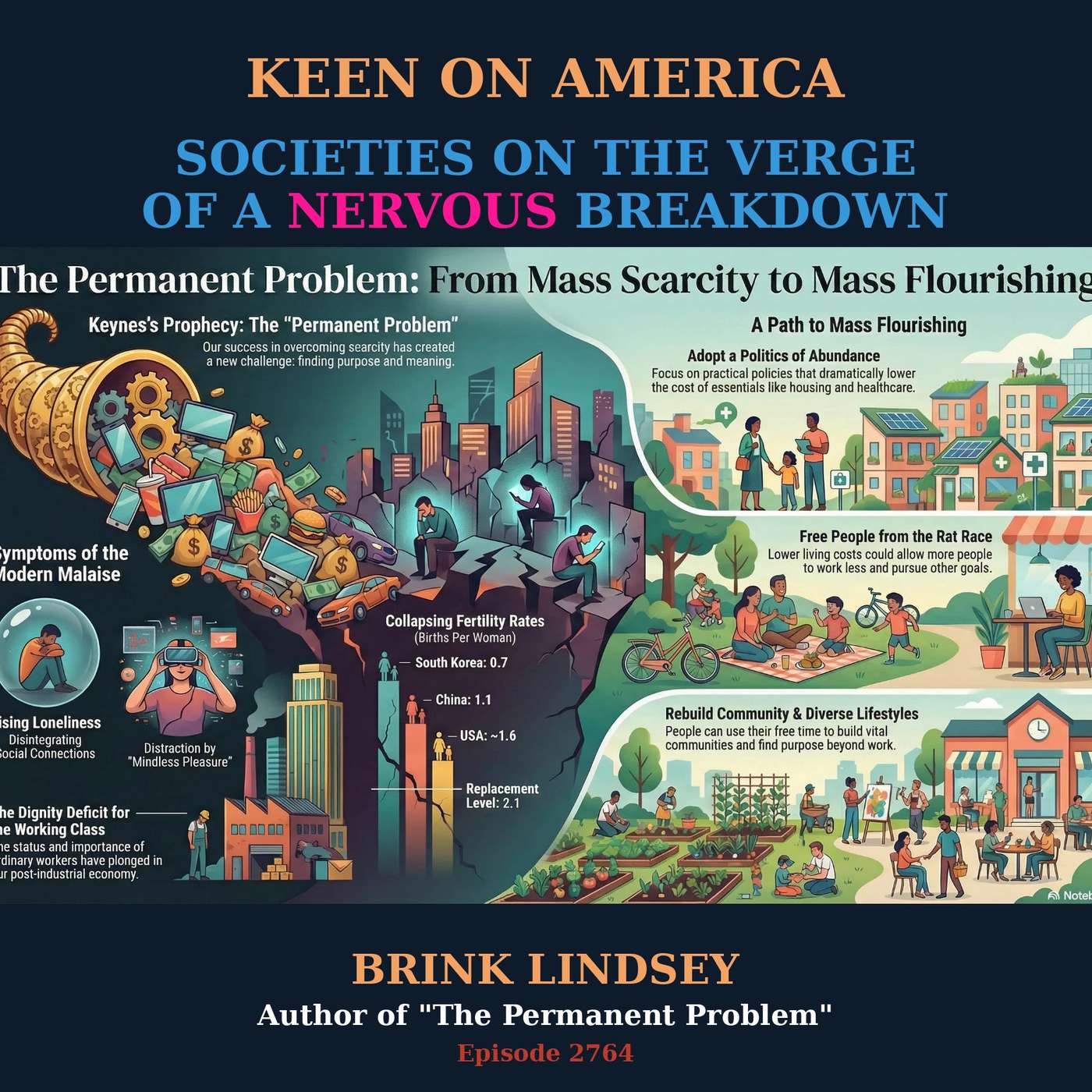
The great John Maynard Keynes explained it a century ago. In his 1930 essay, "Economic Possibilities for our Grandchildren," Keynes predicted that the future would be defined by economic abundance rather than scarcity. B…

Duration: 31:58
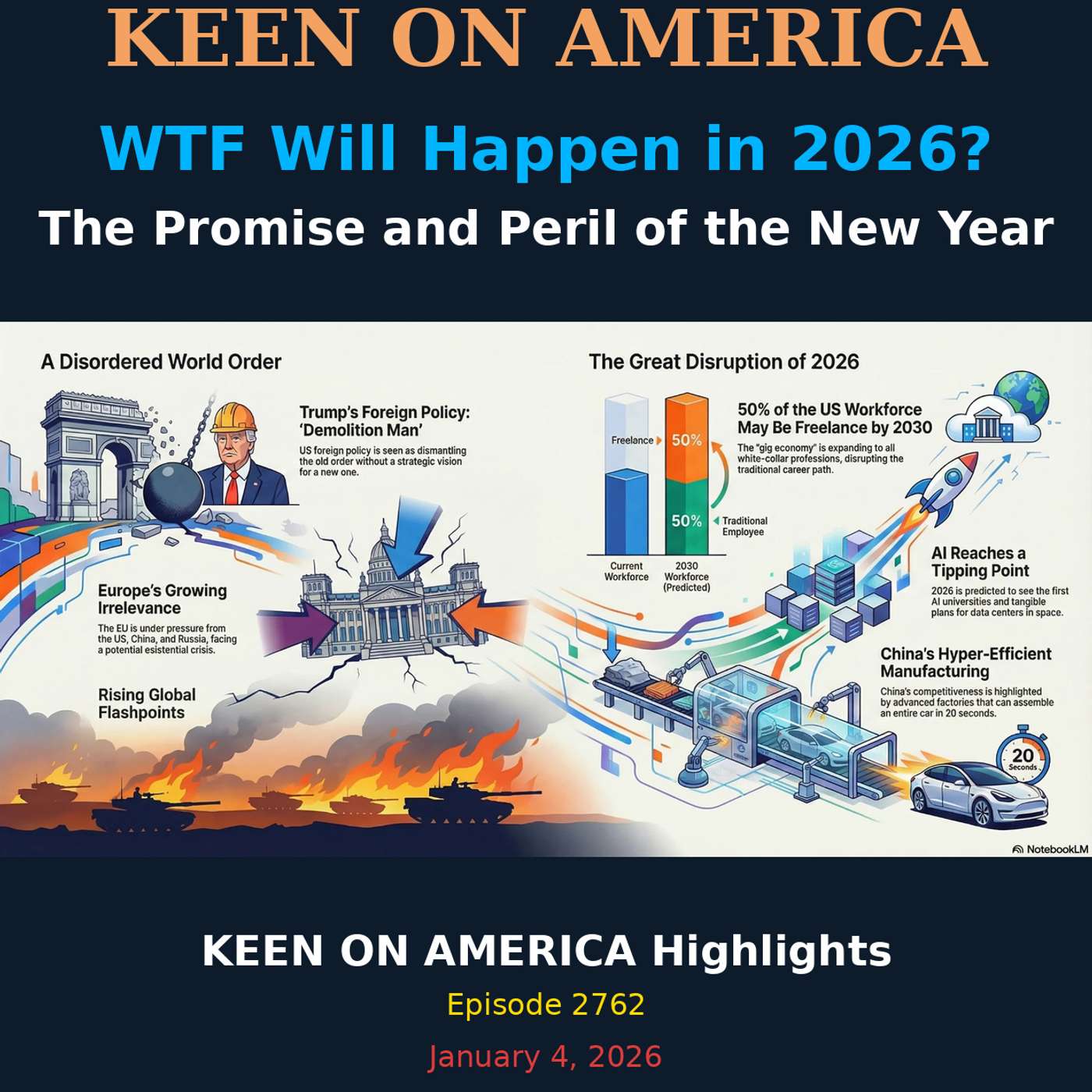
WTF will happen in 2026? Over the last week, we’ve been running a series of interviews about the promise and peril of the new year. And in this new weekly magazine-style KEEN ON AMERICA show, we feature highlights of con…

Duration: 45:18
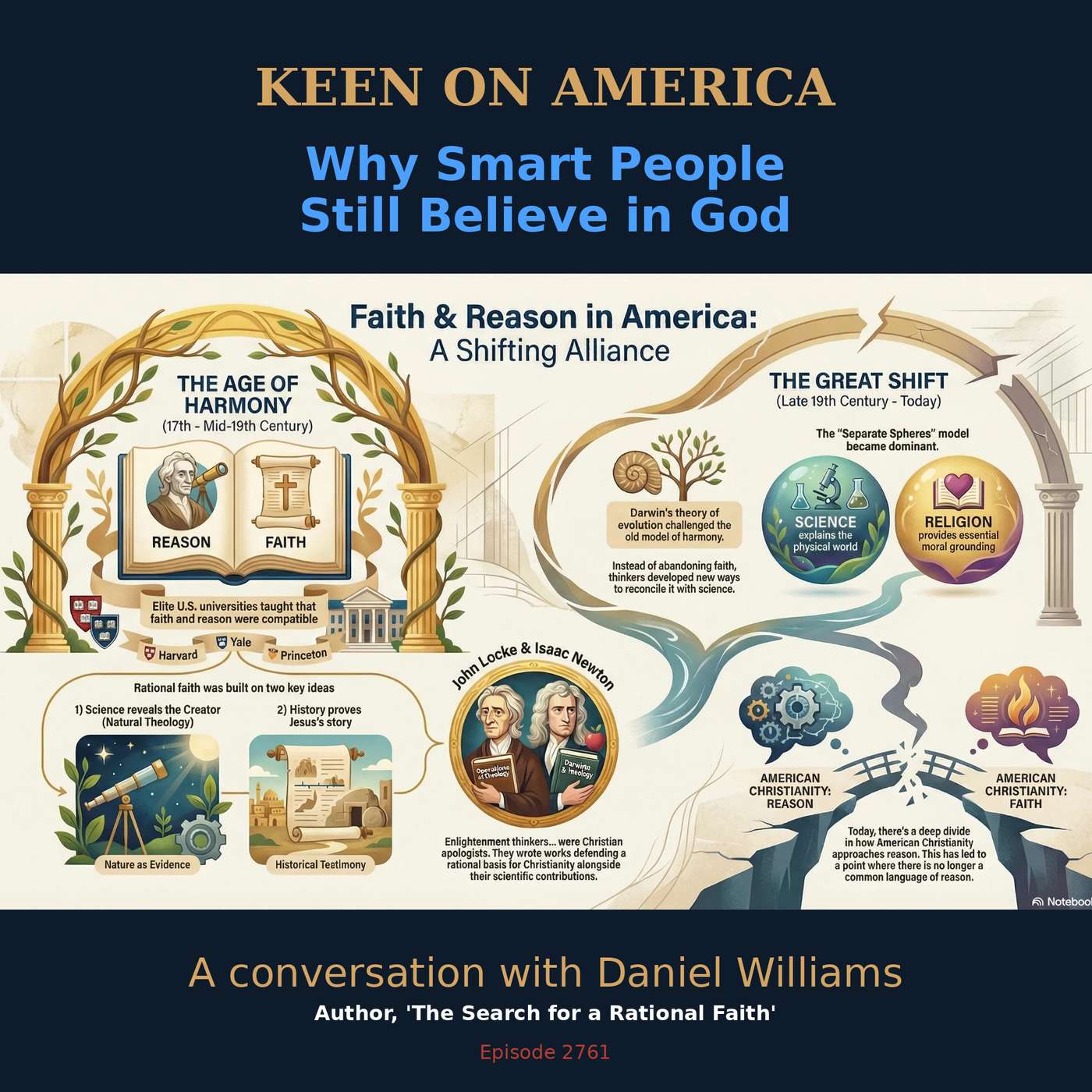
If Darwin’s evolutionary theories couldn’t kill America’s faith in God, then what could? That’s the message in Daniel K. William’s new book, The Search for a Rational Faith. Americans, Williams argues, have always sought…

Duration: 55:15
Happy New Year everyone! As the final show of 2025 and first for 2026, we turned the tables and had me interviewed by the formidable David Masciotra. As you will see, my reading of 2025 is more optimistic than many of my…

Logo
Select station
VOL