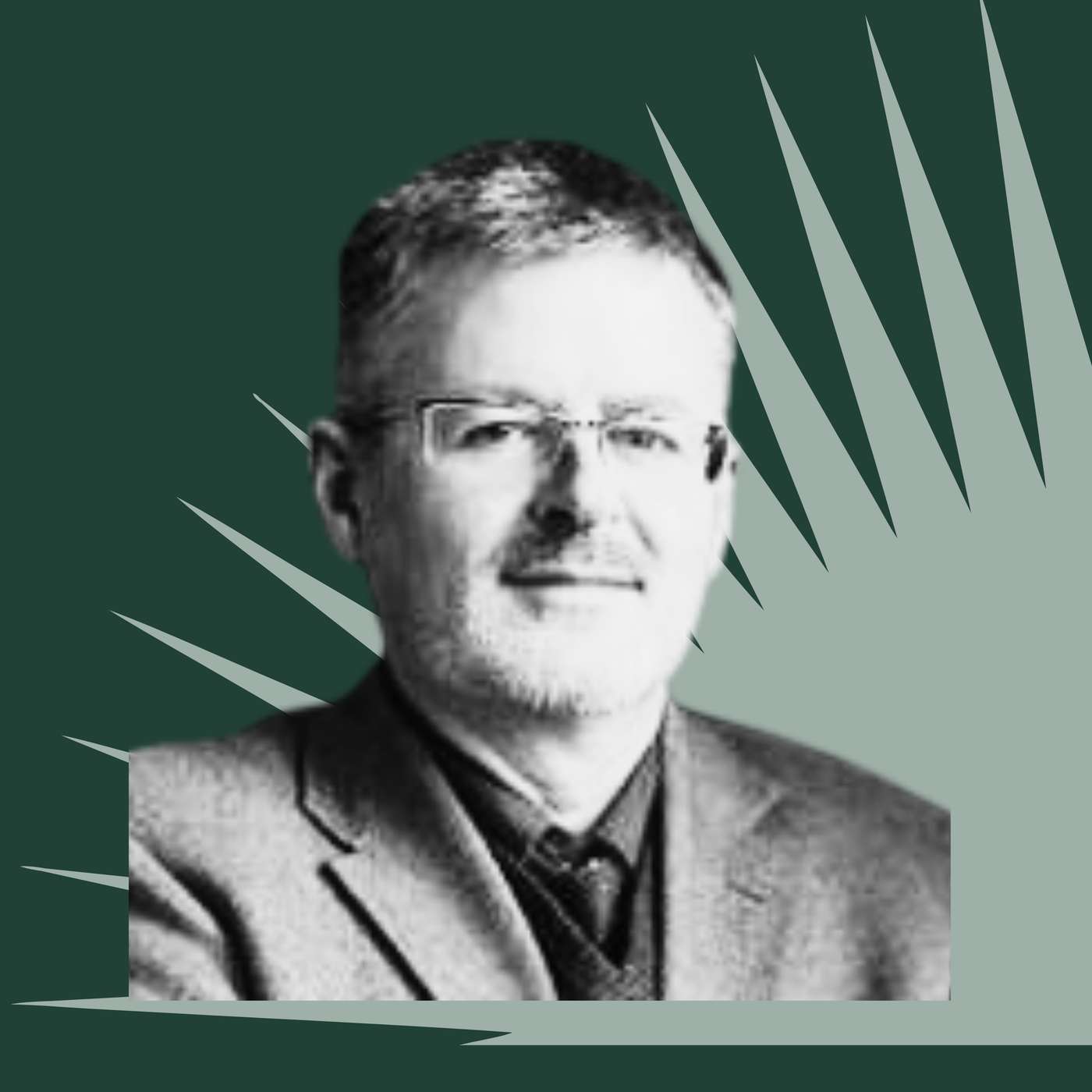
As the presenter of the How to Fix Democracy show, which will be going into its seventh series next year, Andrew Keen has given much thought to the health of American democracy. In this KEEN ON episode, Jonathan Rauch, the Brookings Institute senior fellow, turns the tables on Andrew and interviews him about the state of American democracy. What is the risk of the incoming Trump administration to the Republic, Jon asks Andrew? Is Trump just one more turbulent chapter in the colorful history of American democracy or does the MAGA movement represent an existential threat to the world’s oldest representative democratic system?
Named as one of the "100 most connected men" by GQ magazine, Andrew Keen is amongst the world's best known broadcasters and commentators. In addition to presenting KEEN ON, he is the host of the long-running How To Fix Democracy show. He is also the author of four prescient books about digital technology: CULT OF THE AMATEUR, DIGITAL VERTIGO, THE INTERNET IS NOT THE ANSWER and HOW TO FIX THE FUTURE. Andrew lives in San Francisco, is married to Cassandra Knight, Google's VP of Litigation & Discovery, and has two grown children.
Jonathan Rauch is a senior fellow in the Governance Studies program at the Brookings Institute and the author of eight books and many articles on public policy, culture, and government. He is a contributing writer of The Atlantic and recipient of the 2005 National Magazine Award, the magazine industry’s equivalent of the Pulitzer Prize. His many Brookings publications include the 2021 book “The Constitution of Knowledge: A Defense of Truth”, as well as the 2015 ebook “Political Realism: How Hacks, Machines, Big Money, and Back-Room Deals Can Strengthen American Democracy.” Other books include “The Happiness Curve: Why Life Gets Better after 50” (2018) and “Gay Marriage: Why It Is Good for Gays, Good for Straights, and Good for America” (2004). He has also authored research on political parties, marijuana legalization, LGBT rights and religious liberty, and more. Although much of his writing has been on public policy, he has also written on topics as widely varied as adultery, agriculture, economics, gay marriage, height discrimination, biological rhythms, number inflation, and animal rights. His multiple-award-winning column, “Social Studies,” appeared from 1998 to 2010 in National Journal. Among the many other publications for which he has written are The New Republic, The Economist, Reason, Harper’s, Fortune, Reader’s Digest, U.S. News & World Report, The New York Times, The Wall Street Journal, The Washington Post, The Los Angeles Times, The New York Post, Slate, The Chronicle of Higher Education, The Public Interest, The Advocate, The Daily, and others. In his 1994 book “Demosclerosis”—revised and republished in 2000 as “Government’s End: Why Washington Stopped Working”—he argues that America’s government is becoming gradually less flexible and effective with time, and suggests ways to treat the malady. His 1993 book “Kindly Inquisitors: The New Attacks on Free Thought” (the University of Chicago Press) defends free speech and robust criticism, even when it is racist or sexist and even when it hurts. In 1992 his book “The Outnation: A Search for the Soul of Japan” questioned the then-conventional wisdom that Japan was fundamentally different from the West. Rauch was born and raised in Phoenix, Arizona, and graduated in 1982 from Yale University. In addition to the National Magazine Award, his honors include the 2010 National Headliner Award, one of the industry’s most venerable prizes. In 1996 he was awarded the Premio Napoli alla Stampa Estera for his coverage, in The Economist, of the European Parliament. In 2011 he won the National Lesbian and Gay Journalists Association prize for excellence in opinion writing. His articles appear in The Best Magazine Writing 2005 and The Best American Science and Nature Writing 2004 and 2007. He has appeared as a guest on many television and radio programs.
Keen On is a reader-supported publication. To receive new posts and support my work, consider becoming a free or paid subscriber.
This is a public episode. If you'd like to discuss this with other subscribers or get access to bonus episodes, visit
keenon.substack.com/subscribe