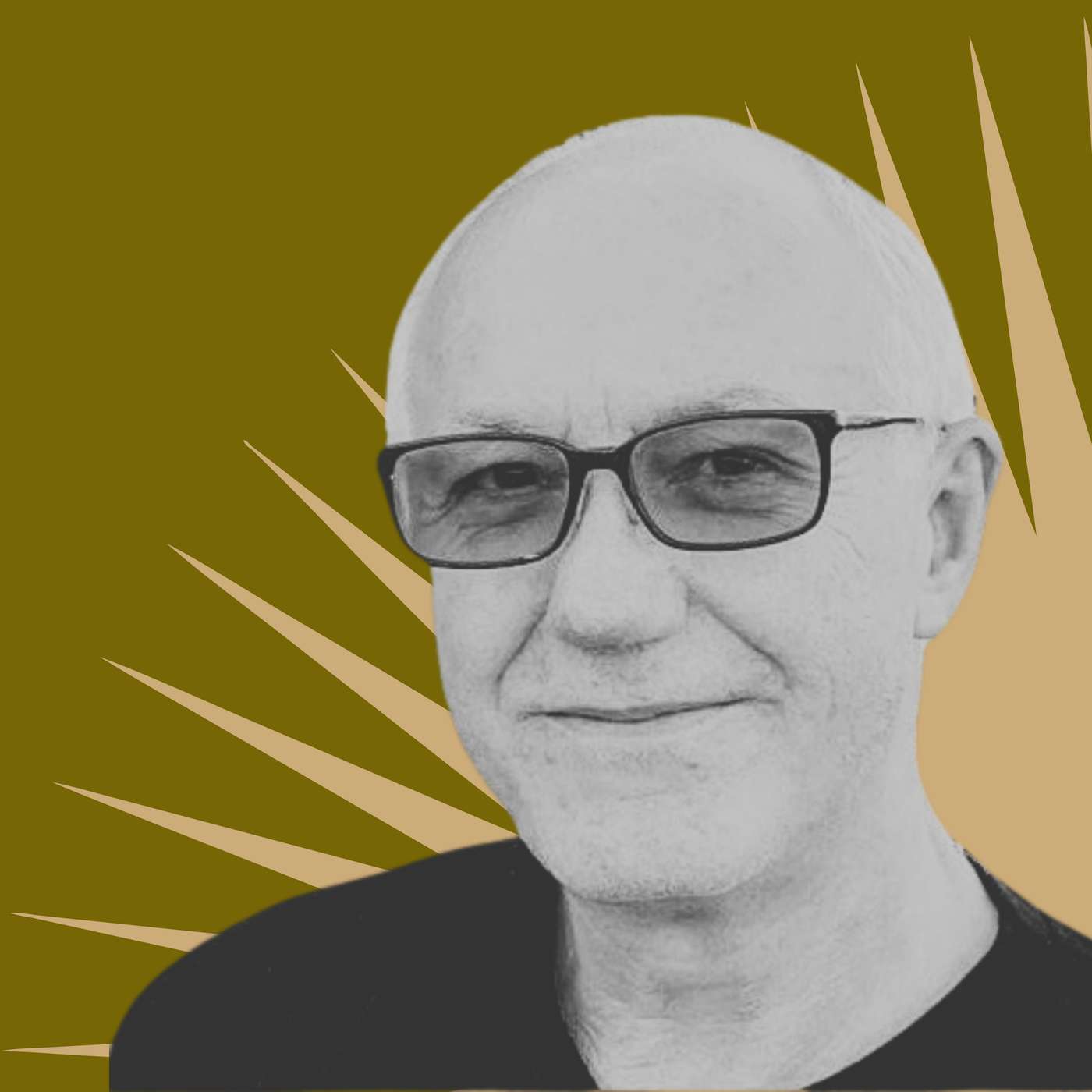
Most of the breathless talk in snowy Munich at this year’s DLD conference, of course, was about the generative AI revolution. But amongst all the hype and glitz about our brave new AI future, Richard Socher stands out. Born in 1983 in Dresden, East Germany, the now Silicon Valley based Socher is amongst the headful of genuine pioneers who helped revolutionize natural language processing. In this conversation, he discusses his journey from being part of a small "heretical" group of researchers in 2010 who believed in using neural networks for natural language processing, to seeing his ideas become mainstream technology that even Munich and San Francisco taxi/Uber now discuss. Socher explains how he helped develop crucial concepts like word vectors and prompt engineering, which influenced the development of modern AI systems. He founded you.com, which focuses on providing accurate AI answers for knowledge workers and enterprises, differentiating itself from consumer-focused AI platforms. Regarding AI's future, Socher is particularly excited about its potential impact on scientific discovery, predicting major breakthroughs in fields like fusion energy and biology over the next 20 years. He acknowledges concerns about AI's impact on jobs but draws parallels to historical technological transitions, suggesting that while some jobs will disappear, new ones will emerge at "higher levels of abstraction. He also addresses criticisms about AI companies profiting from public knowledge, arguing that when technology becomes deeply ingrained, it typically leads to improved access to capabilities that were previously available only to the wealthy.
Richard Socher is the founder and CEO of you.com and co-founder and managing director at AIX Ventures. Richard previously served as the Chief Scientist and EVP at Salesforce. Before that, Richard was the CEO/CTO of AI startup MetaMind, acquired by Salesforce in 2016. Richard received his Ph.D. in computer science at Stanford. He is widely recognized as having brought neural networks into the field of natural language processing, inventing the most widely used word vectors, contextual vectors and prompt engineering. He has over 200,000 citations and served as an adjunct professor in the computer science department at Stanford.
Named as one of the "100 most connected men" by GQ magazine, Andrew Keen is amongst the world's best known broadcasters and commentators. In addition to presenting KEEN ON, he is the host of the long-running How To Fix Democracy show. He is also the author of four prescient books about digital technology: CULT OF THE AMATEUR, DIGITAL VERTIGO, THE INTERNET IS NOT THE ANSWER and HOW TO FIX THE FUTURE. Andrew lives in San Francisco, is married to Cassandra Knight, Google's VP of Litigation & Discovery, and has two grown children.
Keen On is a reader-supported publication. To receive new posts and support my work, consider becoming a free or paid subscriber.
This is a public episode. If you'd like to discuss this with other subscribers or get access to bonus episodes, visit
keenon.substack.com/subscribe