Few people know the U.S. car industry more intimately than the Wall Street Journal deputy auto editor Mike Colias. His new book, Inevitable, offers an insiders guide into what he sees as our messy, yet unstoppable transition to electric vehicles. In this wide ranging conversation on all things automotive, Colias addresses Trump's recent tariff impacts on the American car industry, the stark contrast between Chinese (50%) and US (10%) EV adoption rates, and China's dominance in battery supply chains and charging infrastructure. Colias explains how Chinese automakers have leapfrogged traditional manufacturers in EV technology, while European makers are caught between regulatory pressures and relentless Chinese competition. He ends with some thoughts about the future of autonomous vehicles which he sees as far less"inevitable" than EVs.
Here are the 5 KEEN ON takeaways from our conversation with Colias:
* The stark contrast between EV adoption rates globally - China leads with 50% of new car sales being electric, Europe follows at 20-25%, while the US lags at around 10%. This sharp disparity is largely due to China's strategic government support, infrastructure investment, and incentives.
* China's dominance in the EV supply chain is comprehensive - from controlling critical minerals (lithium, cobalt, nickel) to processing capabilities and battery production. This gives Chinese manufacturers a significant competitive advantage that Western automakers are struggling to match. It might even point to the superiority of the Chinese state lead innovation model over the US market driven one.
* The role of hybrids as a "bridge technology" - Many consumers, particularly in the US, are choosing hybrids as a stepping stone to full EVs, suggesting the transition might be more gradual than initially predicted by US (but not Japanese) automakers who invested heavily in full electric vehicles.
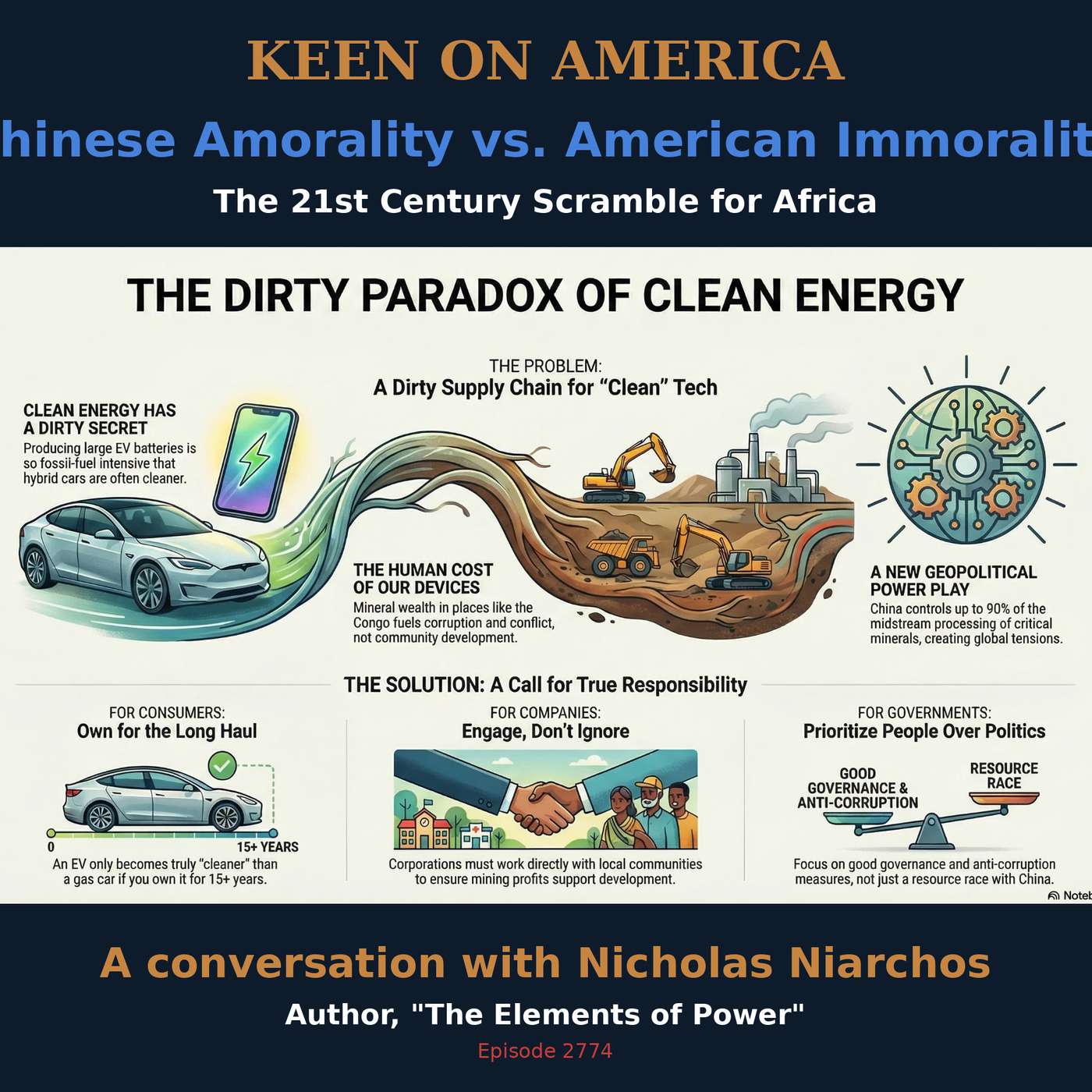
* The environmental impact of EVs is more complex than some activists would have us believe - While EVs produce more carbon emissions during manufacturing than gas vehicles, they ultimately result in 30% less emissions over their lifecycle. However, their environmental benefit depends significantly on the source of electricity used to power them.
* Trump's new tariffs (as of 2025) are creating significant disruption in the auto industry, particularly affecting the established North American supply chains -While unions support the tariffs for potential job creation, most auto executives view them as harmful to the industry and likely to increase car prices.
Mike Colias is the deputy bureau chief for autos, based in The Wall Street Journal’s Detroit bureau. His articles explore the auto industry’s massive and messy transition to electric vehicles, self-driving cars and other technologies with the potential to reshape how people get around. He writes and edits stories about Ford, GM and other major car companies navigating change, from EVs and in-car tech to tariffs. Mike is also author of the 2025 book: “Inevitable: Inside the Messy, Unstoppable Transition to Electric Vehicles." He joined WSJ from trade publication Automotive News, where he covered GM. Before that, he wrote about health care at Crain’s Chicago Business and worked at The Associated Press in Chicago. He graduated from Ohio University with degrees in journalism and business.
Named as one of the "100 most connected men" by GQ magazine, Andrew Keen is amongst the world's best known broadcasters and commentators. In addition to presenting the daily KEEN ON show, he is the host of the long-running How To Fix Democracy interview series. He is also the author of four prescient books about digital technology: CULT OF THE AMATEUR, DIGITAL VERTIGO, THE INTERNET IS NOT THE ANSWER and HOW TO FIX THE FUTURE. Andrew lives in San Francisco, is married to Cassandra Knight, Google's VP of Litigation & Discovery, and has two grown children.
Keen On is a reader-supported publication. To receive new posts and support my work, consider becoming a free or paid subscriber.
This is a public episode. If you'd like to discuss this with other subscribers or get access to bonus episodes, visit
keenon.substack.com/subscribe