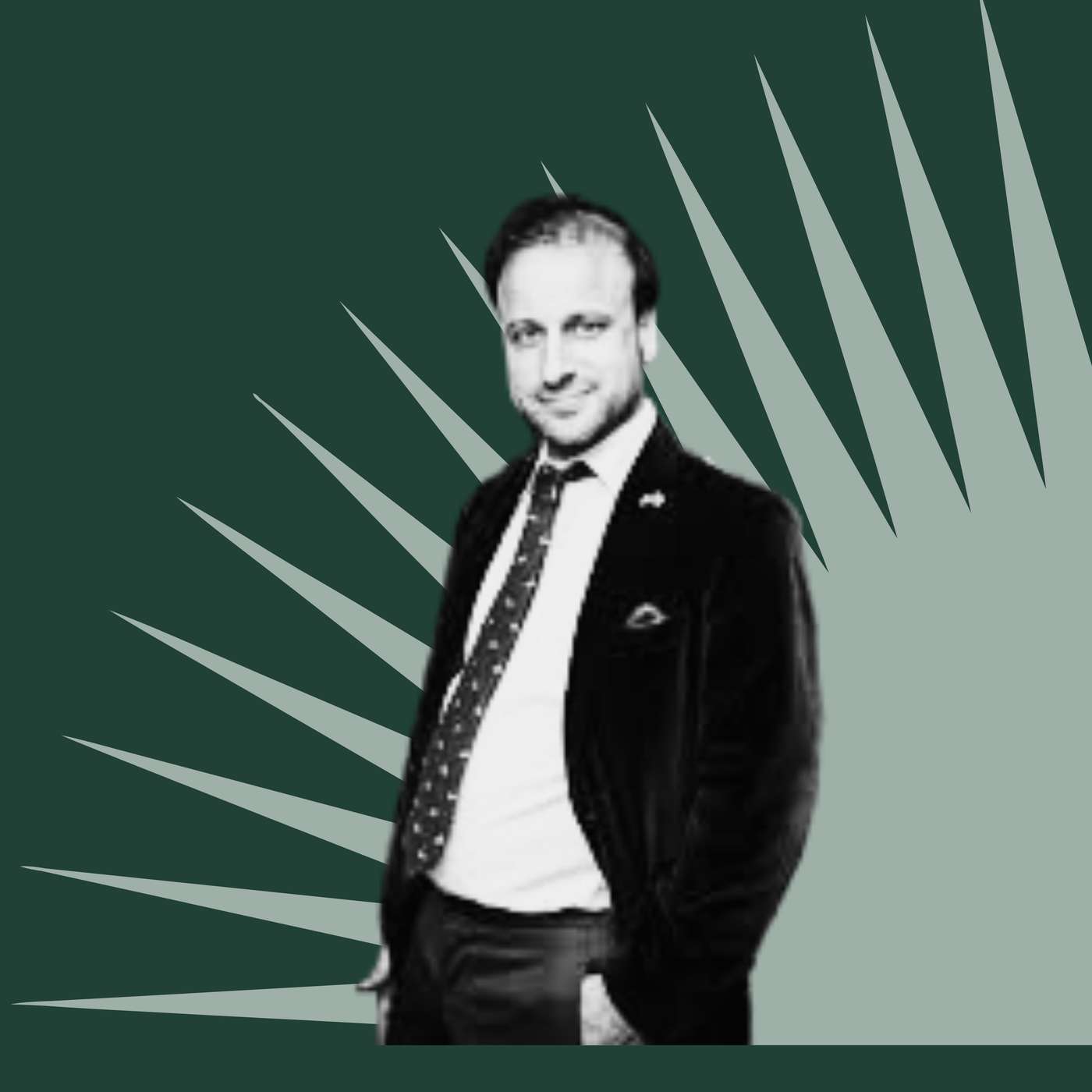
The traditional notion of western civilization is premised on the legacy of ancient Greece and Rome. Other less Eurocentric historians, like the Silk Road author Peter Frankopan, point to the role of China in shaping classical Europe. But, in The Golden Road, the Scottish-Indian historian William Dalrymple, challenges this "Silk Road" narrative, arguing India was Rome's primary trading partner and spread its culture peacefully throughout Asia. Dalrymple, who has lived in India for the last 40 years, explains how ancient Indian mathematical innovations like the concept of zero and our number system radically transformed the world. In a far ranging conversation, the astonishingly erudite Dalrymple also discusses his meteoric career as a non-academic historian and podcaster, India's resurgence as a global power, and offers his take on the current tensions between India and Pakistan over Kashmir.
Five Key Takeaways
* Ancient India was a civilization equal to Greece, Egypt, and China, contributing pivotal mathematical innovations including zero, the numerical system we use today, and advanced astronomical calculations like determining the Earth's circumference and heliocentric universe model—all developed long before the West.
* The popular "Silk Road" narrative is largely a modern myth created in the 1870s. In reality, Rome and India were major trading partners, not Rome and China, with extensive sea trade rather than overland routes.
* India's historical global influence was achieved peacefully through "soft power" – spreading Buddhism, Hinduism, science, mathematics, and culture across Asia through merchants and monks rather than military conquest.
* Despite being a British historian writing about a former British colony, Dalrymple has found remarkable success in India, becoming a bestselling author who has chosen to focus on writing accessible, well-researched histories rather than pursuing a traditional academic career.
* The current India-Pakistan conflict over Kashmir represents a dangerous flashpoint between nuclear powers that could escalate without diplomatic intervention, reflecting ongoing tensions that date back to 1947.
William Dalrymple FRSL, FRGS, FRAS (born William Hamilton-Dalrymple on 20 March 1965) is a Scottish historian and writer, art historian and curator, as well as a prominent broadcaster and critic. His books have won numerous awards and prizes, including the Duff Cooper Memorial Prize, the Thomas Cook Travel Book Award, the Sunday Times Young British Writer of the Year Award, the Hemingway, the Kapuściński and the Wolfson Prizes. He has been four times longlisted and once shortlisted for the Samuel Johnson Prize for non-fiction. He is also one of the co-founders and co-directors of the annual Jaipur Literature Festival.
This is a public episode. If you'd like to discuss this with other subscribers or get access to bonus episodes, visit
keenon.substack.com/subscribe