Fighting to Tell the Truth: Why every Film about War is an Anti-War Film


Author: Andrew Keen October 30, 2025 Duration: 39:48
Podcast episode
Fighting to Tell the Truth: Why every Film about War is an Anti-War Film

After almost two decades in limbo, Michael Pack’s once-rejected Iraq War film finds its moment — a reminder that even the most supposedly “patriotic” war stories reveal the tragic cost of battle.

Seventeen years after PBS rejected his Iraq War documentary The Last 600 Meters as “too pro-military,” conservative filmmaker Michael Pack is finally seeing it air — fittingly, on Veterans Day weekend. Pack reflects on why he believes documentaries are the “second draft of history,” why every war film is, at its core, an anti-war film, and how America’s shifting attitudes toward the military say as much about our politics as our wars.

1. History’s second draft.Pack sees documentaries as the “second draft of history,” a way to capture the ground truth before time erases memory — not to debate the causes or meanings of war, but to record what it actually felt like to fight.

2. Too pro-military for 2008, perfect for 2025.PBS first rejected The Last 600 Meters as “too pro-military.” Seventeen years later, the network is airing it before Veterans Day — proof, Pack says, that America’s cultural attitudes toward the military have shifted.

3. A non-woke filmmaker’s battle.Pack, long identified with the right, argues that the documentary world is dominated by the left. His new company, Palladium Pictures, trains “non-woke” filmmakers to tell stories that aren’t polemical but still reflect a wider range of perspectives.

4. Every war film is an anti-war film.For Pack, heroism and horror are inseparable. His Marines cross kill zones under fire, rescue the wounded, and witness the smell and trauma of war — “heroic and tragic,” he says, in the Kubrickian sense.

5. America’s unfinished war with itself.Pack’s Iraq film and his upcoming documentary on the Afghan withdrawal reflect what he calls “the failure of American elites.” From Vietnam to Afghanistan, he argues, the question remains: can America still fight and win wars?

Keen On America is a reader-supported publication. To receive new posts and support my work, consider becoming a free or paid subscriber.


This is a public episode. If you'd like to discuss this with other subscribers or get access to bonus episodes, visit keenon.substack.com/subscribe
More episodes

Duration: 41:34
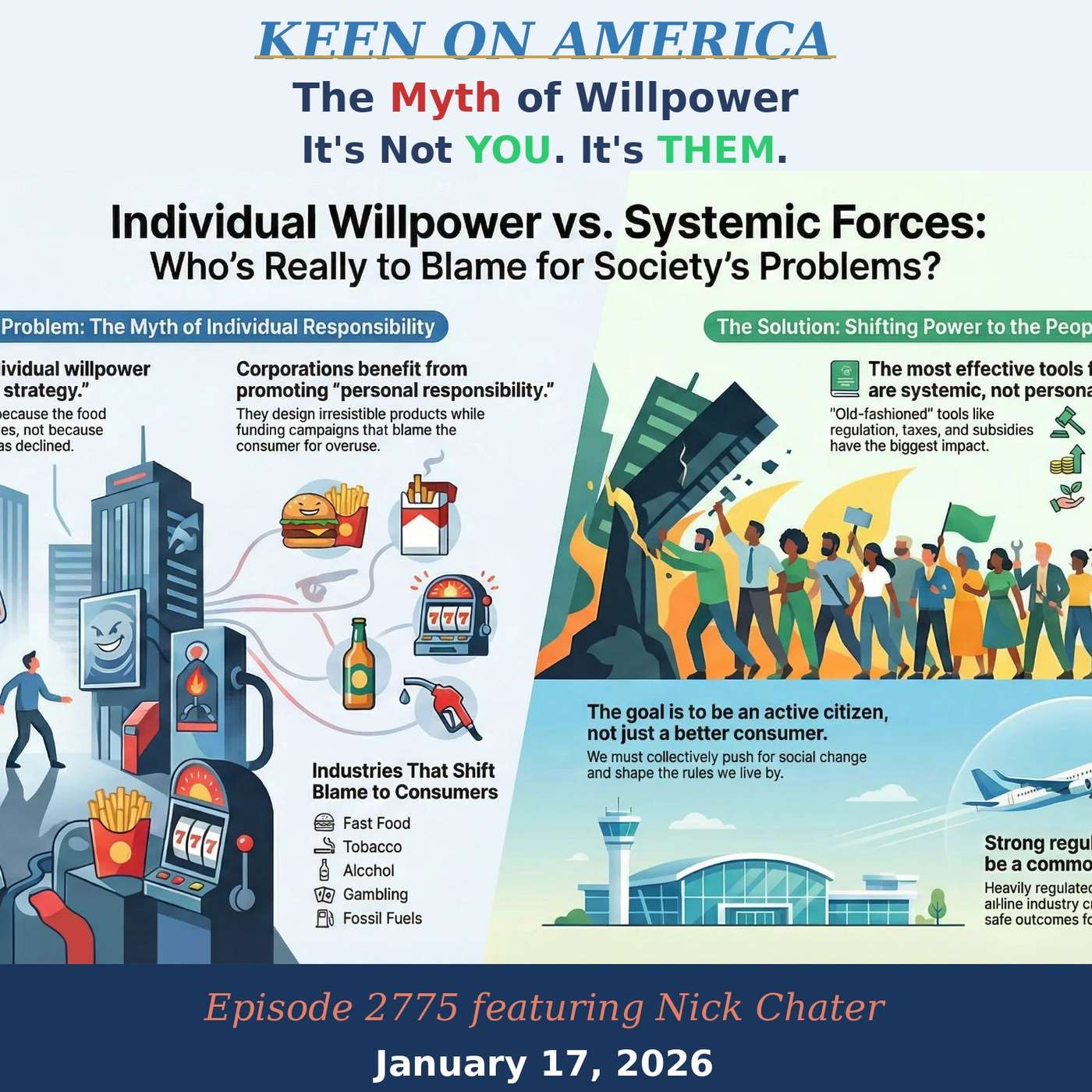
In his new co-authored book It’s On You, the English behavioral scientist Nick Chater exposes how the rich and powerful - the THEM - have convinced us that we're to blame for society's deepest problems. Can't lose weight…

Duration: 45:34
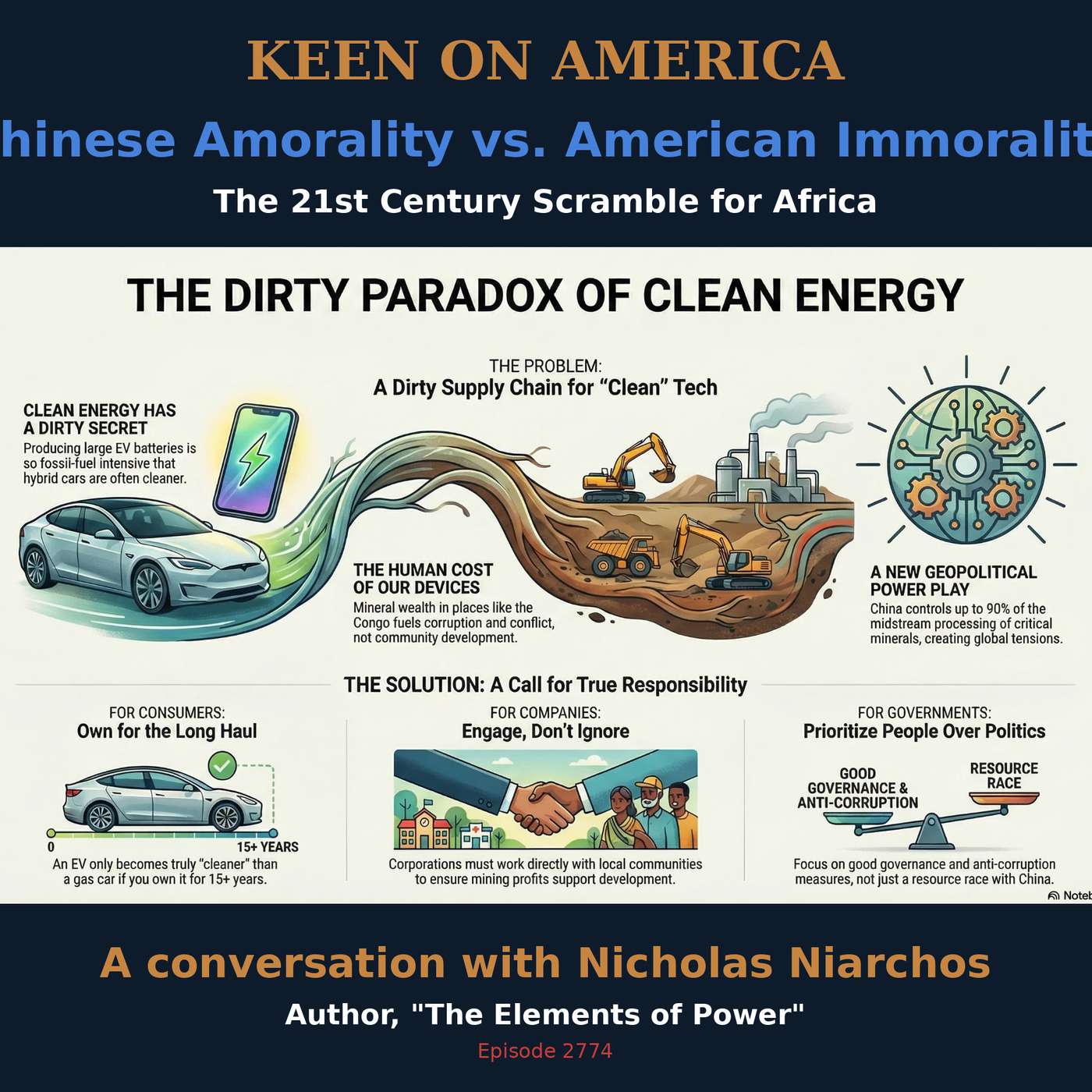
According to the New Yorker writer Nicholas Niarchos, Africa is rich in both raw materials and tragic paradox. We know about the continent's wealth in the rare earth minerals that enable our global transition from fossil…

Duration: 36:29
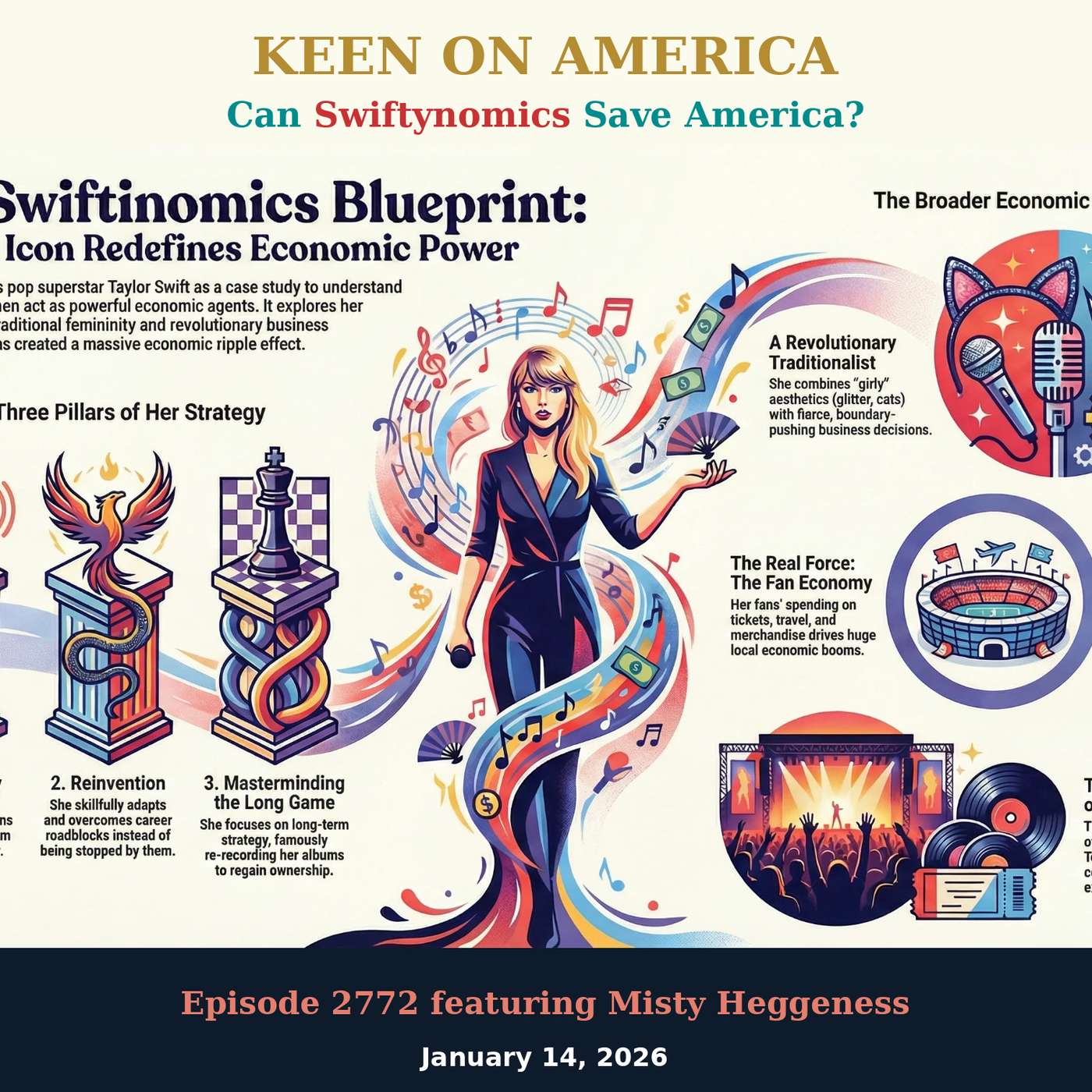
Can Swiftynomics save America? That’s the intriguing thesis at the heart of Misty Heggeness’ new book about Swift’s impact on the American economy. Entitled Swiftynomics, it’s as much about Taylor Swift’s fans as it is a…

Duration: 47:03
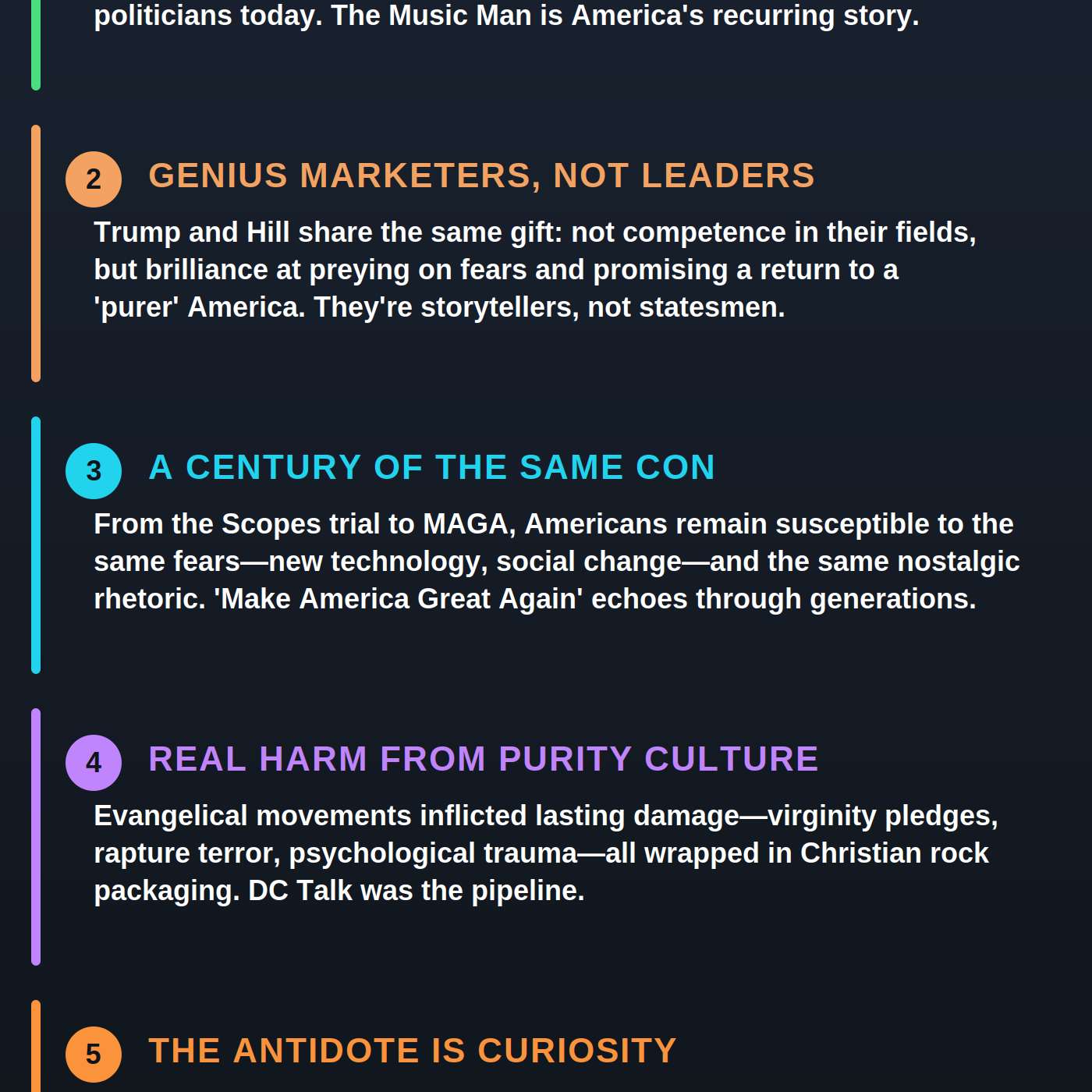
The Music Man was a 1957 Broadway show written by Meredith Willson, a musician from the small Iowa town of Mason City. The popular play (and later movie) featured a con man called Harold Hill who ripped off the naive peo…

Duration: 54:43
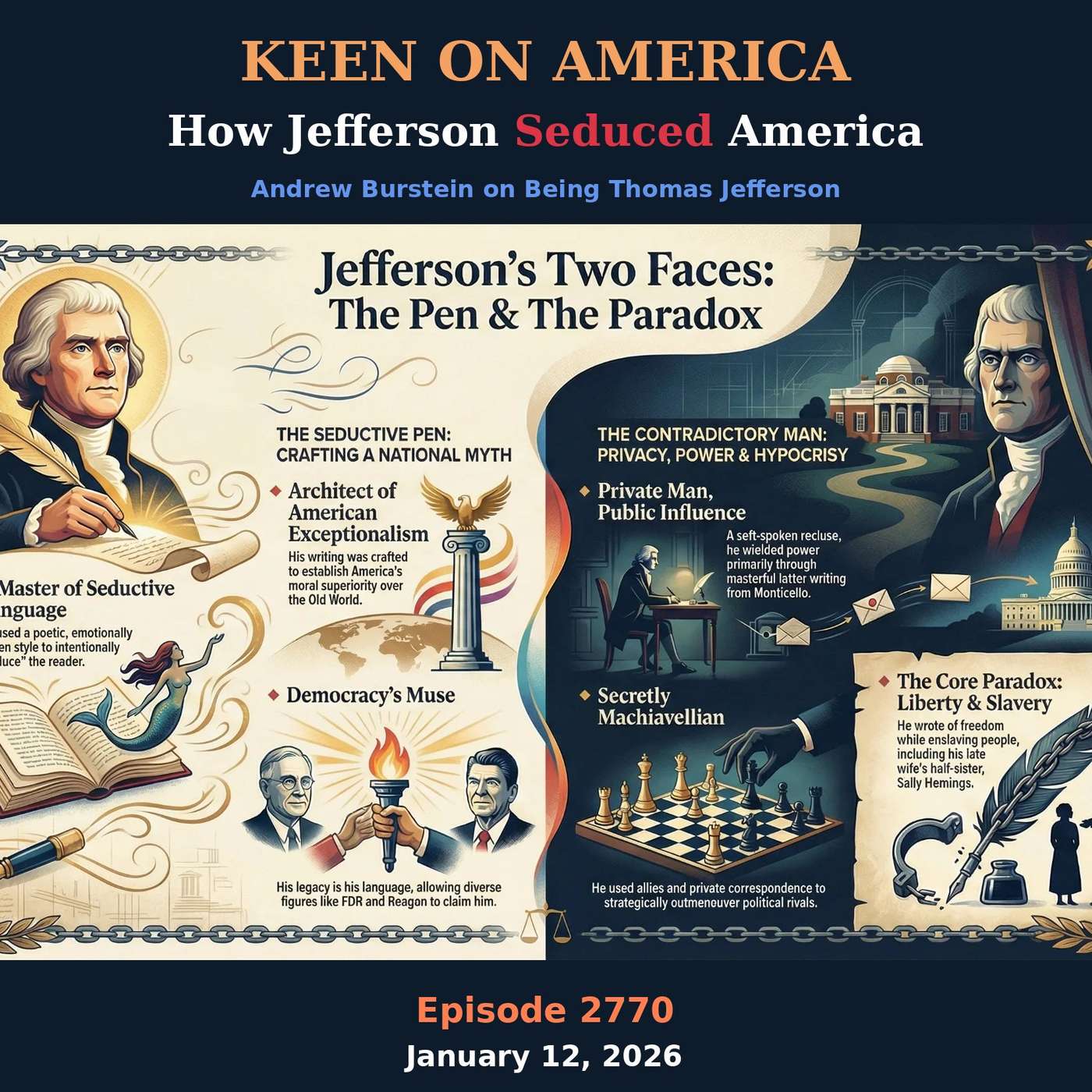
Few biographers can claim to know what it feels like to be Thomas Jefferson more than the Charlottesville-based historian Andrew Burstein. The author of many books about Jefferson, Burstein’s latest, Being Thomas Jeffers…

Duration: 39:13
There was a time in the mid 20th century, the literary historian Gayle Feldman reminds us, when the book business was cool. Back then, New York publishing resembled Silicon Valley tech and the Mark Zuckerberg of his day…

Duration: 47:31
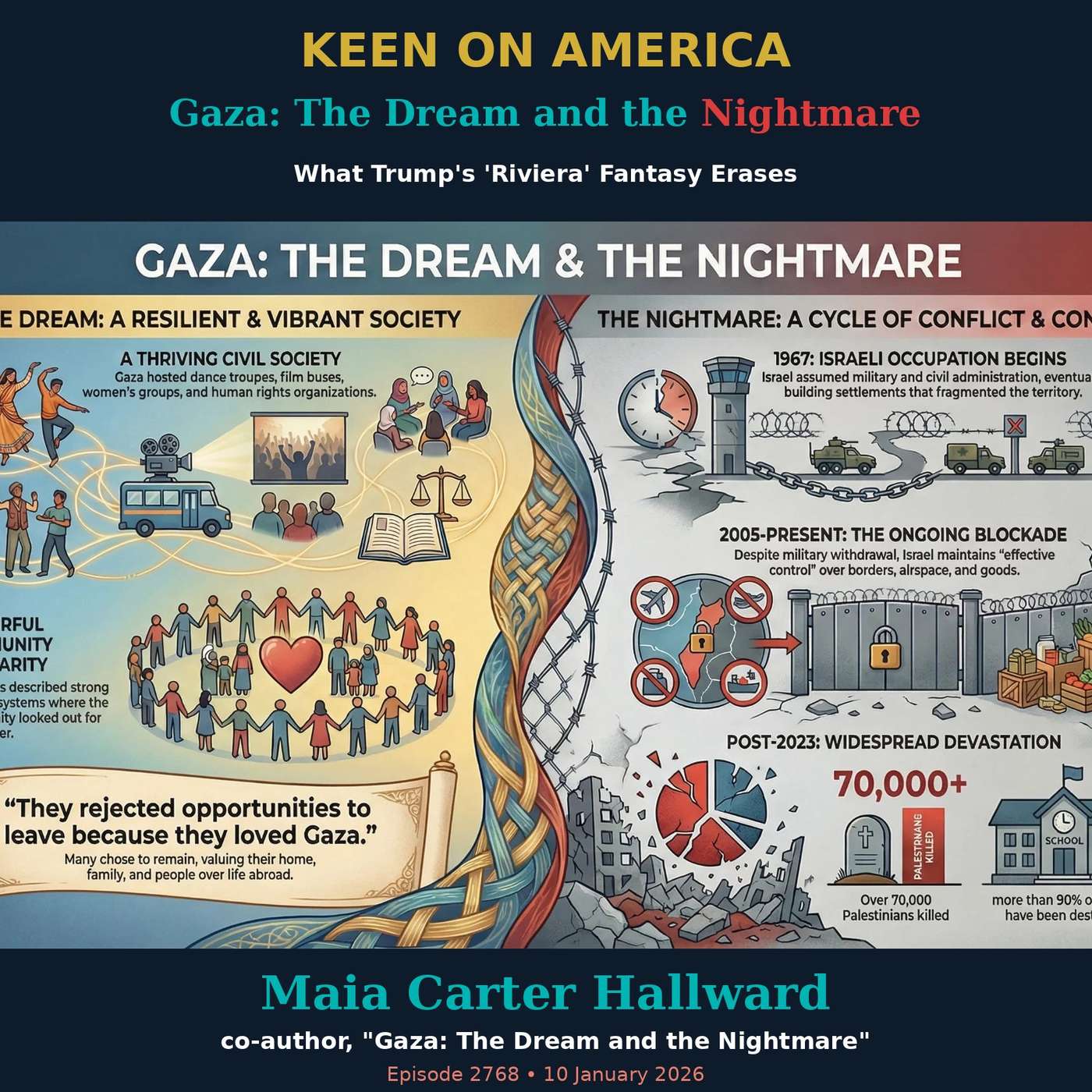
Trump’s Gazan dream is to overlay the complex human history with his own narcissistic real-estate fantasy. But for Maia Carter Hallward, co-author of a new contemporary history of Gaza, this once vibrant Mediterranean en…

Duration: 45:53
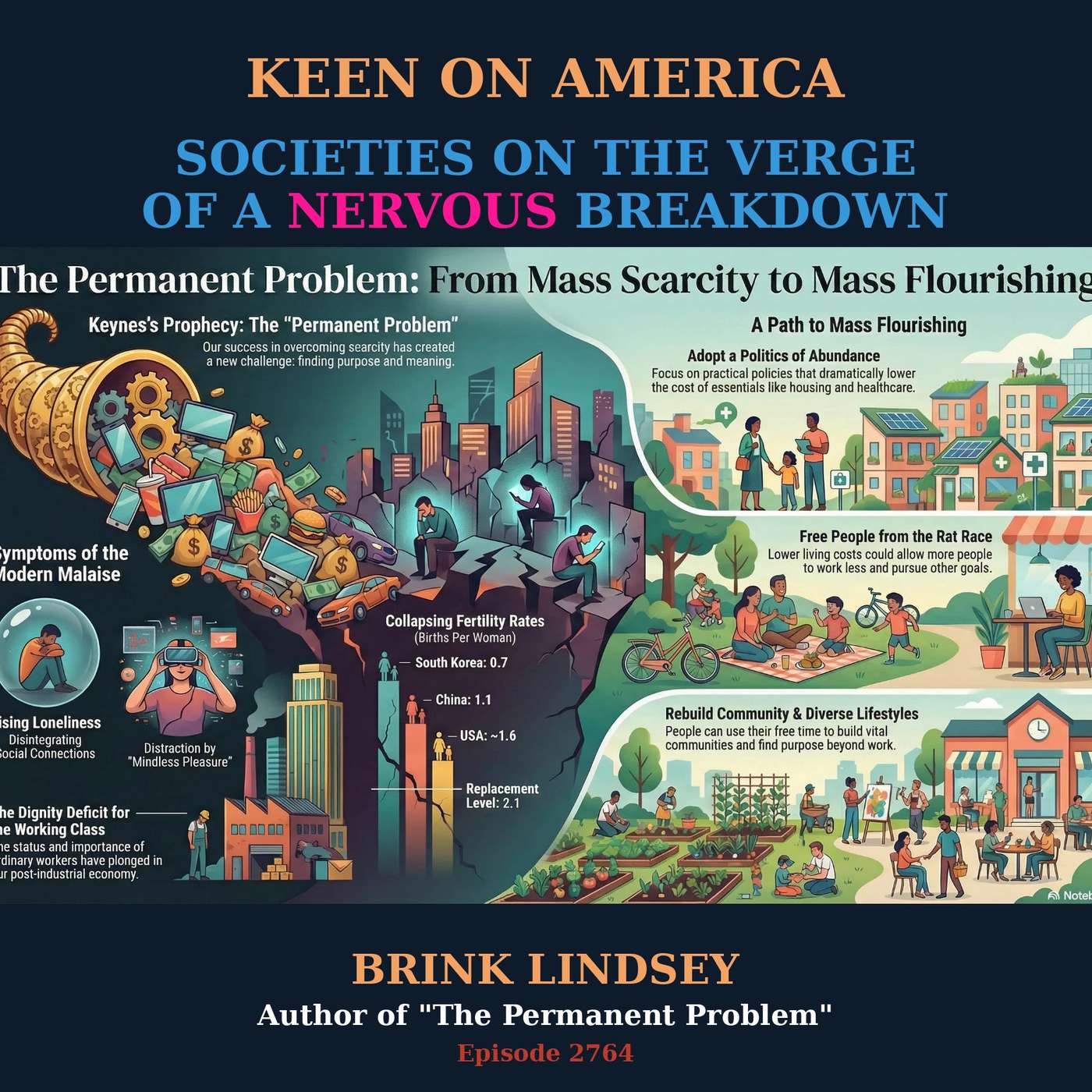
The great John Maynard Keynes explained it a century ago. In his 1930 essay, "Economic Possibilities for our Grandchildren," Keynes predicted that the future would be defined by economic abundance rather than scarcity. B…

Duration: 31:58
WTF will happen in 2026? Over the last week, we’ve been running a series of interviews about the promise and peril of the new year. And in this new weekly magazine-style KEEN ON AMERICA show, we feature highlights of con…

Logo
Select station
VOL