From Mongolia to Silicon Valley: A Venture Capitalist's American Dream
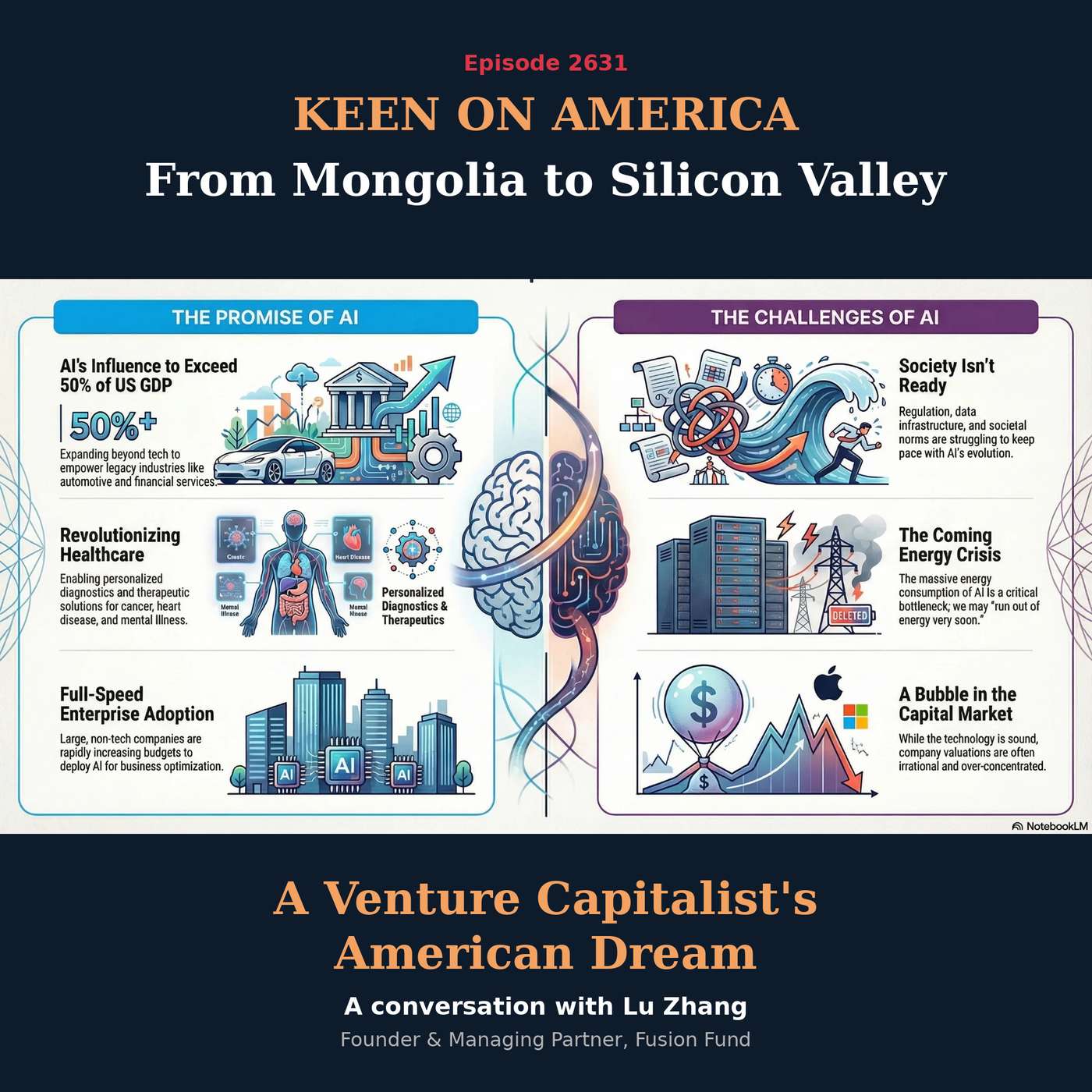
If you think the American Dream is dead, then you probably don’t know the story of Lu Zhang. Born in Mongolia and educated in China, Zhang came to Stanford as a graduate student, struck it rich as a young tech entrepreneur and is now managing partner of her own early-stage venture fund. In our conversation, Zhang makes a compelling case for why Silicon Valley remains the world’s most important innovation ecosystem—even as she warns that restrictive immigration policies threaten to strangle the very talent pipeline that made her remarkable success possible. She’s bullish on AI, bearish on energy infrastructure, and refreshingly candid about the capital market bubble that everyone in tech pretends doesn’t exist. So does Zhang really exist or is she a bot designed to promote the American Dream? She says she’s real. I believe her. Do you?
This is a public episode. If you'd like to discuss this with other subscribers or get access to bonus episodes, visit keenon.substack.com/subscribe
Episode 2270: Craig Garnett on May 24, 2022 - Uvalde's Darkest Hour
Episode 2269: Michael Sayman looks forward to an AI age in which all our online interactions are with bots
Episode 2268: David Rowell on how new technology is making us dislike new music
Episode 2267: Jonathan Taplin on the coming cultural renaissance in America
Episode 2266: Mr Musk, Mr Sacks and Mr Andreessen go to Washington
Episode 2265: Jeff Jarvis on how to reclaim the internet from moguls, misanthropes and moral panics
Episode 2265: Internet Hall of Famer, Mitchell Baker, on the promise of an Open Web
Episode 2264: Robert Pearl demystifies the RFK Jr nomination for Secretary of Health and Human Services
Episode 2263: The Godmother of Silicon Valley on luck, love and fate
Episode 2262: Steve Blank on how to hack the 21st century
Episode 2261: Douglas Rushkoff on why AI is the first native app for the internet
Episode 2260: Andrew Keen evaluates the health of American democracy
Episode 2259: Idealab founder Bill Gross on what's he's learned over the last 20 years