From Mongolia to Silicon Valley: A Venture Capitalist's American Dream
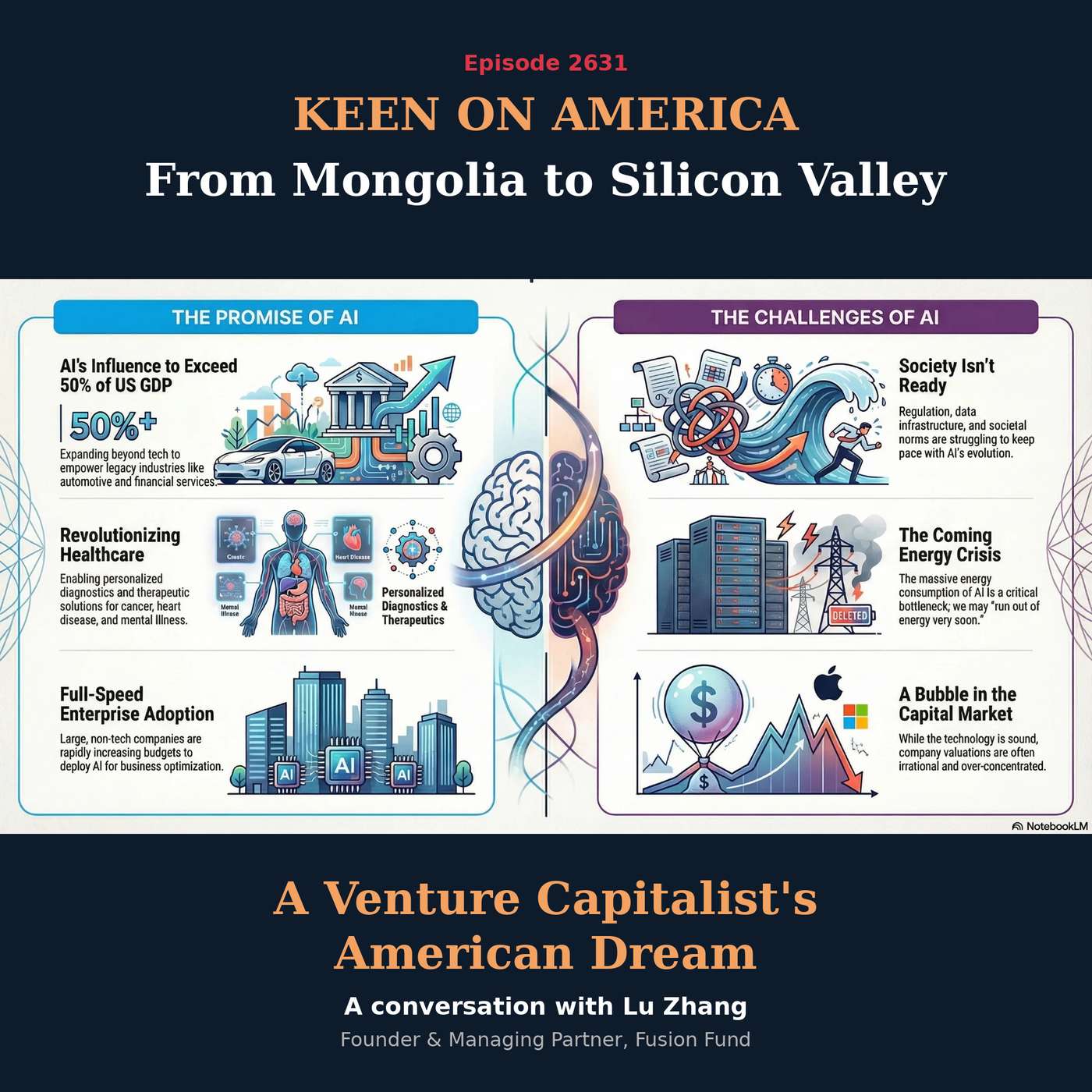
If you think the American Dream is dead, then you probably don’t know the story of Lu Zhang. Born in Mongolia and educated in China, Zhang came to Stanford as a graduate student, struck it rich as a young tech entrepreneur and is now managing partner of her own early-stage venture fund. In our conversation, Zhang makes a compelling case for why Silicon Valley remains the world’s most important innovation ecosystem—even as she warns that restrictive immigration policies threaten to strangle the very talent pipeline that made her remarkable success possible. She’s bullish on AI, bearish on energy infrastructure, and refreshingly candid about the capital market bubble that everyone in tech pretends doesn’t exist. So does Zhang really exist or is she a bot designed to promote the American Dream? She says she’s real. I believe her. Do you?
This is a public episode. If you'd like to discuss this with other subscribers or get access to bonus episodes, visit keenon.substack.com/subscribe
Episode 2102: Peter S. Goodman on How the World Ran Out of Everything
Episode 2101: Bethanne Patrick's six new books to reach on the porch or beach this June
Episode 2100: Banning Lyon's remarkable memoir of trauma, healing and the outdoors
Episode 2099: John Ganz on how America cracked up in the early 1990s
Episode 2098: Guy Lawson gets us inside the biggest scandal in the history of college sports
Episode 2097: Keen On America featuring Francis S. Barry
Episode 2096: Sasha Vasilyuk uncovers Ukraine secretive history by digging into the Soviet past
Episode 2095: Keith Teare on why the AI game in Silicon Valley might already be all over
Episode 2094: Joseph O'Neill on football as the ugly game of neo-colonial exploitation
Episode 2093: J. Albert Mann offers a Young Person's Guide to the History of American Labor
Episode 2092: Shane Burley on why Anti Zionism isn't Antisemitism
Episode 2091: Lilie Chouliaraki on the Weaponization of Victimhood
Episode 2090: Meredith Broussard on the digital "revolution" of artificial unintelligence and inequality