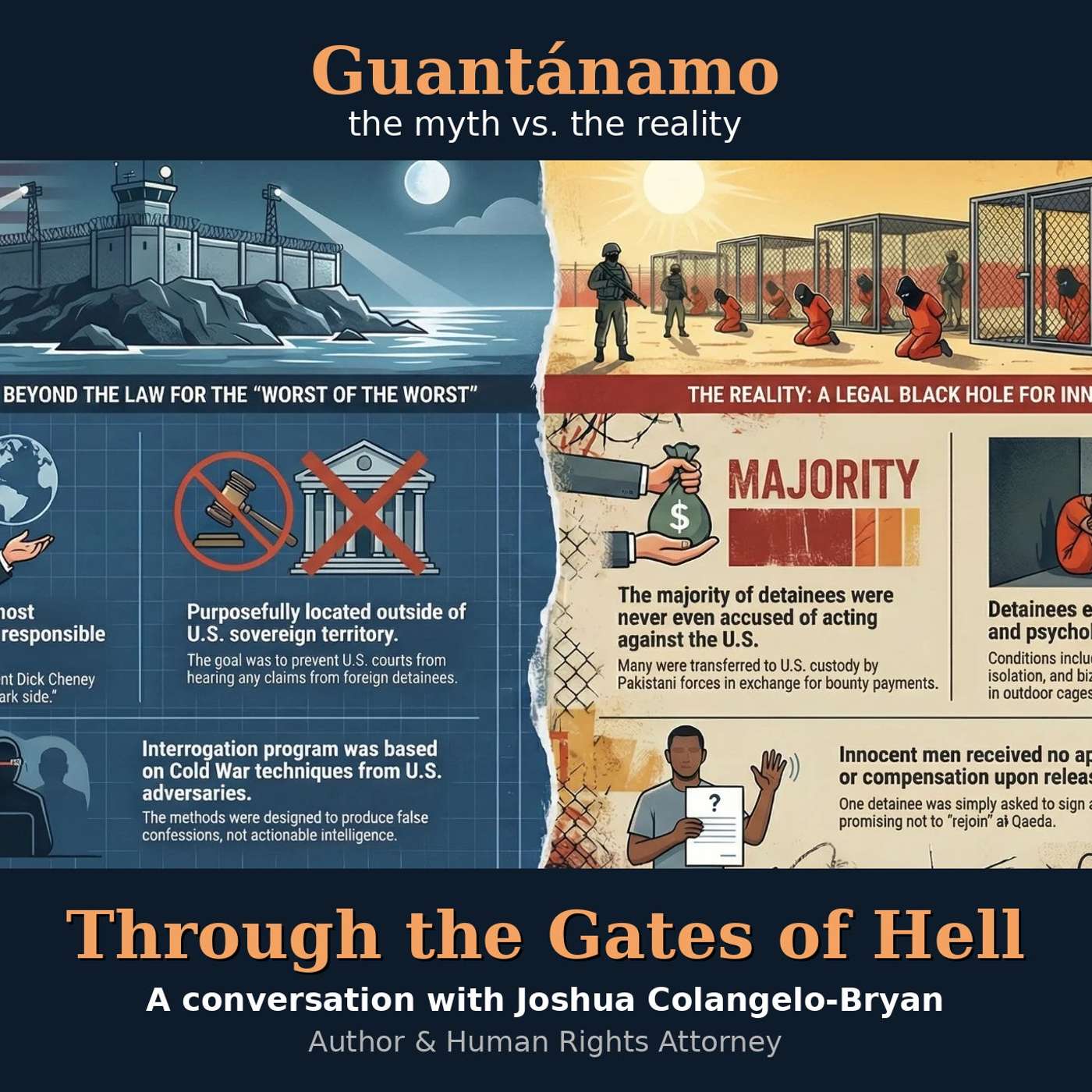
Guantanamo: The Myth vs the Reality
Dick Cheney died four weeks ago, but his dark legacy lives on—quite literally—at Guantanamo Bay. The human rights lawyer Joshua Colangelo-Bryan was among the first attorneys to enter the notorious prison in 2004, and what he found there shattered every official justification for its existence. The “worst of the worst”? Most detainees were never even accused of acting against America. Many were simply sold to the Americans for bounties. The sophisticated interrogation program? Techniques copied from Chinese and Soviet methods designed to extract false confessions, not intelligence. In his new book Through the Gates of Hell, Colangelo-Bryan tells the story of his unlikely friendship with Jaber Mohammed, a Bahraini detainee who spent years in captivity for the crime of being an Arab man in the wrong place (Afghanistan) at the wrong time (post 9/11). Released without apology or compensation—just a form asking him not to “rejoin” organizations he’d never belonged to—Jaber now lives in Saudi Arabia with four children, focusing less on bitterness and more on those rare moments when American guards showed him unexpected kindness. As the Trump administration revives the “worst of the worst” rhetoric against immigrants and once again sends people to Guantanamo, Colangelo-Bryan’s account is a warning from recent history: demonize a racial or religious group, and you will inevitably destroy innocent lives. The gates of hell have once again been opened. Will they ever be closed?
This is a public episode. If you'd like to discuss this with other subscribers or get access to bonus episodes, visit keenon.substack.com/subscribe
The Art of a Deal with the Devil: on Faustian Bargains from Shakespeare and Goethe to Thomas Mann and Donald Trump
When the United Nations Actually Mattered: Remembering the Burmese Schoolteacher who Ran the U.N. in its Glory Days
How Evil 'Big Car' Has Killed More People Than World War II
The Double Life of Robert McNamara: How America's 'Best and Brightest' Led the Nation into Vietnam While Knowing the War Was Unwinnable
The World's Worst Bet: How America Gambled Dumbly on Globalization and Lost
Demystify Science and Humanize Scientists: How to Rebuild Scientific Trust in our Angry MAHA Times
From Borges to Brain Scans: How our Minds Invent Reality
The Hypocrisy of Trump's War on Universities: How Wealthy Families Game the College Admission Process
Borders are Back, Baby: From Trump and Transylvania to Brexit and Bolivia's Navy
Beware of another Silicon Valley Win-Win-Win: Can users, publishers and tech companies really all benefit from the AI revolution?
Every Day, Computers are Making People Easier to Use: The Return of IN FORMATION
Is Roman Polanski really worth defending?
How Parents Have Become the Social Media in Their Kids' Lives: So Taking Away Phones Won't Alone Fix the Teen Mental Health Crisis