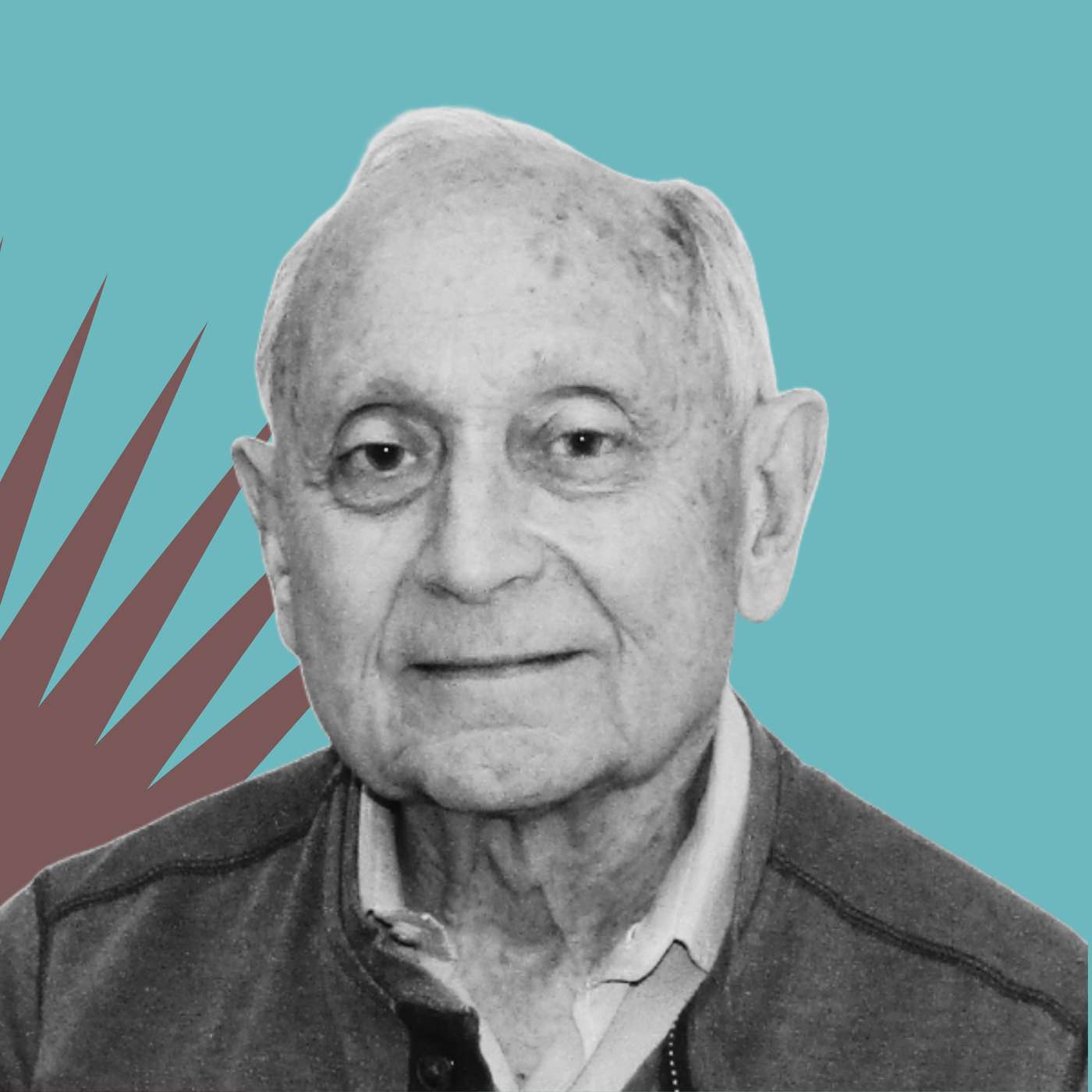
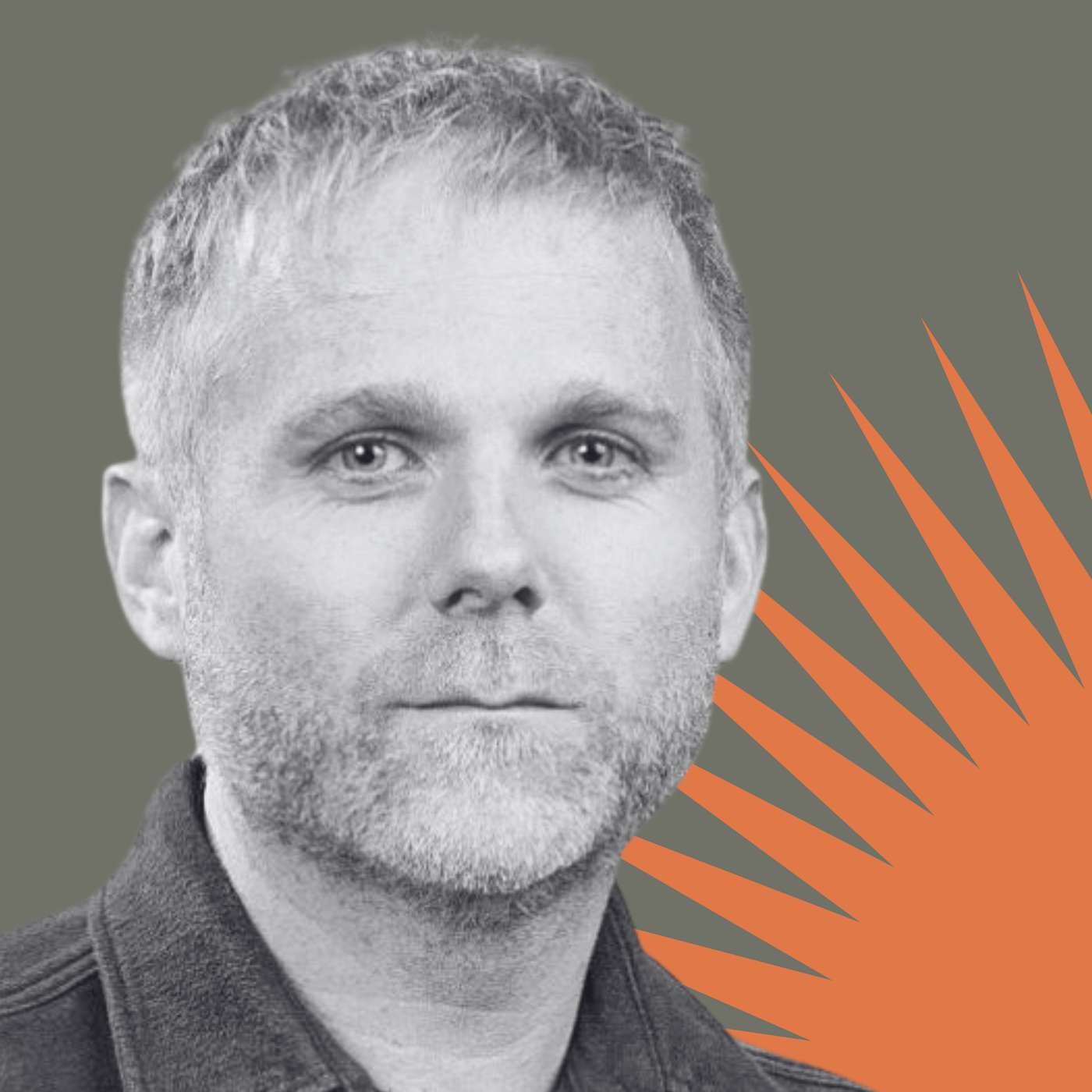
He Was Somebody: David Masciotra Remembers Jesse Jackson


Author: Andrew Keen February 19, 2026 Duration: 40:51
Podcast episode
He Was Somebody: David Masciotra Remembers Jesse Jackson

"American culture likes martyrs, not marchers." — David Masciotra, quoting Jesse Jackson

A couple of days ago, a great American died. Jesse Jackson was 84. He was somebody. Even Donald Trump acknowledged the passing of "a good man"—which, as my guest today notes, Jackson probably wouldn't have appreciated. David Masciotra is the author of I Am Somebody: Why Jesse Jackson Matters, one of the most readable biographies of the African-American leader. Having spent six years covering him and more than 100 hours in conversation, he called Jackson a friend.

Masciotra borrows from Jackson on Americans preferring martyrs to marchers. It's easy to celebrate him now that he's gone. But when Jesse was being Jesse—battling economic apartheid, registering millions of voters, building a Rainbow Coalition—he had many critics and enemies, including some of those hypocrites now praising him.

Jackson's legacy is vast. After King's death, he focused on economic justice, securing thousands of jobs for Black workers and entrepreneurs. He ran for President twice, nearly winning the 1988 nomination. He pushed for proportional delegate allocation—without which Obama would never have won in 2008. He debated David Duke and, in Masciotra's words, "reduced him to a sputtering mess." He was the first presidential candidate to fully support gay rights. He slept beside gay men dying of AIDS in hospices. He marched with Latino immigrants from California into Mexico.

But perhaps most relevant today: Jackson showed how to build a coalition that transcended racial politics without ignoring race. "If we leave the racial battleground to find economic common ground," MLK's spiritual successor insisted, "we can reach for moral higher ground." That's the populist strategy Masciotra believes the Democrats need now—a vision, he fears, trapped between the identitarian politics of its left and the milquetoast neoliberalism of its right flank.


Five Takeaways

●      Martyrs, Not Marchers: American culture celebrates civil rights leaders after they're dead. When Jackson was hard at it, he had enemies—including some now praising him.

●      Jackson Made Obama Possible: Jackson pushed for proportional delegate allocation. Without it, Obama—who won small states—would never have beaten Clinton in 2008.

●      Jackson Debated David Duke: And reduced him to a sputtering mess. Duke's response: "Jackson's intelligence isn't typical of Blacks." Jackson believed refusing debate only empowers enemies.

●      Race and Class Are Linked: Jackson showed you can't substitute race for class or use race to erase class. Leave the racial battleground for economic common ground.

●      Visionaries Win the Marathon: Jackson often lost the sprint but won the marathon. His Rainbow Coalition vision is what Democrats need now—and keep fumbling.


About the Guest

David Masciotra is a cultural critic, journalist, and author of I Am Somebody: Why Jesse Jackson Matters. He spent six years covering Jackson and more than 100 hours in conversation with him. He is an old friend of Keen on America.

References

People mentioned:

●      Martin Luther King Jr. was Jackson's mentor. Jackson was an aide to King and was with him on the balcony the day he was assassinated.

●      David Duke, former KKK leader, debated Jackson in 1988. Jackson wiped the floor with him.

●      W.E.B. Du Bois and Booker T. Washington represent a historic dichotomy in Black political thought. Jackson occupied space between positions.

●      Rosa Parks was eulogized by Jackson, who noted that she succeeded simply because "she was available."

●      Robert Kennedy shared Jackson's universal vision of coalition-building across racial lines.

Organizations mentioned:

●      Operation PUSH was Jackson's organization focused on economic justice for Black Americans.

●      The Rainbow Coalition was Jackson's political movement seeking to unite Americans across race and class.

Further reading:

●      Masciotra's UnHerd piece: "Jesse Jackson Transcended America's Racial Politics"

About Keen On America

Nobody asks more awkward questions than the Anglo-American writer and filmmaker Andrew Keen. In Keen On America, Andrew brings his pointed Transatlantic wit to making sense of the United States—hosting daily interviews about the history and future of this now venerable Republic. With nearly 2,800 episodes since the show launched on TechCrunch in 2010, Keen On America is the most prolific intellectual interview show in the history of podcasting.

Website

Substack

YouTube

Apple Podcasts

Spotify


Chapters:

  • (00:00) - Introduction: A great man died
  • (01:14) - Martyrs, not marchers
  • (02:49) - Jackson in the context of King
  • (05:07) - The Booker T.–Du Bois dichotomy
  • (08:14) - Did Jackson make Obama possible?
  • (11:15) - The marathon, not the sprint
  • (13:25) - How a white guy from Chicago became Jackson's biographer
  • (16:32) - Jackson vs. David Duke
  • (20:43) - I Am Somebody: the origin
  • (24:06) - Transcending racial politics
  • (30:26) - The Rainbow Coalition as progressive populism
  • (33:23) - What Jackson teaches us about leadership
  • (36:26) - Will Jackson be remembered?


More episodes

Duration: 40:24
America is not only a good country, but it can also make the world a better place. That’s the somewhat surprising conclusion of the progressive Washington Post columnist Shadi Hamid, whose new book, The Case for American Power, argues that America remains the one great power that can improve the world. Hamid, once a militant anti-Iraq War campus activist, has undergone a striking ideological journey in the quarter-century since 9/11. The moral arc of his life now bends towards a practical, imperfect morality. This son of Egyptian immigrants champions American dominance over Chinese and Russian dictatorships—while insisting that hypocrisy, far from being a fatal flaw, is actually the homage that vice pays to virtue. The gap between American ideals and reality, he argues, is where moral progress happens. He even has a word for this: asymptote. Meaning that American idealism, while it can never fully be reached, is still of great value. 1. The Left Has Lost Faith in America—And the Number…

Duration: 46:13
We’ve done shows before on how contemporary America resembles late-stage Soviet society. But none quite as intriguing as with the Russian-born, US-based journalist Mikhail Zygar. In The Dark Side of the Earth, his new history of the Soviet Union’s demise, Zygar underlines the moral exhaustion of its citizens. People no longer believed in anything, he reports on the collapse of this vast Euro-Asian empire. And that’s the analogy Zygar makes with contemporary America which, he suggests, is equally exhausted. From the Soviet Union to the United States, a descent into a morally bankrupt nihilism defines the end of empire. Zygar even identifies the idealistic Obama with Gorbachev and the pugnacious Trump with Yeltsin, implying that a self-styled Putin-like “savior” lurks in the dark shadow of the American future. 1. Putin’s Russia is worse than the Soviet Union The Soviet Union had dozens of political prisoners in the 1970s; Putin’s Russia has thousands. Putin threatens the West with nuclea…

Duration: 32:51
The world is a remake. Yesterday’s show featured the MAGA remake of The Handmaid’s Tale. Today it’s Dr Strangelove 2.0 and the remaking of the trillion-dollar military-industrial complex in Silicon Valley. As William Hartung, co-author of The Trillion Dollar War Machine, notes, Dwight Eisenhower’s old military-industrial complex has migrated west to Silicon Valley. It even has a Strangelovian anti-hero: mad Peter Thiel, co-founder of Palantir and the Curtis Le May character behind other Silicon Valley military start-ups. No wonder current American foreign policy—with its Monroe Doctrine meddling in Latin America—also appear to be a giant remake.1. Silicon Valley Has Become the New Military-Industrial Complex Dwight Eisenhower’s old guard defense contractors—Lockheed Martin, Raytheon, Northrop Grumman—are being displaced by tech companies like Palantir, Anduril, and SpaceX. The “military-industrial-digital complex” represents a fundamental shift in how America builds and profits from it…

Duration: 35:37
Back in 2021, Margaret Atwood came on the show to give her dark take on the American future. Four years later, Atwood’s prescience, particularly in her 1985 classic The Handmaid’s Tale, is increasingly self-evident. As the journalist Irin Carmon notes, MAGA America has become an Atwoodian dystopia of trad wives and state fecundity. But it is also, Carmon warns in her new book Unbearable, a place that actively discriminates against pregnant women, especially those of color. American women are dying in childbirth at three times the rate of their peers in other wealthy nations. Even in liberal New York City, Black women are nine to twelve times likelier to die than white women. So MAGA America is simultaneously fetishizing and punishing fecundity—celebrating “Trump babies” while jailing pregnant women who test positive for drugs. Forget the trad wives. The problem lies with the trad men making pregnancy so unbearable in America today.1. America’s Maternal Mortality Crisis Is a National Di…

Duration: 41:54
How to fix today’s epidemic of loneliness? For the New Yorker cartoonist and author Sophie Lucido Johnson, the answer involves both pigeons and polyamory. As she argues in her brand new book, Kin: The Future of Family, Johnson provides the tools to forge kinship in everything from asking for help on a grocery run, to choosing to have roommates later in life to combat loneliness, to living in modern day “mommunes” of single mothers sharing bills and responsibilities. And the pigeons and polyamory? Johnson draws on pigeon behavior—how pair-bonded birds navigate home more successfully than solitary ones—as a metaphor for human interdependence. Her own polyamorous life, detailed in her popular 2018 memoir Many Love, exemplifies her broader argument: that intentional, non-traditional relationship structures can provide a much richer web of connectivity than the isolated nuclear family. So the future of family goes way beyond traditional family. It’s pigeons, polyamory and mommunes. * The nu…

Duration: 43:52
Lawyers usually like the law. The more the better. But in addition to his life as a top corporate lawyer, Philip K. Howard has made a second career out of criticizing the invasion of law into American society. In books like The Death of Common Sense, Life Without Lawyers and his latest, Saving Can-Do, Howard argues that a uncontrolled thicket of legal red tape is undermining innovation in America. The lawyer’s central thesis is against the law: America has morphed from a can-do nation into a can’t-do society where individual judgment has been replaced by legal central planning, and where citizens must ask lawyers for permission before acting. Too many lawyers and too many laws, Howard says, are transforming America into a dystopia caught between Brave New World and Nineteen Eighty-Four. But isn’t that a bit rich, perhaps even Orwellian, from the Senior Counsel at one of America’s most illustrious law firms?Keen On America is a reader-supported publication. To receive new posts and supp…

Duration: 38:56
My neologism-du-jour is “enstatification”. It’s what is happening in MAGA America with Trump’s Gaucho-style swaggering into the economy and his reversal to autarky and a back-to-the-future Monroe Doctrine. With the growth of a 19th-century style state power, America is trying to become the new China. Meanwhile, as Keith Teare notes in his latest That Was The Week newsletter, China is the new America in its embrace of technological innovation, particularly its trebling down on clean energy. That’s why the “Too Big To Fail” debate about OpenAI is so heavily laced in irony. It’s not just Sam Altman’s chutzpah in trying to simultaneously become the punter and the house in his multi-trillion-dollar bet on ChatGPT. But it might actually reflect the new realities of second-quarter 21st-century America. We’ve been wondering for a while now what comes after neo-liberalism. In a neologism: enstatification. * China Has Already Won the Clean Energy Race—And That Changes Everything Keith Teare conf…

Duration: 39:32
One big story captures all six books selected by the Financial Times for their short list of best business books of 2025. As the FT’s Senior Business Writer, Andrew Hill, notes, it’s the story of the shift in global economic power from the United States to China. It’s game over. From Dan Wang’s Breakneck, which contrasts China’s “engineering state” with America’s “lawyering nation,” to Ezra Klein and Derek Thompson’s Abundance, chronicling America’s inability to build infrastructure, the shortlist reads like an autopsy of American decline. Edward Fishman’s Choke Points examines the new age of economic warfare, while Eva Dou’s House of Huawei reveals how Chinese companies vaulted past Western competitors. Even Stephen Witt’s The Thinking Machine, ostensibly about NVIDIA’s triumph, ultimately focuses on the US-China technology race. The judges, Hill admits, “very clearly narrowed in on this highly consequential US-China theme.” Whether chronicling rare earth minerals, clean energy domina…

Duration: 34:33
We all have our roles. I’m the smug San Francisco intellectual and the Orlando-based Dr Chloe Carmichael is the fearlessly authentic psychologist. She’s also the author of Can I Say That?, a feisty defense of free speech in our time of cancellation and unfriending. Most of us are too scared to say what we think, Carmichael argues about this anxiety-ridden, intolerant age. Such self-censorship is damaging our mental health, she worries. Liberals are more likely to defriend people over political differences. And yes, women sometimes lie. Imagine that. I’m a touch skeptical about some of this psychologizing—particularly whether any Americans are truly being silenced. But the good Dr Chloe has the “data” (who doesn’t?), the slot on Fox, and the cheek to nail me as a smug San Francisco intellectual. Even if such straight talk nearly got her unfriended by an anonymous woke reviewer at Publishers Weekly. Probably another smug coastal elite. Can I say that?1. The Mental Health Case for Free Sp…

Duration: 46:01
A week is a long time in American politics. I did this interview with Alex Zakaras last week, before the midterms and Trump’s slide in the polls. But in spite of Mamdani’s victory earlier this week, the left still needs to figure out how to successfully reinvent itself in the MAGA age. That, at least, is the argument that Zakaras, a progressive political philosopher, makes in his new book Freedom For All. What could a liberal society be in 21st-century America, he asks. Zakaras’ answer is an unambiguous left populism that defiantly reclaims freedom from libertarian conservatives, challenges economic elites head-on, and stops defending the pre-Trump status quo. But can progressives really build the broad coalition necessary to win power while staying true to their principles? Yes, Alex Zakaras trumpets. By pursuing freedom for all in a post-neo-liberal America. 1. The Left Can’t Just Play Defense Zakaras argues that liberals have adopted a defensive posture—protecting institutions, defe…

Duration: 40:02
If money is supposed to make you happy, then why do tech billionaires like Elon Musk, Peter Thiel and Marc Andreessen seem so miserably angry? That’s the question at the heart of Jacob Silverman’s new book, Gilded Rage, an expose of Silicon Valley’s angry plutocracy. The weird thing is that a lot of these billionaires behave little differently from the apoplectic lumpen commentariat on X or Reddit. Sure, they might own X, but they share all the right-wing conspiracy theories infecting the online mob - from trollish racism and anti-semitism to a bro style paranoia about female power. According to Silverman, their rage is a form of exhaustion with the world itself. These men don’t just want to own everything—they want to exit society entirely, by inventing new cities, buying private islands, and founding Martian colonies. Unlike the Gilded Age robber barons who happily built universities and libraries, today’s miserable tech elites sit in their palatial basements and rage against society…

Duration: 46:10
Bell Curve author joins the intellectual mob (Peter Thiel, Jordan Peterson, Ross Douthat et al) and finds GodCharles Murray, the infamous co-author of the Bell Curve, has joined the crowd and is Taking Religion Seriously. But what if God doesn’t take him seriously—or worse, finds his work on cognitive elites sufficiently annoying to sentence him to give powerpoint presentations on IQ for eternity? Murray doesn’t seem too stressed by these Dantesque scenarios. Instead, he’s eager to keep up with his Quaker wife, Catherine Bly Cox, who has taken religion far more seriously than Murray himself. Even Murray’s discovery of God feels slightly detached and skeptical—as if the social scientist is laughing at himself for doing such an unverifiable and perhaps even low IQ thing. So if Murray can’t take his own faith seriously, why should God—or fellow skeptics of today’s mob fashion for religion—take him any more seriously? 1. The Intellectual Zeitgeist Has Shifted on Religion Twenty years ago,…

Duration: 42:45
Lea Ypi’s new book about her Greek-Albanian grandmother is a philosophical meditation on dignity, a history of Ottoman collapse and Balkan nationalism, and a warning about our own indignant age of manufactured identities and resurgent tribalism.Back in January 2022, Lea Ypi came on the show to discuss Free, her brilliant account of growing up in communist Albania. Now Ypi, who teaches political philosophy at LSE, is back with her follow-up, Indignity, an equally compelling biography of Leman Ypi, her maternal grandmother. “A Life Reimagined” is its subtitle, but it’s not just her grandmother whose life Ypi is reimagining. The book is a retelling of the modern stories of Greece, Turkey and Albania as well as a sly backwards glance on the court politics of the late Ottomans. Indignity is a Balkan story, in the grand tradition of Rebecca West. And like West, Ypi shows us that Balkan history is never quite dead - instead, it’s prophecy for our own age of resurgent nationalism and manufactu…

Duration: 52:26
A former US ambassador to Russia warns of America’s slide into autocracyAs American ambassador in Moscow between 2012 and 2014, Michael McFaul had a front row seat on Russia’s slide into autocracy. But in his new book, Autocrats vs Democrats, McFaul warns that it’s not just Putin, but also Xi and Trump who are fueling the “new global disorder”. And the intended audience for his jeremiad against autocracy is, of course, in the United States, rather than China or Russia. McFaul, who now teaches at Stanford, is warning about democracy’s dangerous flirtation with autocracy, especially in the United States. The parallels are chilling. Putin used the law to target enemies, reorganized property rights to silence independent media, and cultivated a patrimonial relationship with supporters who saw him as their protector. Trump, McFaul argues, is following a similar playbook—though America’s deeper democratic traditions and more autonomous institutions provide stronger resistance. Yet McFaul see…

Duration: 27:37
A Nobel laureate on why we should sometimes trust scientists, and not politicians, to fix the futurePeter Agre won the Nobel Prize for Chemistry in 2003, but he’s not interested in playing God. Or even know-it-all. “When Nobel Prize winners start predicting what the stock market would do, or who’s going to win the World Series, they may be beyond their specialty,” he says. Yet in his new book, Can Scientists Succeed Where Politicians Fail?, Agre claims that scientists have succeeded in defusing international crises where politicians have failed. He uses the 2015 Iran nuclear accord as an example, arguing that it only happened because two MIT-trained physicists spoke the same scientific language and brought presents for each other’s grandchildren. Then Trump canceled it. Now, with RFK Jr. running American health policy and the CDC “decimated,” he fears for catastrophe. Peter Agre may not quite be God. But he’s about as close as we will get in our polarized and paranoid world. * Science…

Logo
Select station
VOL