
How Capitalism Can Save Capitalism: The Case for Stakeholder Capitalism
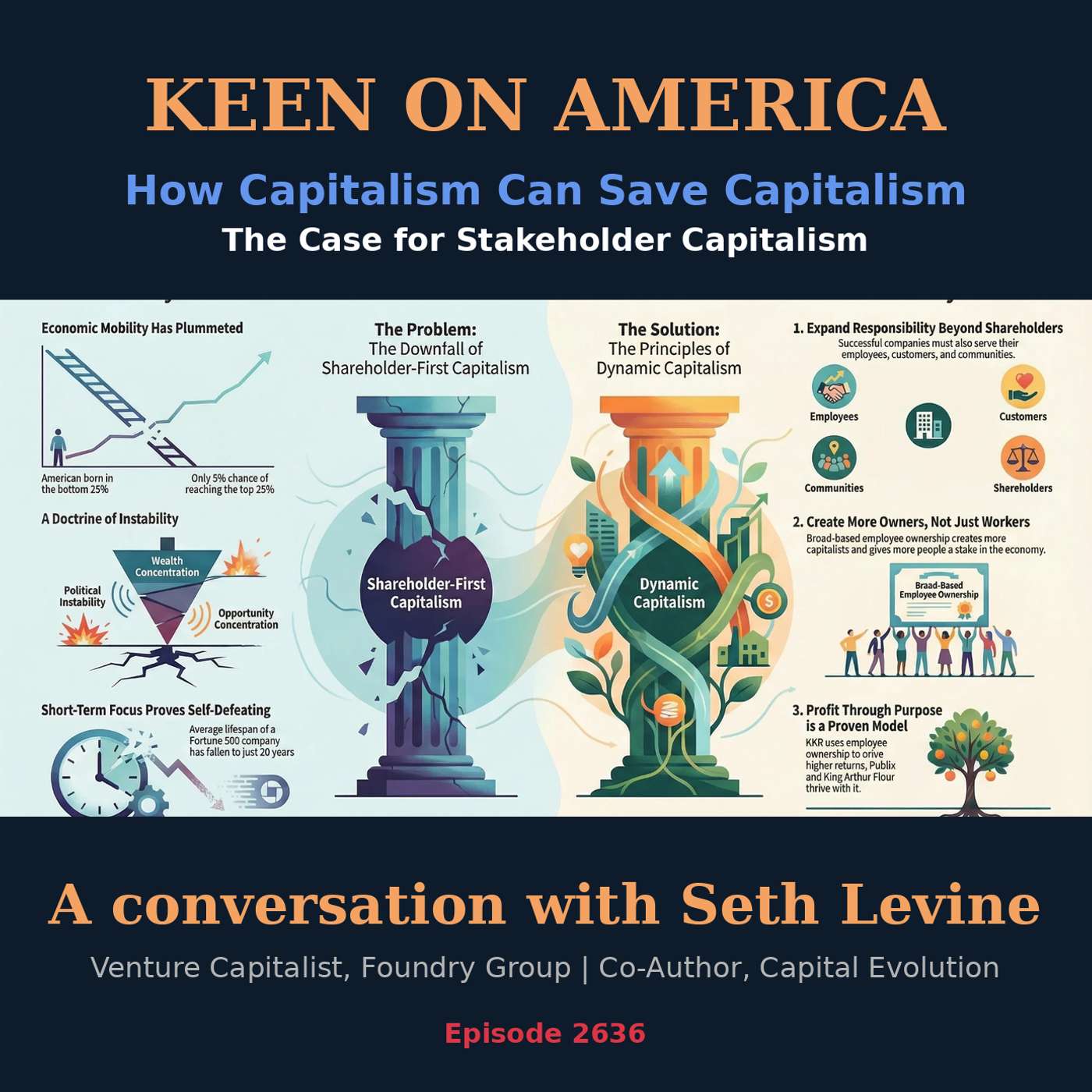
The American economy is a numbers game and those numbers are becoming more and more unfair. “30 years ago, if you were born in the bottom 25th percentile of wealth, you had about a 25% chance of dying in the top 25th percentile.” notes the venture capitalist Seth Levine. “Today you’ve got a 5% chance.” So what to do? What Levine wants is more rather than less capitalism. As he argues in his new co-authored (with Elizabeth MacBride) book, Capital Evolution, “if we want more people to have a stake in the economy, more people have to have a stake in the economy.” Thus the case for what he calls stakeholder capitalism. Only capitalism can save capitalism, Levine argues. Whether that’s Davos-style tautology or the way to right the wrongs of American capitalism is a more complicated question.
This is a public episode. If you'd like to discuss this with other subscribers or get access to bonus episodes, visit keenon.substack.com/subscribe
Maud Newton: How to Come to Terms With Troubling Ancestors
Isaac Fitzgerald: What's Wrong (And Right) With American Male Writers
Paul Tucker: What Chinese and American Statesmen Need to Do to Lessen Global Discord
Priyanka Kumar: How "Reading" Nature, Especially Birds, Enables Us to Transcend Ourselves
Ben Kesling: The Gut-Wrenching Story of One U.S. Army Unit's Experience in Afghanistan
Samantha Cole: How Sex Changed the Internet and the Internet Changed Sex
RJ Andrews: Why the Future of Publishing For One Start-Up Entrepreneur is High-End and Analog Books That Visualize Data
Lenore Andreson: How California is Pioneering the Reform of the American Criminal Justice System
Claudia Lux: Imagining a Kafkaesque Hell in Which There Is Only Jägermeister to Drink and the Devil Is a Corporate Bureaucrat
Henrietta Harrison on the 18th-Century China Question: The Perils of Translating Between Qing China and the British Empire
Greg Melville: How Cemeteries Reveal America's Most Hidden and Often Deadliest History
Paul Sexton: Perhaps the Most Remarkable Thing About Charlie Watts Was Just How Remarkably Ordinary He Was
Colin L. Read on Not the People's Money: Uncovering Bitcoin's Catastrophic Economic and Environmental Cost