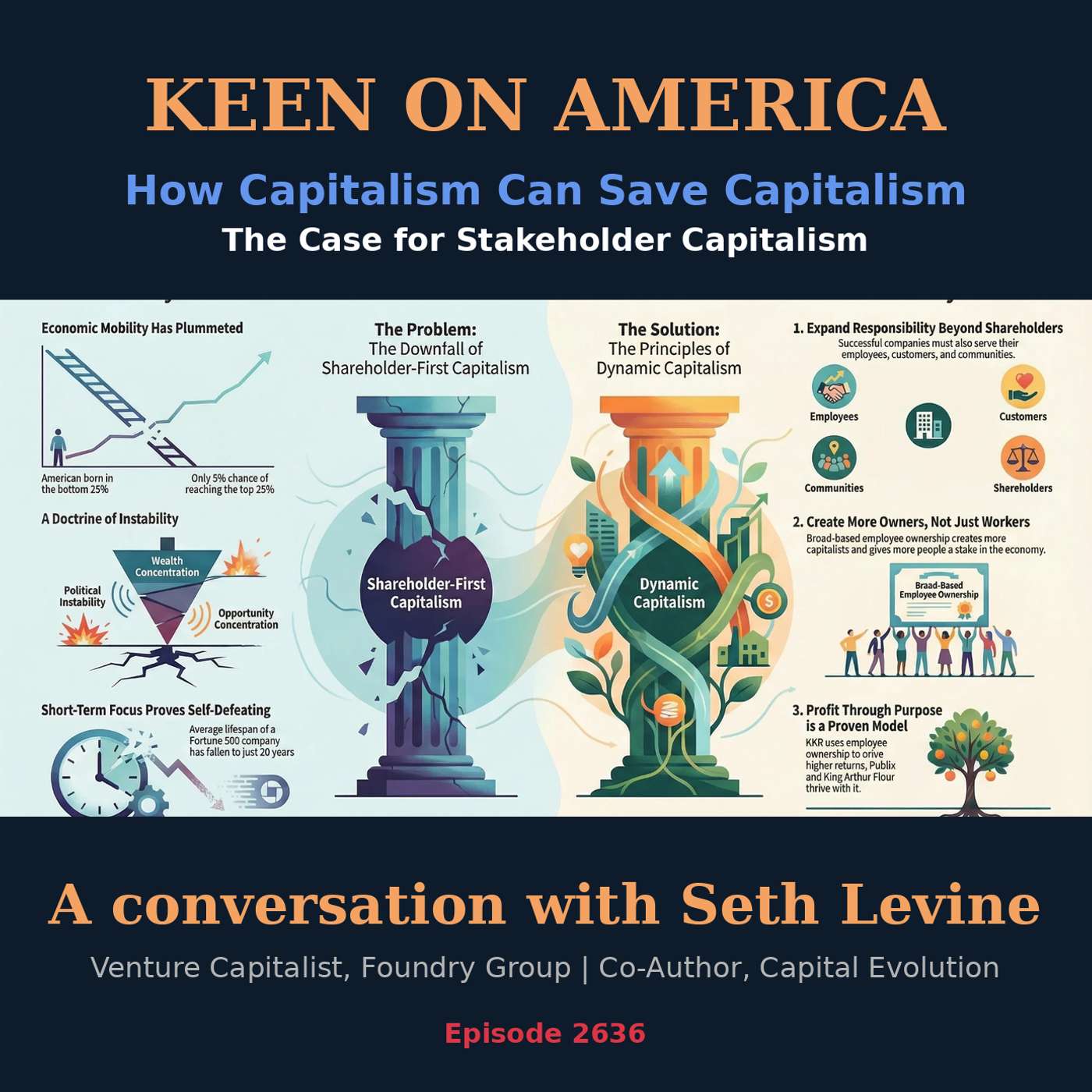
How Capitalism Can Save Capitalism: The Case for Stakeholder Capitalism
The American economy is a numbers game and those numbers are becoming more and more unfair. “30 years ago, if you were born in the bottom 25th percentile of wealth, you had about a 25% chance of dying in the top 25th percentile.” notes the venture capitalist Seth Levine. “Today you’ve got a 5% chance.” So what to do? What Levine wants is more rather than less capitalism. As he argues in his new co-authored (with Elizabeth MacBride) book, Capital Evolution, “if we want more people to have a stake in the economy, more people have to have a stake in the economy.” Thus the case for what he calls stakeholder capitalism. Only capitalism can save capitalism, Levine argues. Whether that’s Davos-style tautology or the way to right the wrongs of American capitalism is a more complicated question.
This is a public episode. If you'd like to discuss this with other subscribers or get access to bonus episodes, visit keenon.substack.com/subscribe
Italian Football: The Art of Defense and The Soul of a Nation
From Feudal Lords to AI Billionaires: Capitalism's Thousand-Year Conquest of the World
Why Football's Greatest Player Might Be Its Most Boring: The Problem (Yawn) of Lionel Messi
Maradona, Pele or Messi: Who is the Greatest Footballer of All Times?
All Sparta, No Athens: The Decline and Fall of Empires
Where Does Abundance Come From? How to Reinvent a Fairer Future in our AI Age
The Zakaria Paradox: Fareed Zakaria on the Triumph of Reactionary Politics in Our Revolutionary Post-Industrial Age
How American Eugenics Fueled Nazi Euthanasia: Psychiatry's Forgotten Complicity in the Holocaust
Chris Matthews on Robert F. Kennedy: Ten Reasons Why Bobby Still Matters
One Battle After Another in Hollywood: Why Gen Z Has Abandoned Cinema and What It Says About American Culture
Student Debt as Modern American Serfdom: A Mother Stole $200,000 in Her Daughter's Name
Keen on Hispanic America: How Latino TV Networks Reshaped American Politics and Culture
Is There An Orchestrated Moral Panic Against AI? Or Is This Just Another Figment of a Paranoid Silicon Valley?