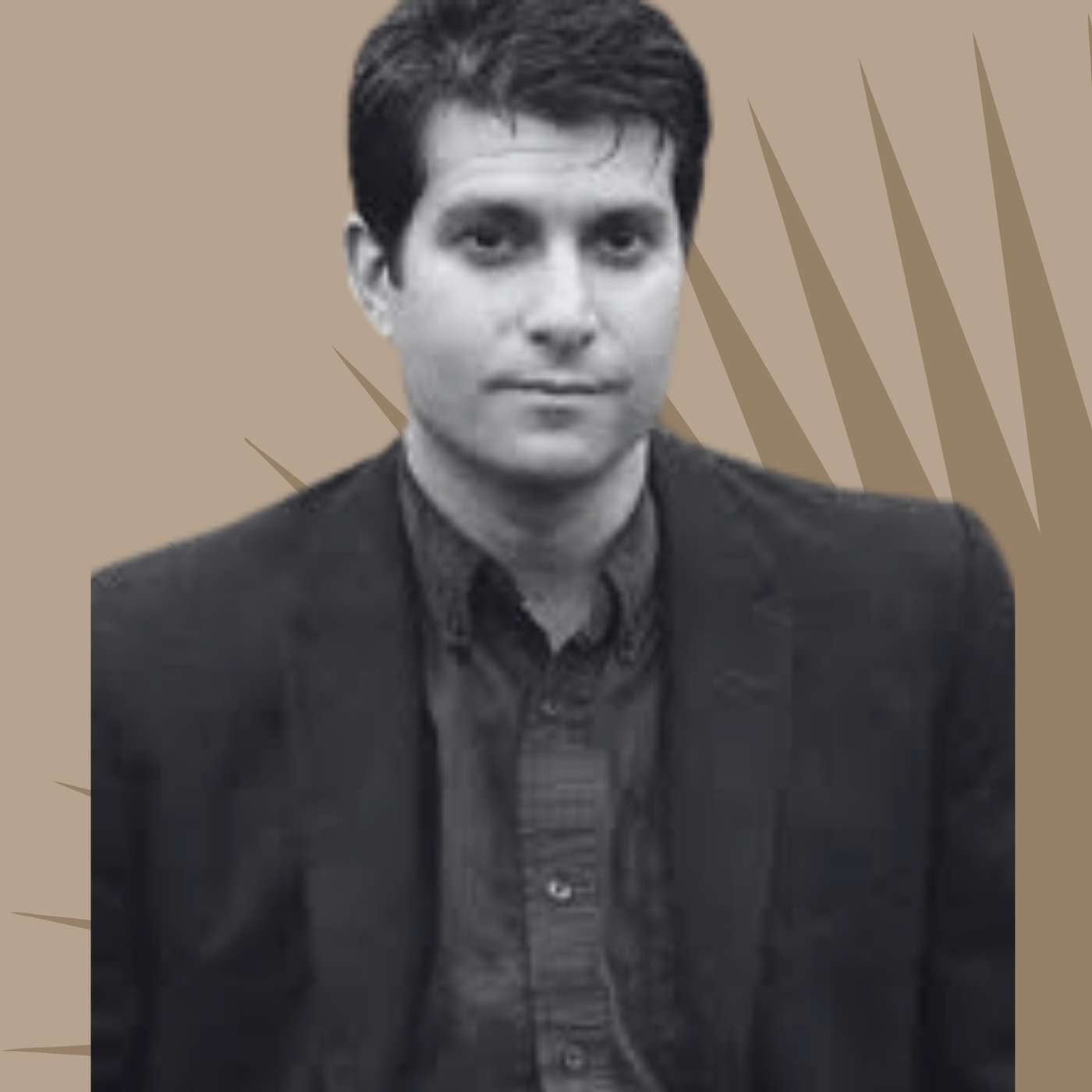
It's Always Exploding Somewhere: Why No Weapon Is Ever Perfect


Author: Andrew Keen February 2, 2026 Duration: 41:06
Podcast episode
It's Always Exploding Somewhere: Why No Weapon Is Ever Perfect

There’s something absurdly Strangelovian about the American quest for a perfect weapon. As Jeffrey Stern warns in The Warhead, his new history of The Paveway, the first “smart” bomb, weapons are always, like their human engineers, imperfect. “It’s always exploding somewhere,” Stern dryly notes, and those explosions in the Texas Instruments developed Paveway were not only unexpected, but often tragically imperfect. So for example, the Second Gulf War was the most precise air war in history and yet within a year, more civilians died than in Hiroshima and Nagasaki combined. The conceit of “perfection”, Stern warns, might be as quintessentially American as the fatally flawed Walt Disney corporation or the Kennedy dynasty (both part of the Paveway story). Which is why this history of smart weapons makes such chilling reading in an AI age when Americans are once again being promised perfect military technology. 

Keen On America is a reader-supported publication. To receive new posts and support my work, consider becoming a free or paid subscriber.

This is a public episode. If you'd like to discuss this with other subscribers or get access to bonus episodes, visit keenon.substack.com/subscribe


More episodes

Duration: 55:30
Pay attention to this interview. Because, you see, attention is seriously expensive — the Silicon Valley industry being worth $17 trillion, at least according to the Princeton historian D. Graham Burnett, co-editor of a new manifesto entitled Attensity. For Burnett and his friends in the Attention Liberation Movement, the attention industry is "fracking" the human out of us. Liberating ourselves from its exploitative grasp, then, is an existential challenge. "If we take our attention away," he warns, "it collapses into sand." And so will we. So paying attention involves more than simply putting down our phones. It means joining the Attensity movement and challenging the central attention economy principles of 21st century capitalism.Keen On America is a reader-supported publication. To receive new posts and support my work, consider becoming a free or paid subscriber. This is a public episode. If you'd like to discuss this with other subscribers or get access to bonus episodes, visit k…

Duration: 36:23
New books are like London buses. You wait and wait and then a handful comes at the same time. Take, for example, histories of the New York City vigilante Bernie Goetz. Last week, we featured the CNN legal analyst Elliott Williams who has a new book out on Goetz. And now we have another uncannily timely book on Goetz. This one from the Pulitzer-Prize winning historian, Heather Ann Thompson. Entitled Fear and Fury, Thompson focuses on the 1984 New York City case in the genealogy of white rage in America, tracing the Goetz shootings back to the Reagan Eighties as well as white vigilantes in the Trump era like Kyle Rittenhouse. What ties Goetz and Rittenhouse together, Thompson argues, is the inversion of victim and villain in a brutal haze of violence. And, of course, we can now see this tragic narrative repeated on the streets of Minneapolis. It’s as if Bernie Goetz and Kyle Rittenhouse are now working for ICE. This is a public episode. If you'd like to discuss this with other subscriber…

Duration: 30:19
This is the final conversation from DLD. And the most optimistic - at least from a European perspective. John Thornhill, the FT’s Innovation Editor and founder of Sifted, has a quite different take on Europe’s tech scene from our other guests. Yes, he acknowledges, the regulatory environment is complex. And, yes, late-stage capital is thin. But Thornhill sees something the doomsayers miss: resilience. A new generation of founders isn’t building “European champions” — they’re building global ones. Innovation hot spots are popping up across the continent: London, Berlin, Stockholm, Tallinn, Lisbon. Paris (of all places) is enjoying a renaissance. And deep tech — biological computing, synthetic biology, materials science — may finally give Europe’s research strength a viable path to commercialization. So who needs Silicon Valley Goliaths when you have an army of European Davids?Keen On America is a reader-supported publication. To receive new posts and support my work, consider becoming a…

Duration: 28:29
For media moguls, we are living, to borrow from Dickens, in the best and worst of times. As Nicholas Thompson confessed to me at DLD, The Atlantic CEO is simultaneously “excited” and “terrified” by the power of AI to revolutionize his media industry. On the one hand, Thompson explains, AI represents the best tool journalism has ever had for locating needles in haystacks. On the other hand, AI has the potential to obliterate traditional media’s entire business model. So what’s it to be: extinction or renaissance? For Thompson, a lot depends on the fate of copyright. If our Silicon Valley leviathans pay for the original content that powers their intelligence, then media companies can prosper in the age of AI. If not, then it really will turn out to be the worst of times for high quality, curated publications like The Atlantic. Keen On America is a reader-supported publication. To receive new posts and support my work, consider becoming a free or paid subscriber. This is a public episode.…

Duration: 34:50
One of the most bracing presentations at DLD this year was given by Crunchbase's data queen Gene Teare. Breaking down America's VC dominance, Teare's speech might have been entitled "64% and Counting." As Teare told Keith and me in a special Teare family edition of our regular That Was The Week show, the VC gap between Europe and America is only getting wider. From 2014 to 2023, US share of global venture dipped below 50%. But in 2025, it roared back — with nearly two-thirds of all global VC flowing to America. The foundation model funding disparity tells the story: OpenAI raised $40 billion last year, Anthropic $17.5 billion. The top French AI company? $2 billion. Oh mon Dieu.Keen On America is a reader-supported publication. To receive new posts and support my work, consider becoming a free or paid subscriber. This is a public episode. If you'd like to discuss this with other subscribers or get access to bonus episodes, visit keenon.substack.com/subscribe

Duration: 17:33
Not everything at DLD this year was on the growing US-European economic and technological divide. There were many speeches on the environment including from heavyweights like Kate Raworth. And I had the opportunity to catch up with my favorite advocate of regenerative agriculture, the managing partner at Acton Capital, Jan-Gisbert Schultze. According to Schultze, today's deepest problem is our spiritual disconnection from nature. We've lost 50% of our soil carbon, he notes, and with it the fertility that sustains us. We can save ourselves, he says, from the soil up — by embracing regenerative agricultural practices that prioritize local community activation and sustainable farming. Schultze is putting this into practice at Lake Constance, Germany's largest lake, where his Regenerate Forum is working to transform an entire county into what he calls a "climate landscape" — retraining farmers, rebuilding soil, and relocalizing the food system.Keen On America is a reader-supported publicat…

Duration: 40:11
Few speakers at DLD this year were more sombre than The Economist's deputy executive editor Kenneth Cukier. “Civilizations aren’t killed,” Cukier says, “they commit suicide.” It's now "three minutes to midnight" in Europe, he warns, and what he called the priceless "vase" of the liberal order is about to shatter. Borrowing from Hemingway's description of personal bankruptcy, Cukier argues that civilizational suicide comes "slowly, then suddenly". So can anything avert this collapse? Cukier isn't particularly optimistic, but nor is he hopeless. The vase hasn't shattered yet. The hope, he suggests, is with new peaceful technologies that can help reinvent democracy. But if the European clock really is teetering at three minutes to midnight, it's hard to be persuaded by Kenneth Cukier’s abstract promises of ethical technology.Keen On America is a reader-supported publication. To receive new posts and support my work, consider becoming a free or paid subscriber. This is a public episode. If…

Duration: 29:26
Few people experienced the Dot-Com bubble with more vertiginous intensity than Bill Gross, the Pasadena-based founder of Idealab and many many other internet startups over the last 30 years. So when I sat down with Gross at DLD, I couldn’t resist opening with the boom/bubble gambit. How, I asked him, does today’s AI hysteria compare with the Web 1.0 madness of the Nineties? While Gross - whose current ProRata.ai play is focused on protecting creativity in the age of generative AI - doesn’t believe that today’s boom is akin to the Dot-Com bubble, there are similarities. We are at what Gross calls a “Napster moment” in terms of making the big LLMs accountable for all the content they are illegally crawling (ie: stealing). And to get beyond this moment, he says, everyone from Google and OpenAI to Perplexity and Anthropic, needs to move to a “Spotify model” that fairly shares revenue with the human creators of knowledge. Keen On America is a reader-supported publication. To receive new pos…

Duration: 25:01
Yesterday’s show from the DLD conference was about the need for Europe to relearn the language of power. Today, things get even more dire for our European friends. I asked another DLD speaker, Carl Benedikt Frey, a Swedish economic historian who teaches at Oxford, whether it’s “game over” for Europe in terms of its ability to compete with American and Chinese big tech. His answer: not yet—but close. Frey’s last book, shortlisted for the 2025 Financial Times business book of the year, is entitled How Progress Ends: Technology, Innovation and the Fate of Nations. But it’s specifically Europe’s economic progress and the fate of European nations that most concerns Frey. Unless Europeans create a true single market for services, he warns, it really could be the end of the European dream of continent-wide progress. So no more crossroads for a continent perennially at a crossroads. And that single market, Frey explains, is ultimately a matter of political rather than economic will.Keen On Ame…

Duration: 23:44
I'm just back from another stimulating Digital Life Design (DLD) conference in Munich where all the talk was about the growing technological and political gap with the United States and China. From Machiavelli and Hobbes to Napoleon and Bismarck, Europe invented the modern concept of state power. But decades of outsourcing security to NATO and the US have left the continent dangerously rusty both in the language and execution of power. According to Marta Mucznik, a senior analyst at the Brussels-based left-leaning International Crisis Group, "projecting power is the language of today's world." And unless European politicians relearn it, Mucznik warns, that growing gap between Europe and the bipolar reality of a US-China centric world will only continue to dramatically widen.Keen On America is a reader-supported publication. To receive new posts and support my work, consider becoming a free or paid subscriber. This is a public episode. If you'd like to discuss this with other subscriber…

Duration: 39:12
For a country forever flirting with amnesia about its racial history, America sure struggles to forget. Take, for example, Bernie Goetz, the white subway vigilante, who shot four black teenagers on a NYC subway in December 1984. There’s not just one - but two major new books about the anything but colorblind Goetz case which we’ll be discussing over the next couple of weeks. The first is by the CNN legal analyst Elliot Williams who presents it as a Rashomon style narrative in which there is no single undisputed truth. There might not be quite five truths in Williams’ Five Bullets, but interpreting this story all depends on your political and racial perspective. “If a black man had shot four white teens,” Williams reimagines, “this would be a totally different story.”Keen On America is a reader-supported publication. To receive new posts and support my work, consider becoming a free or paid subscriber. This is a public episode. If you'd like to discuss this with other subscribers or get…

Duration: 41:34
In his new co-authored book It’s On You, the English behavioral scientist Nick Chater exposes how the rich and powerful - the THEM - have convinced us that we're to blame for society's deepest problems. Can't lose weight? That's because YOU lack willpower—or so THEY would have you believe. But willpower, Chater argues, is a convenient myth. And that means the behavioral economists got it wrong too. Nudge theory doesn't work because human beings are far messier than the utilitarians assume. The answer isn't self-discipline. It's systemic change—and that requires politics, not self-help or even self-discipline. It’s transferring power back from THEM to YOU. This is a public episode. If you'd like to discuss this with other subscribers or get access to bonus episodes, visit keenon.substack.com/subscribe

Duration: 45:34
According to the New Yorker writer Nicholas Niarchos, Africa is rich in both raw materials and tragic paradox. We know about the continent's wealth in the rare earth minerals that enable our global transition from fossil fuels to clean energy. But it's contemporary African paradoxes that Niarchos describes in his important new book, The Elements of Power. There's the paradox of clean energy's dirty secret — the horrifying cost in African suffering of our insatiable thirst for the minerals that power our electric vehicles and solar panels. Then there's the paradox of the new scramble for Africa between what he calls the "amoral" Chinese and the "immoral" Americans. And finally there's Niarchos' own personal paradox (which he doesn’t disguise) of being the scion of two of the wealthiest and most powerful families in Europe while writing a book about some of the poorest and most exploited people on the planet.Keen On America is a reader-supported publication. To receive new posts and supp…

Duration: 42:42
We all have our own favorite Robert Redford movie. But what's Redford’s most prescient film about today’s America? His Seventies trilogy about American politics — The Candidate, Three Days of the Condor and All the President's Men — are all, in their own profound ways, lasting meditations on the United States. But of the three, it might be Sydney Pollack's Three Days of the Condor (1975) which has the eeriest relevance to contemporary America. For James Grady, whose equally classic 1974 thriller Six Days of the Condor inspired the movie, Three Days of the Condor speaks to both the all-encompassing paranoia and isolation of our age. It's the anti-James Bond film for our anti-James Bond age. "For a movie that was made fifty years ago to unearth the emotions we felt then, and the emotions we're feeling now — that's extraordinary," James Grady says. Yes. After a half century, the Condor has landed. Keen On America is a reader-supported publication. To receive new posts and support my work,…

Duration: 36:29
Can Swiftynomics save America? That’s the intriguing thesis at the heart of Misty Heggeness’ new book about Swift’s impact on the American economy. Entitled Swiftynomics, it’s as much about Taylor Swift’s fans as it is about the megastar herself. “Taylor Swift is not moving mountains in local communities,” Heggeness acknowledges. “Her fans are. They are willing to fork out thousands of dollars, travel to another city, stay in hotels, get their hair done - that’s the real economic engine.” So Swiftynomics is really about what Taylor Swift unleashes, not who she is. This is a public episode. If you'd like to discuss this with other subscribers or get access to bonus episodes, visit keenon.substack.com/subscribe

Logo
Select station
VOL